D&D magic tattoos run from a finger-width geometric D20 to a full dungeon map sleeve, and the right piece depends on whether you want your ink to stay hidden under a work shirt or read across the table every session.
A beholder on the shoulder stays visible to fellow players without pulling out a screen, while a mimic on your calf only shows when you choose.
[link-whisper-related-posts]1. Nordic Animal Tattoos
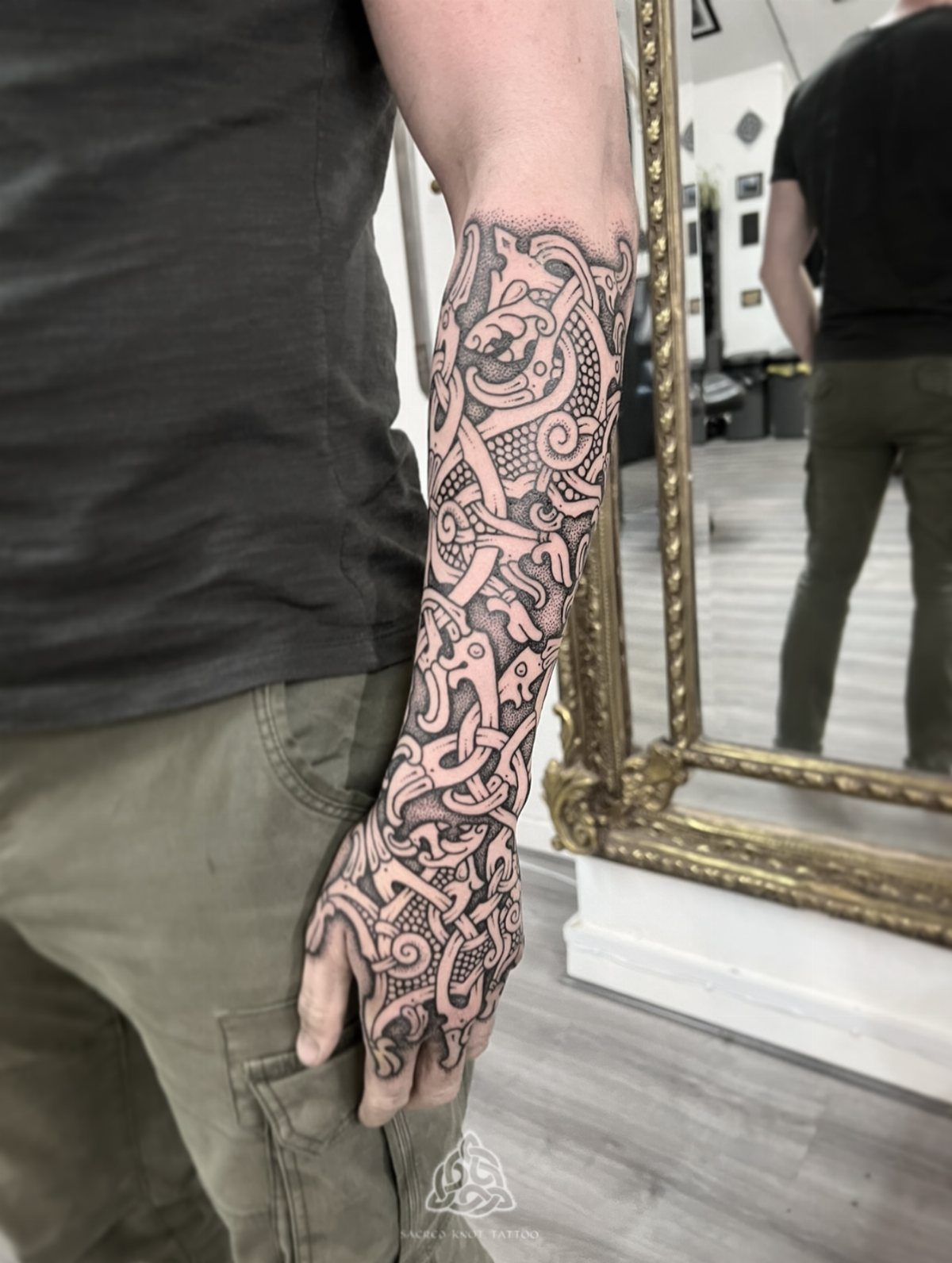
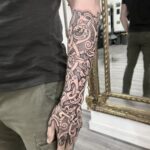
A Nordic bear or wolf in knotwork turns your forearm into campaign armor. I like this for long-running groups where the setting itself needs weight; the animal you pick becomes a shared symbol the table recognizes across sessions.
The knotwork style reads at distance, which matters for a piece you’ll wear to every session. Ask your artist how the line weight holds at finger-width scale; thin interlace can blur faster than you’d think.
Swap the animal to match your world.
Desert campaign, use a lion or camel in the same knots. The technique stays, the story changes.

CHOOSE YOUR QUEST: In the realm of Dungeons and Dragons, Savvi's Temporary Tattoo Pouches unite with the magic of the game to kindle the inner adventurer in both kids and adults. The set includes 50 designs.

Officially Licensed Dungeons & Dragons Apparel For Men and Women; Dungeons & Dragons Pride Apparel; Dungeons & Dragons Dice Apparel; D&D Game Pieces Apparel; Roll Playing Game Apparel; Dungeon Master Apparel; Dungeon Master Pride Apparel

· Dice use liquid core ball, and no matter how the dice roll, the eyes always stare at the top
2. Floating D20 and Spellbook
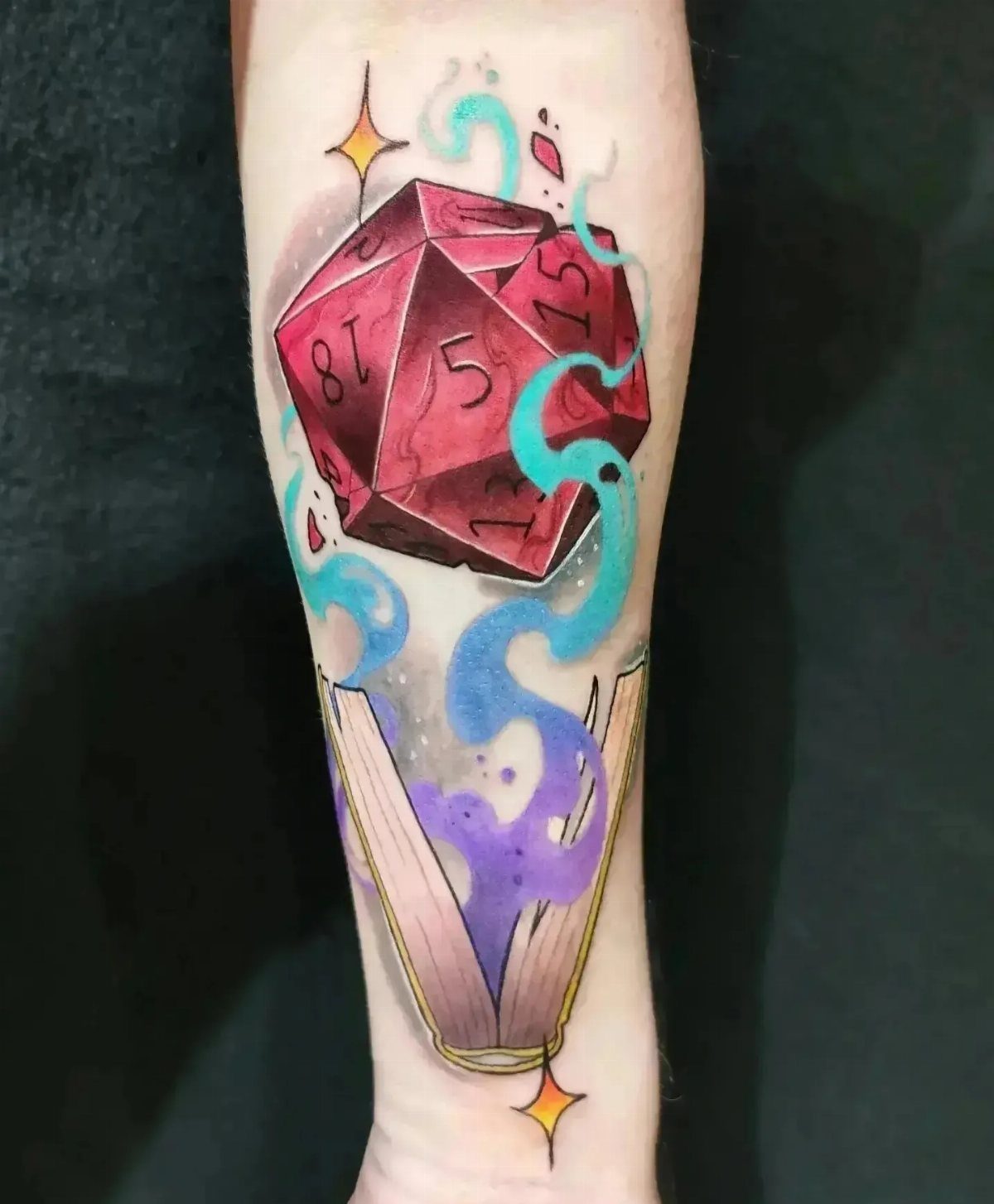
Your spellbook lives on your skin, not in a pack. The red D20 hovering over open pages works as a wizard’s tattooed grimoire, a concept I first saw players adopt after worrying about confiscation at court scenes or prison breaks.
Mechanically, a tattooed spellbook cannot be stolen or burned.
It also cannot be quickly edited; swapping a prepared spell for another takes hours of study, not a quick knife-scrape. The DM should know your choice before the first session where capture matters, so the trade feels fair, not sprung.
The floating D20 and spellbook tattoo’s colors shift easily to your wizard school’s palette.
Then allow them to have a number of tattoos equal to 1/3 caster spell slot progression.


3. Mimic Monster
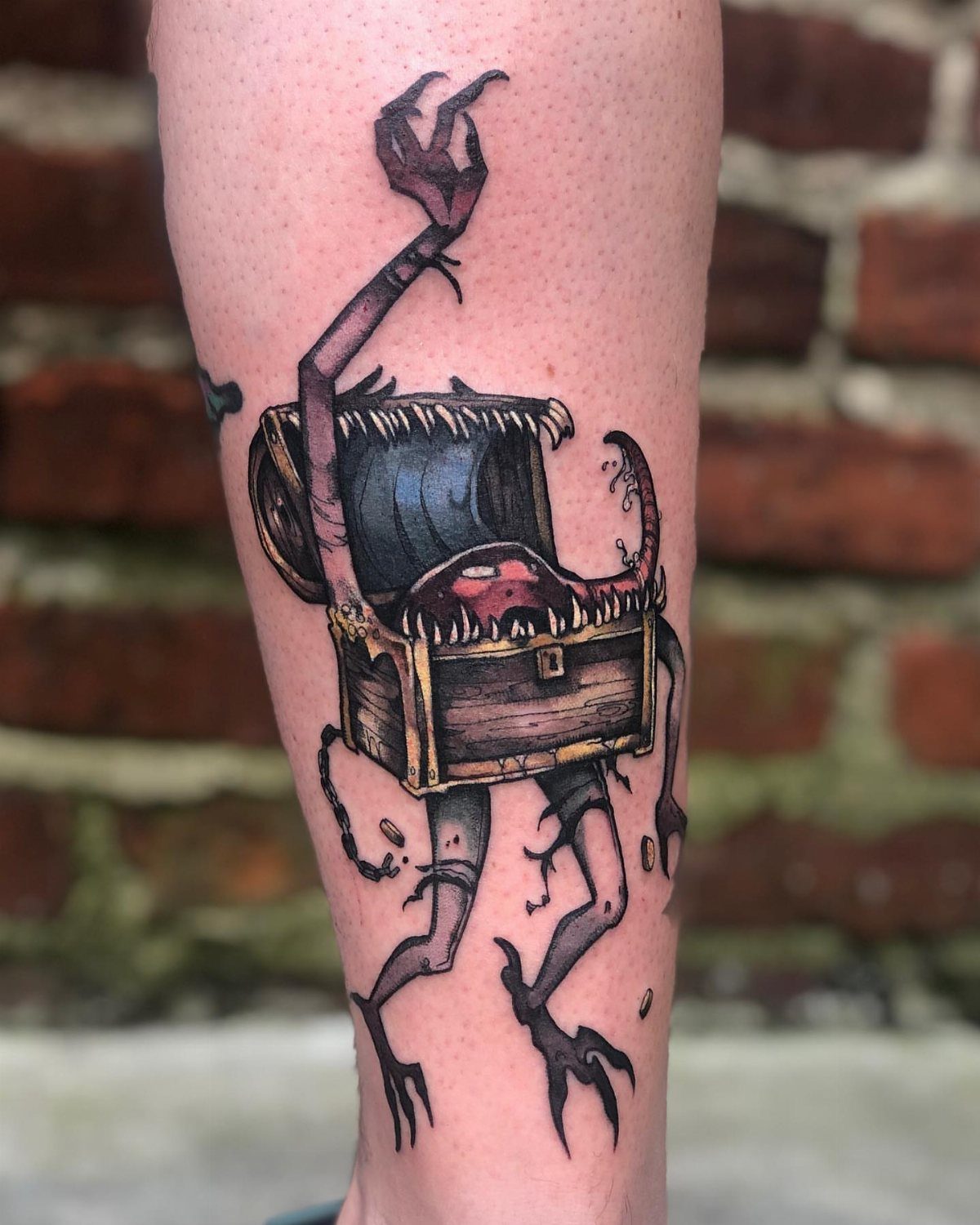
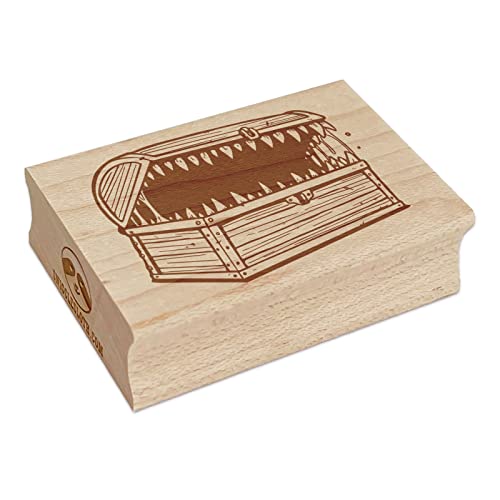
A mimic on your leg waits for someone to notice. The teeth and spindly limbs read as comedy to fellow players and genuine menace to anyone who has lost a character to one.
The lower leg placement means jeans cover it for professional settings; the full reveal needs shorts.
Check your workplace dress code before committing to calf-high monsters. The color saturation in this piece will need touch-up eventually, standard for bright reds and yellows on legs.
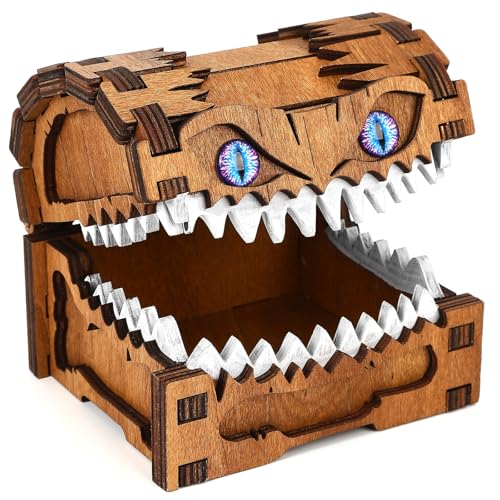
Not Your Ordinary Dice Box – This isn't a safe little chest… it's a Mimic! With glowing green eyes and sharp teeth, it guards your dice like a hungry monster.

Artwork designed and drawn by our in-house tattoo artist!

Dice Chest Building Set: The design of this Mimic building block is inspired by the popular game, presenting a unique haunted treasure chest image in the fantasy world. This Mimic building block shows the charm of the mysterious treasure chest through detailed design and creative functions, making it a captivating halloween sets piece
4. Dungeon Map Sleeve
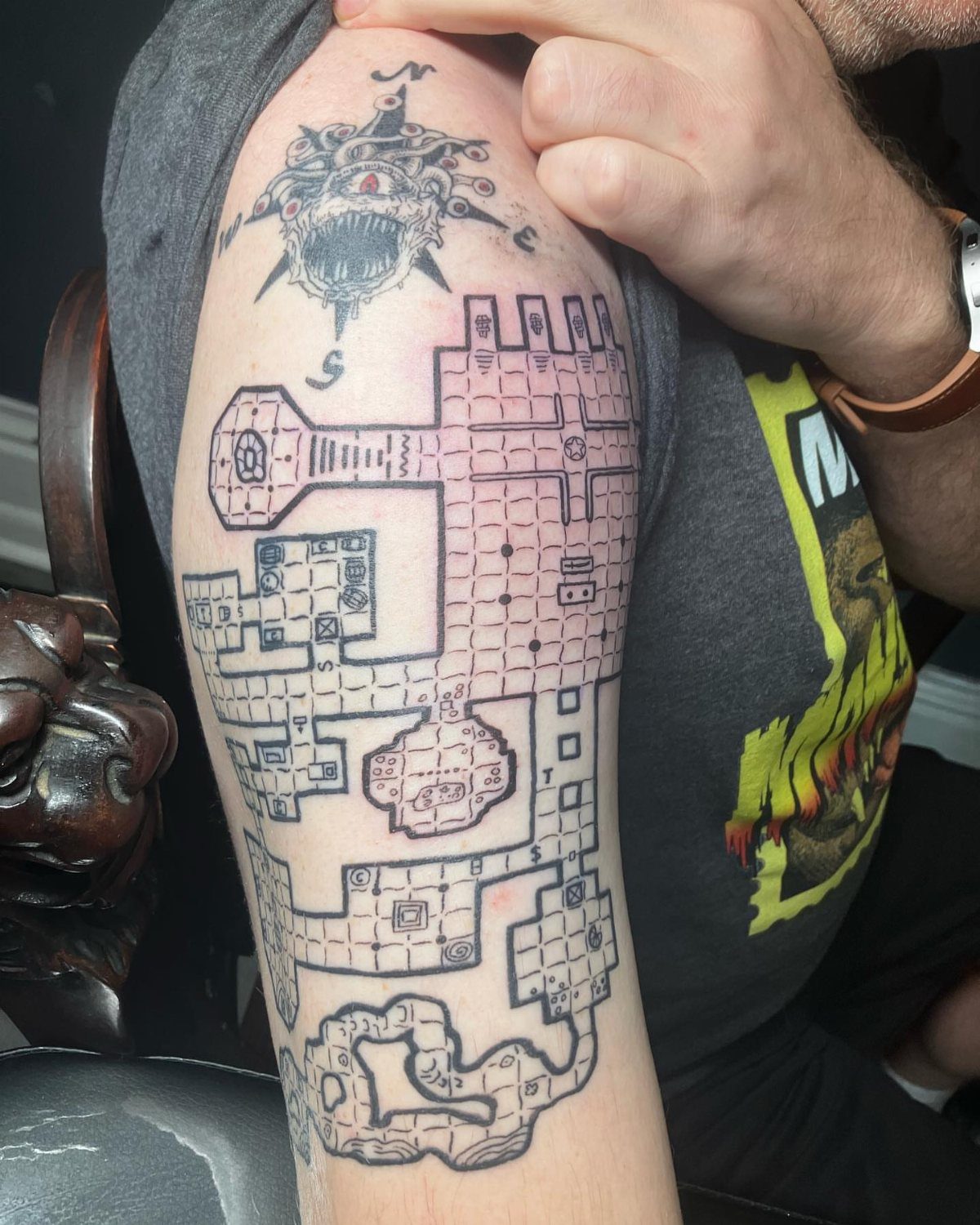
A dungeon map wrapping your upper arm turns your body into the table. Grid lines, corridors, and that beholder compass rose sit like a sleeve of campaign history.
Black ink ages cleaner than color for map details this fine.
The scale matters: too small, and individual rooms blur together; too large, and the map wraps awkwardly around the muscle. Bring reference photos of dungeon tiles you actually played, or the artist invents corridors that mean nothing to you.
The compass rose placement on the shoulder cap lets short sleeves frame it deliberately.

Looks Real and Seamless -- 92% nylon and 8% spandex,stretchable fabric material,These arm tattoo sleeves is easy slip on and off,you can feel comfortable and soft whenever you wear it. Reasonable price with great quality.

★【92% nylon and 8% spandex】stretchable fabric material, easy slip on and off temporary tattoo sleeves for men

Looks Real and Seamless -- 92% nylon and 8% spandex,stretchable fabric material,These arm tattoo sleeves is easy slip on and off,you can feel comfortable and soft whenever you wear it. Reasonable price with great quality.
5. Geometric D20 Tattoo
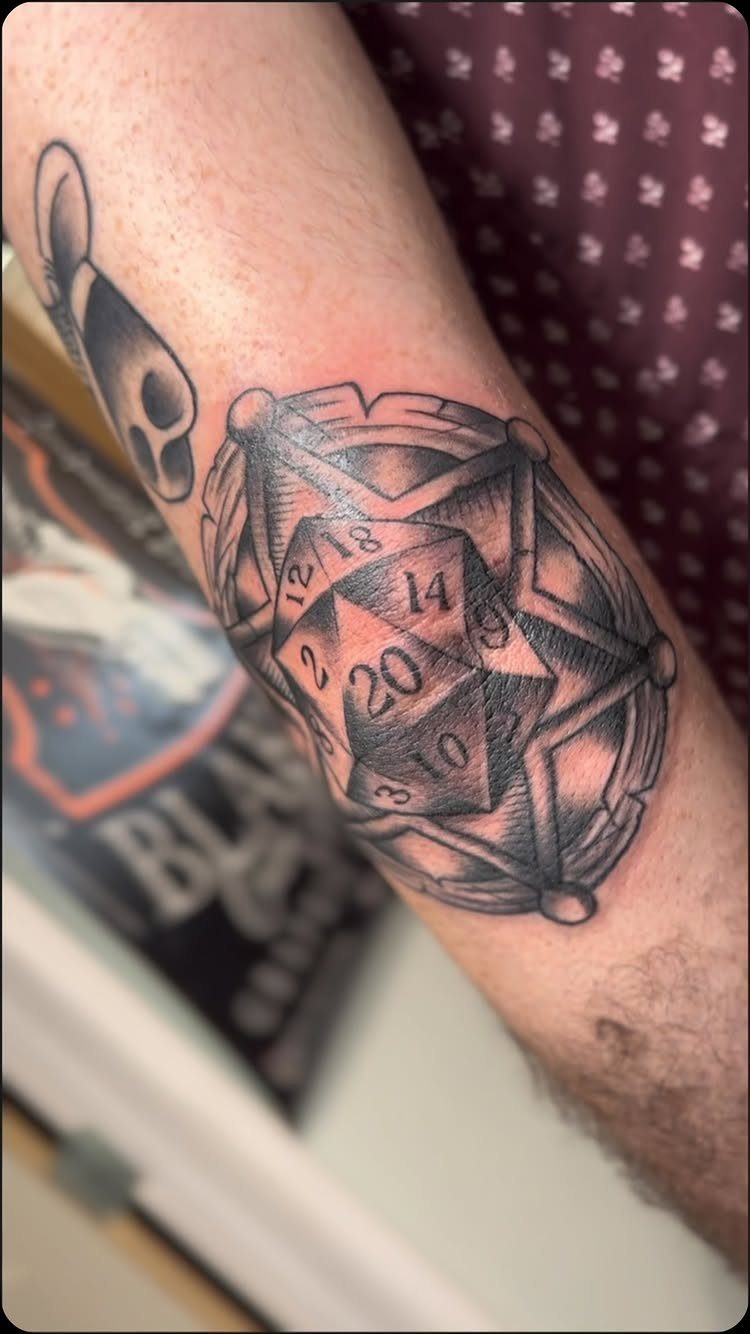
A D20 inside geometric shielding speaks to the math-minded player. The black and grey palette keeps the focus on form, not flash; the star pattern behind the die catches light without demanding it.
Elbow placement moves with every joint bend.
Expect some distortion when you flex, and tell your artist if you want the die to read true at full extension or at rest. Fresh blackwork here heals rough; plan on careful moisturizing for a while before your next session.

Package Includes: 4 safari jungle animals temporary tattoo sheets; Total 140 tattoos in 140 different designs


6. D&D Quest Motif Collage
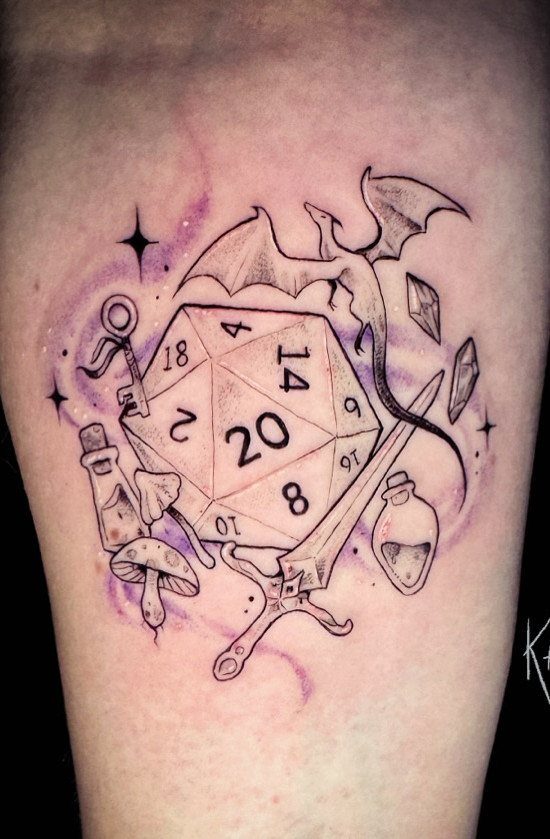
Dragon, sword, potions, key, crystals, mushrooms, stars, all orbiting a central D20: this is the character sheet as collage.
I prefer this format for players who multiclass or who want one piece to summarize a whole campaign arc rather than a single build.
The purple shading behind the objects ties them together visually; without it, a cluster of small icons reads as clutter. Ask your artist about negative space between elements, or the healing process will blur boundaries you wanted sharp.
This density suits a larger flat area like thigh or back, not a spot where the skin stretches irregularly.

CHOOSE YOUR QUEST: In the realm of Dungeons and Dragons, Savvi's Temporary Tattoos unite with the magic of the game to kindle the inner adventurer in both kids and adults. The set includes 14 stunning designs.

D&D FANDOM: Throughout its 50 years, there have been many monsters that have graced our tabletops, but none more iconic than the ones depicted on this medallion.

DUNGEONS AND DRAGONS D20 DICE OFFICIALLY LICENSED LINED MESH SHORTS: Our officially licensed pop culture lined mesh shorts are crafted from 100% polyester, carefully chosen to provide the ultimate combination of comfort, exceptional breathability, and long-lasting durability. This high-quality fabric ensures that your shorts will withstand the test of time, maintaining their vibrant colors and shape even after repeated washes.
7. Beholder Creature
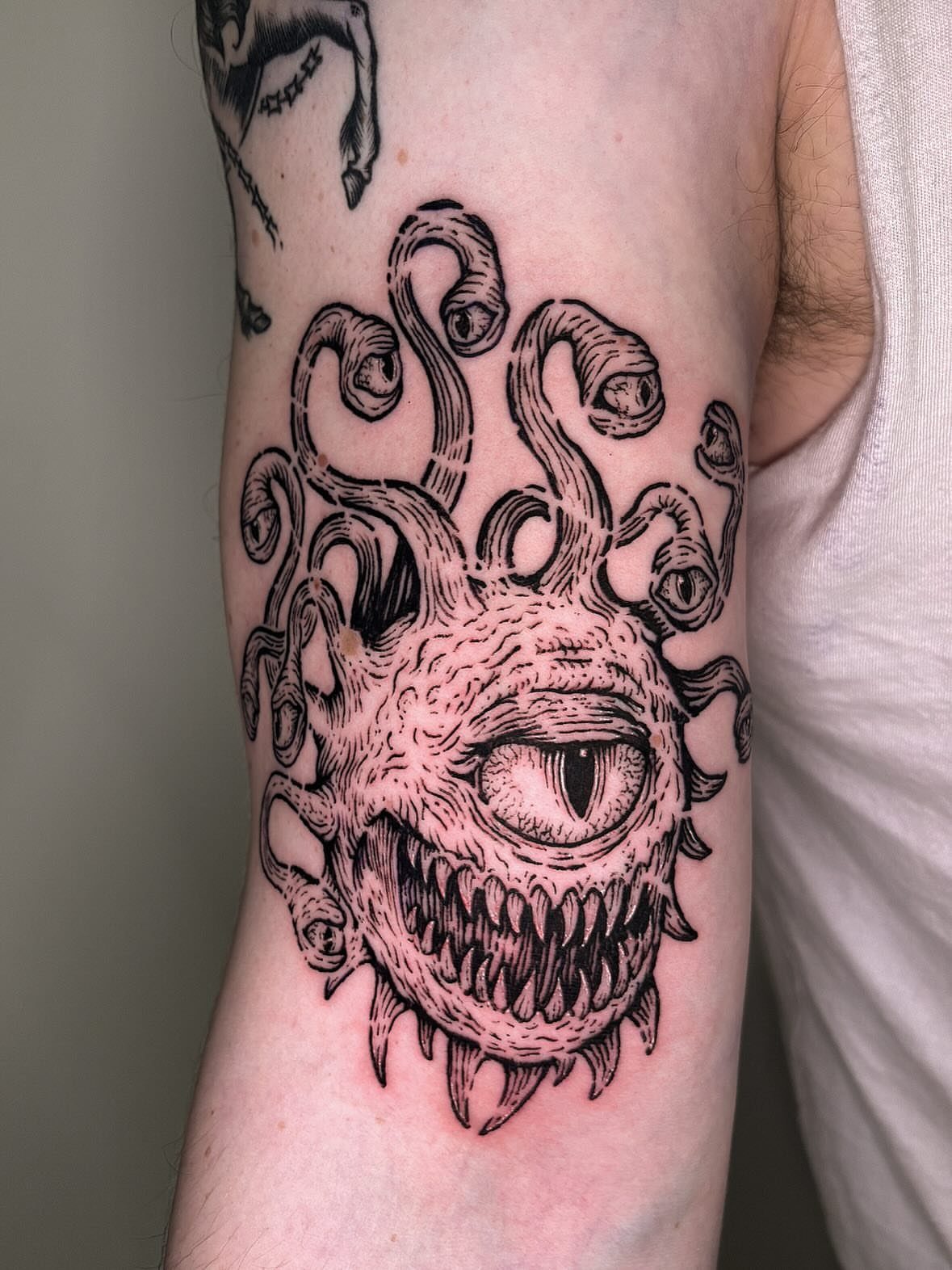
A beholder tattoo turns your shoulder into the monster manual itself. The eye stalks radiating from that central orb work with the natural curve of the deltoid, not against it.
Black ink keeps the linework readable as the skin ages; color here would fight for attention with the form.
Ask your artist how the tentacle overlap reads from a few steps back, since the density of limbs can blur into a blob at conversation distance.
The eye detail needs a steady hand at small scale; if your artist’s portfolio lacks similar fine work, consider scaling up or simplifying the stalk count.
This one suits DMs who want their favorite monster visible at the table without pulling out a screen.
8. Animal Adventurer
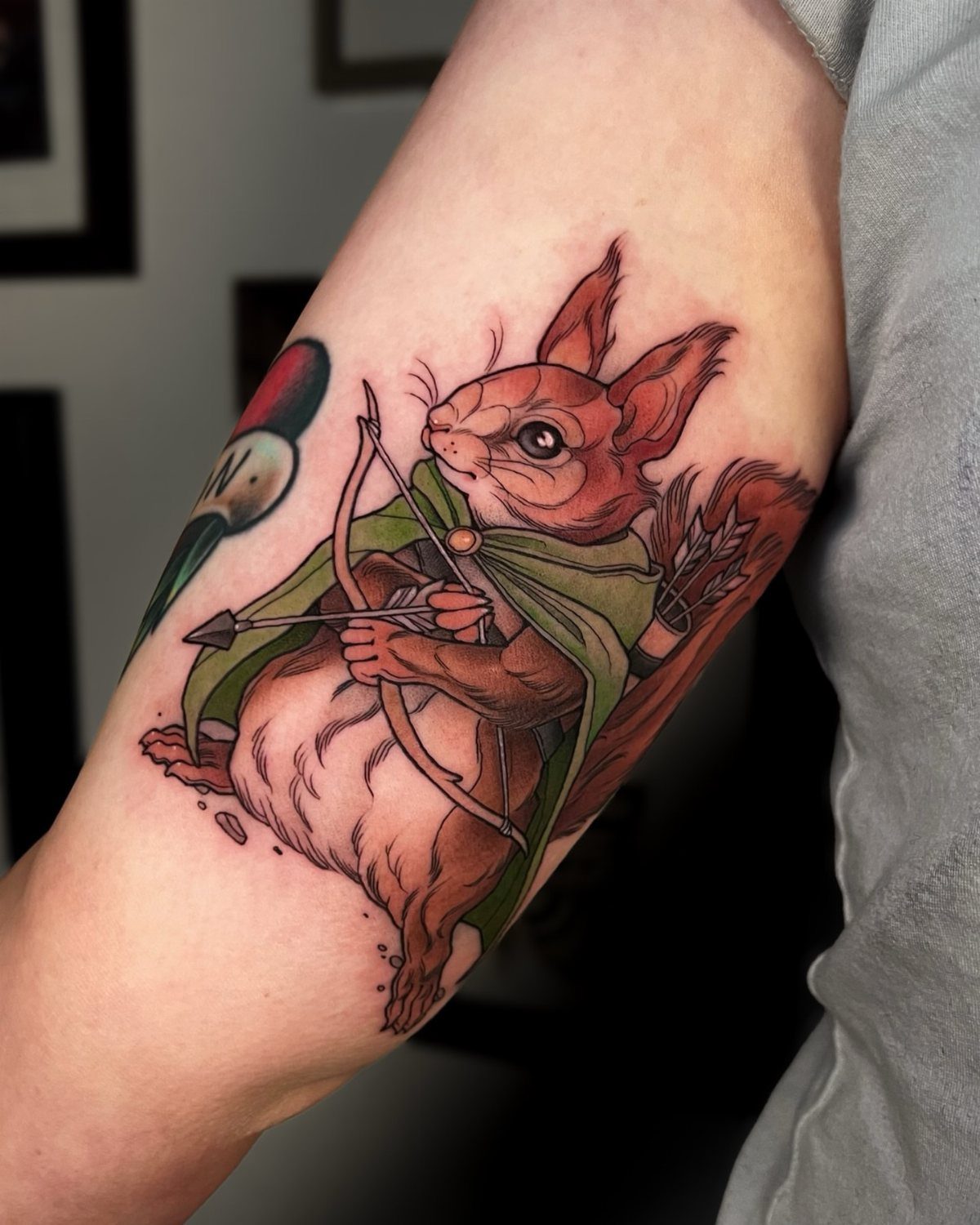
A squirrel in a green ranger’s cloak, bow drawn, turns the class archetype into something nobody at the table expects. The humor lands because the animal stays serious; the hood and stance sell the character, not the species.
The green cloak color will need refreshment every few years, standard for forest tones on arms.
Ask your artist about the bow string detail, whether they plan a single needle pass or a lighter suggestion; a too-heavy line cuts the scale and the squirrel reads as a blob with sticks.
This format works for any class and any creature. A frog wizard in blue robes, a barbarian badger, the template travels.
CHARMING RUBBER STAMP - Small in size, but big in character, our stamps feature deeply etched rubber for excellent clarity. A foam layer between the handle and rubber adds cushion to make stamping a breeze. The sizes listed refer to the longest side of the stamp design.

Artwork designed and drawn by our in-house tattoo artist!

Artwork designed and drawn by our in-house tattoo artist!
9. Feywild Enchanted Forest
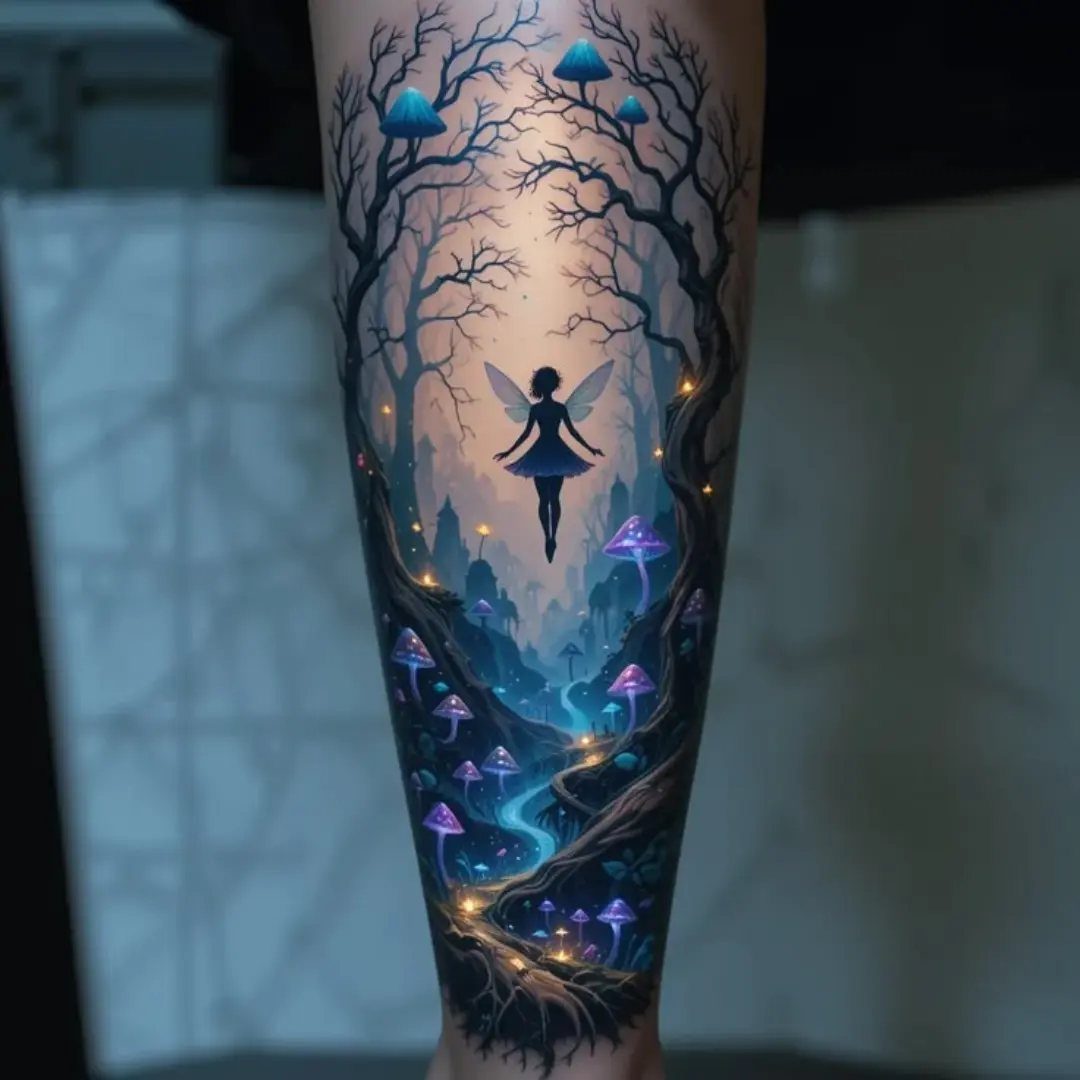
A fairy silhouette over glowing mushrooms turns your forearm into a Feywild portal. The blue and purple palette reads as bioluminescence rather than cartoon, which matters for a piece you’ll wear outside game night.
The glow effect comes from white ink highlights against saturated color, a technique that fades faster than standard pigment. Plan for touch-ups if you want the mushrooms to keep reading as lit from within.
The fairy’s wing transparency needs negative space left deliberately; if your artist fills too solid, the figure loses its lightness and becomes a dark blot against the forest.
Dark forest backgrounds suit pale skin where the contrast carries the depth without heavy black.

One Size Fits Most People, Measurement is approximately 15.4 inch long by 3.2 inch wide when not stretched. Unless you have really huge arms, these should fit comfortably because they are stretchable.

Looks Real and Seamless -- 92% nylon and 8% spandex,stretchable fabric material,These arm tattoo sleeves is easy slip on and off,you can feel comfortable and soft whenever you wear it. Reasonable price with great quality.
Frequently Asked Questions
How do magical tattoos work?
Magical tattoos function like other magic items in D&D, applied with a tattoo needle and attuned to like any enchanted gear.
The needle implants the magic into your skin, so a separate attunement ritual is unnecessary beyond what the item itself demands.
Spell tattoos appear where you choose and look how you decide, though the DM has final say on whether a design fits the magic’s theme.
What are the effects of tattoos in Tasha’s Cauldron?
Tasha’s Cauldron of Everything contains 11 magical tattoos with effects ranging from damage resistance to stored spells.
The book leaves the visual design to player and DM collaboration, so your ghost step tattoo might look like spectral footprints or a fading portrait, depending on what your table agrees fits the mechanics.
Each tattoo’s effect is fixed by the rules, but the art is yours to negotiate.