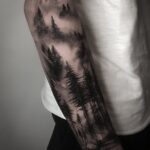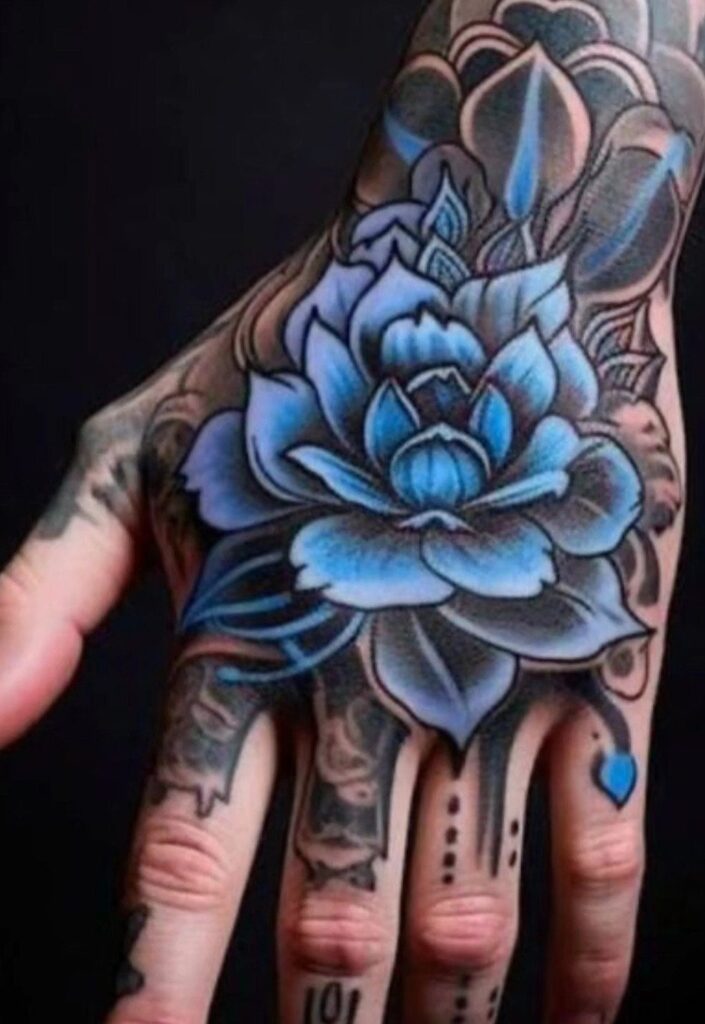
A blue lotus tattoo can run from a single fine-line stem at 2 inches to a full forearm piece with mandala lace and gradient shading that takes several hours.
Fine lines this long need skin that stays relatively still; the forearm stays steadier, while hand extensions and shoulder stems torque when muscle flexes and will need rework or touch-up sooner.
[link-whisper-related-posts]1. Blue Lotus Flower Design
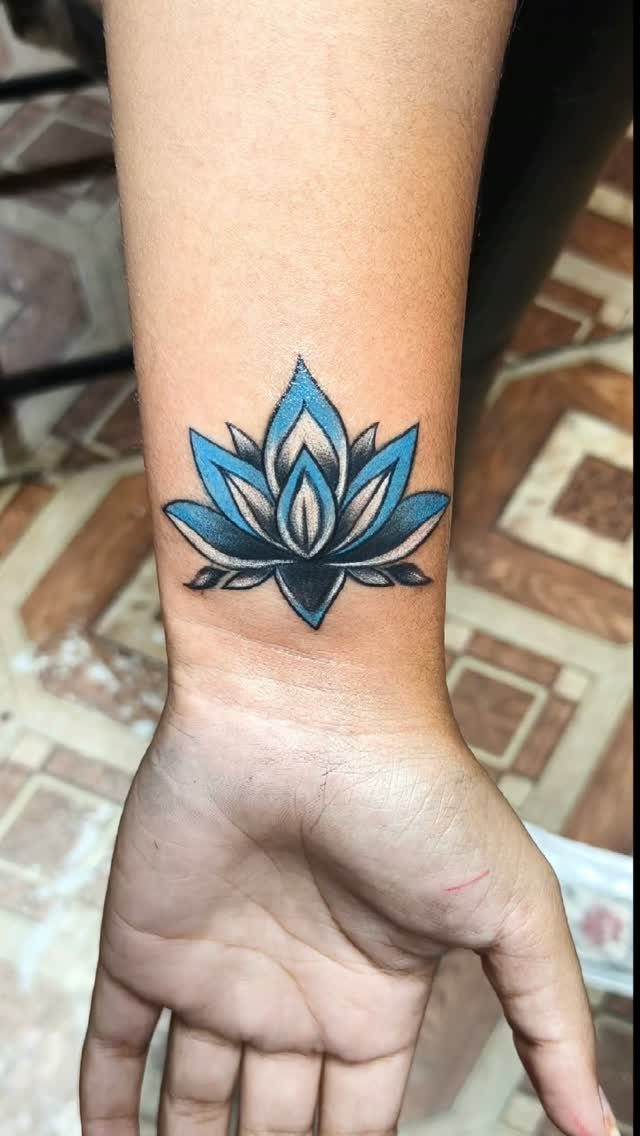
A blue lotus flower tattoo works best when the petals read in layers, not as one flat shape.
The navy-to-cobalt shift in the visible piece comes from packing blue ink more densely at the petal base and letting it thin toward the edges, with black line work defining each layer’s rim.
I would ask the artist to draw the flower at actual size before the appointment; a lotus this detailed shrinks badly below 2 inches.
The swirling vines and small leaves some versions add run vertically, which suits a forearm or side rib placement where the body gives a natural column.

Floral Variety: This set includes 9 different lotus pattern stencils. Each design has its own look, from closed buds to fully opened flowers. They work well for face painting, body art, or craft projects, giving a clean and elegant finish that fits different occasions.

32 Lotus & Mandala Patterns – 6 large A4 sheets with up to 100 distinctive Indian Arabian flower and tribal totem designs for a complete body art story.

【Spiritual Lotus & Moon Designs】This semi-permanent tattoo set features minimalist fine-line designs inspired by lotus flowers, crescent moons, flowing vines, and subtle star accents. Symbolizing renewal, inner balance, and feminine energy, these delicate elements blend Eastern spirituality with modern aesthetics. Perfect for minimalist lovers, yoga and meditation enthusiasts, and those drawn to spiritual, calming, and quiet strength with effortless style.
2. Watercolor Blue Lotus Tattoo
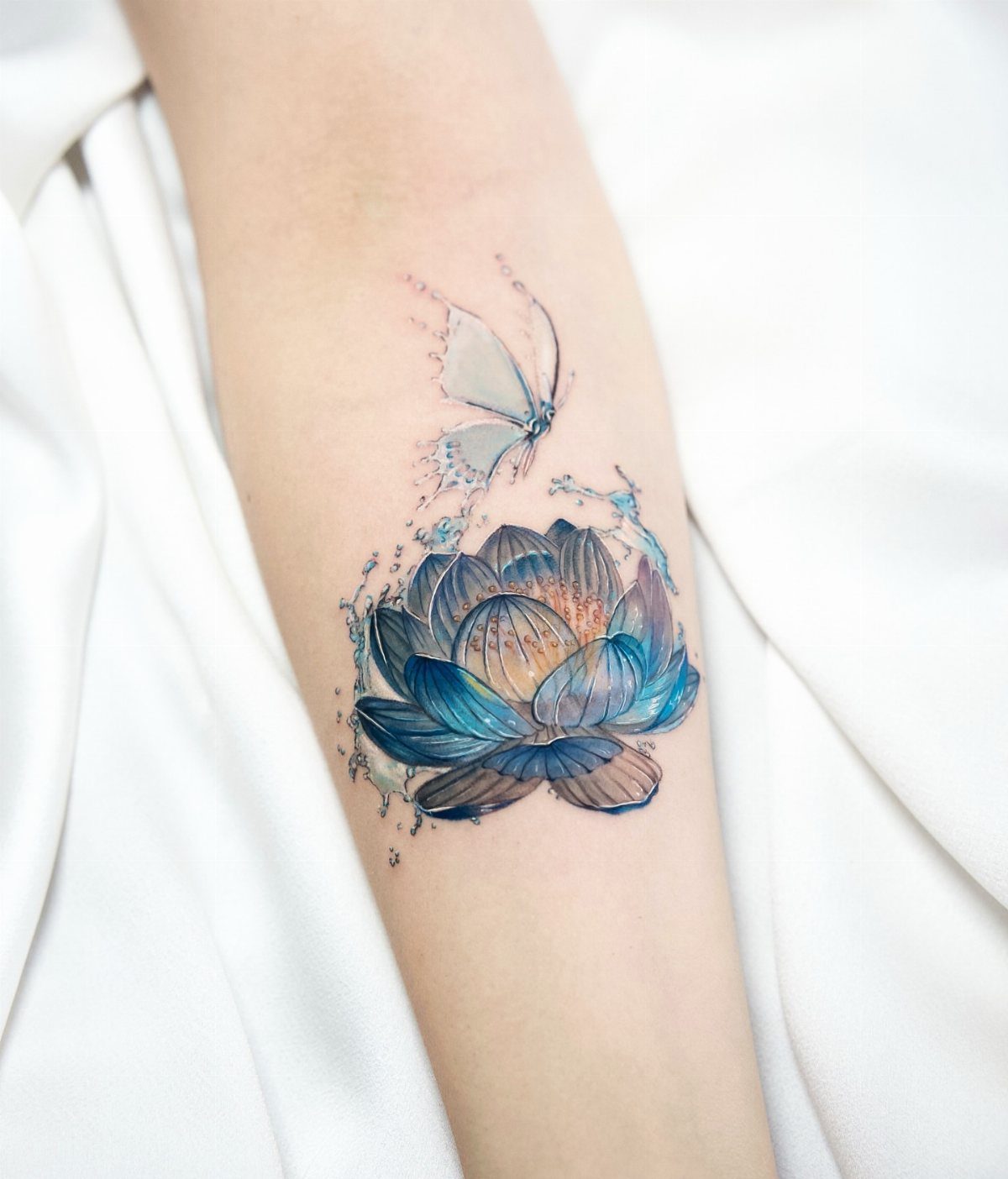
Watercolor technique in tattooing means the color sits in soft, unlined washes that bleed like actual paint on wet paper.
The visible piece shows this in the blue lotus and the butterfly beside it, with the flower’s edges dissolving into splatter rather than holding a hard contour.
Longevity is the real problem with watercolor blue lotus tattoos. Those soft edges blur faster than black outlines, and the blue can shift toward green as it ages.
I would plan for a touch-up sooner rather than later, and I would place it where sun exposure is minimal, since UV accelerates the fade in unlined color work.

【UNIQUE AMAZING DESIGNS】Each Size is about 11.4 x 21 cm / 4.48 x 8.26 inch. Contains 8 sheets temporary tattoo paper stickers which are printed with non-toxic ink.

Semi Permanent Tattoo Stickers: High-quality temporary tattoos that last 7-14 days, gradually fading as your skin naturally exfoliates. Made with skin-safe, plant-based inks that meet international safety standards

Innovative Skin-Sync Technology: We don't just sit on the skin; we interact with it. By reacting organically with naturally occurring proteins in your skin's outermost layer (stratum corneum), our plant-based formula magically transforms from a transparent guide into a rich, ultra-realistic navy-black. It looks exactly like a healed, permanent tattoo—without the needles or depth.
3. Blue Lotus Tattoo with Eye of Horus
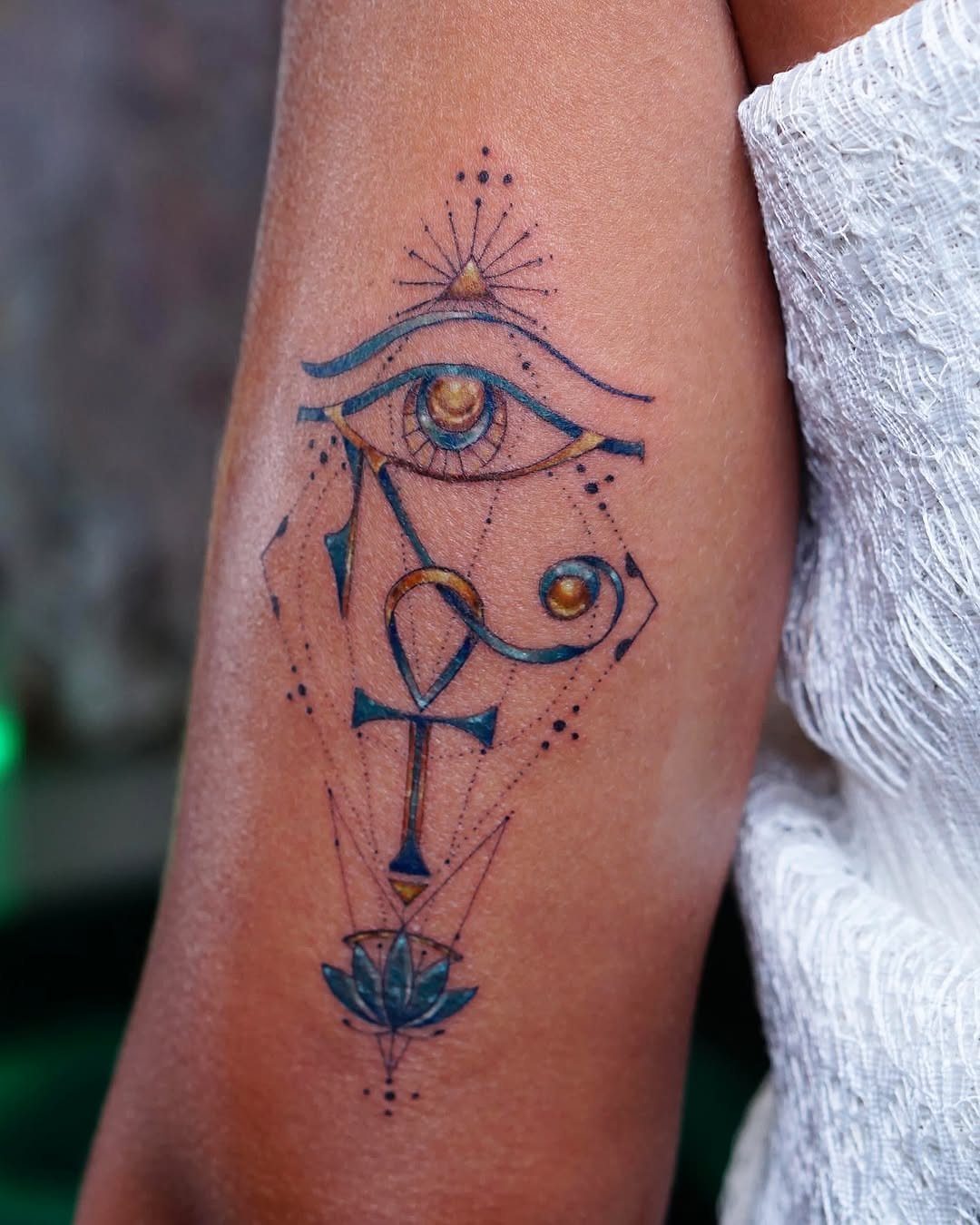
The Eye of Horus paired with a blue lotus pulls from Egyptian revival imagery, where the lotus stood for rebirth and the eye for protection.
Gold ink or gold-toned shading alongside the blue gives the piece its particular register, closer to jewelry than to botanical illustration.
The ankh symbol that often accompanies these 2 adds vertical length, so the composition suits a forearm or calf better than a wrist.
I would check that the artist has healed photos of metallic or gold-toned work; gold pigment can heal patchy, and some shops mix their own version rather than using a standard brand.

【Elegant Feminine Lotus Design】This fine-line lotus set is designed to enhance the natural beauty of your body. Soft, balanced lines create a feminine and intimate look that feels symbolic and graceful. Ideal for subtle yet meaningful self-expression, these tattoos offer quiet confidence and beauty.

Realistic Finish: Different from you know ordinary temporary tattoo stickers or fake tattoos. It is so real and comparable to the real tattoo. It is a semi-permanent technology, Water-Resistant, friction-resistant, and can last for a long time, staying on your skin for 1-2 weeks.

Innovative Skin-Sync Technology: We don't just sit on the skin; we interact with it. By reacting organically with naturally occurring proteins in your skin's outermost layer (stratum corneum), our plant-based formula magically transforms from a transparent guide into a rich, ultra-realistic navy-black. It looks exactly like a healed, permanent tattoo—without the needles or depth.
4. Minimalist Blue Lotus
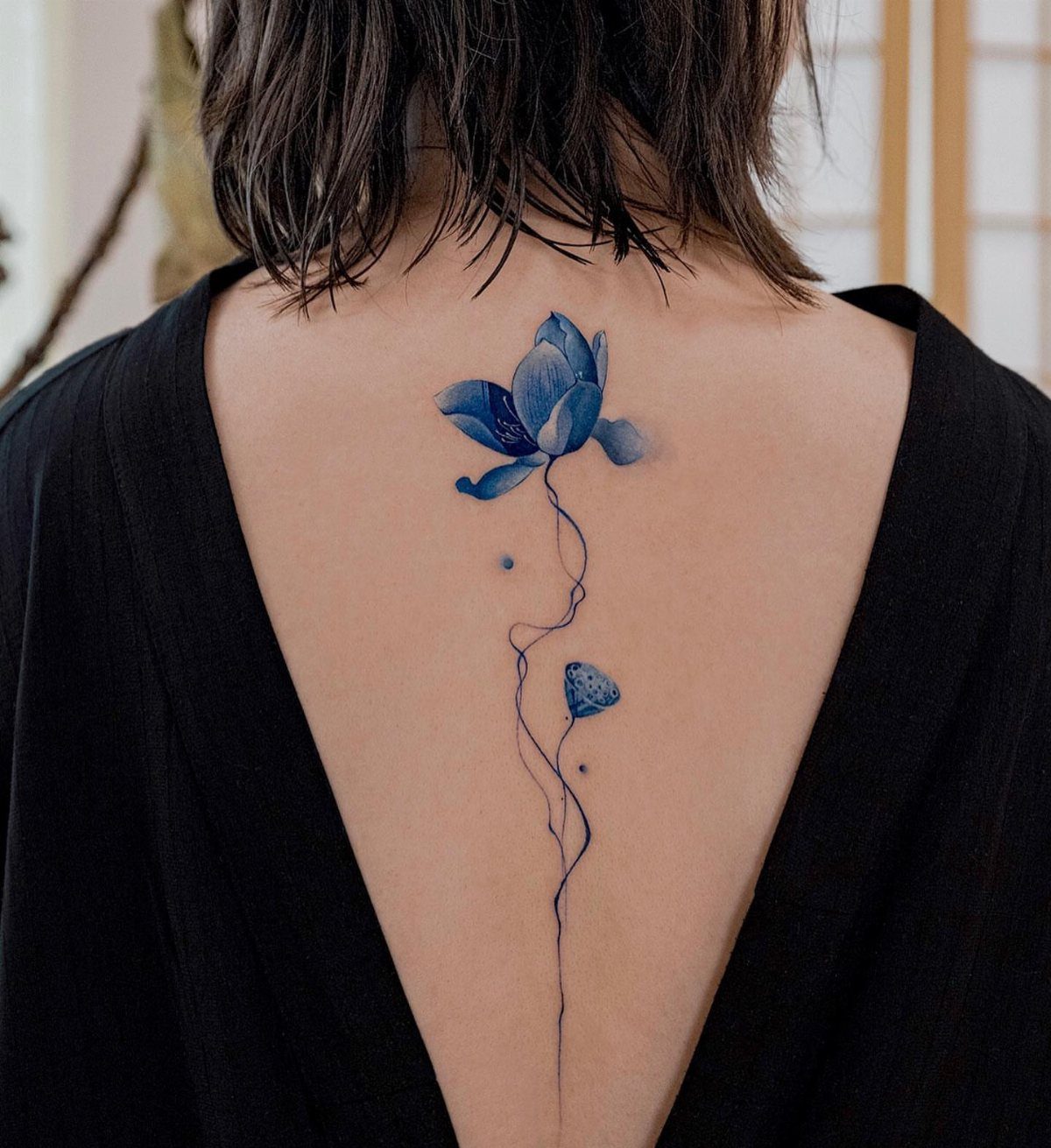
A single blue lotus on a thin vertical stem, placed along the spine as the visible piece shows, reads as posture and bone structure rather than as decoration.
The seed pod at the stem’s lower end gives the eye a stopping point, which matters when the canvas is a person’s back.
Fine lines this long need skin that stays relatively still; the spine flexes, and weight change or muscle gain will distort a line over time.
I would wait until I was at a stable weight, and I would expect the blue to soften to a gray-blue over time, since thin lines hold less ink.

Glowing Temporary Tattoos: Set of 5 sheets featuring intricate mandala and floral designs that glow in the dark for a mesmerizing effect.
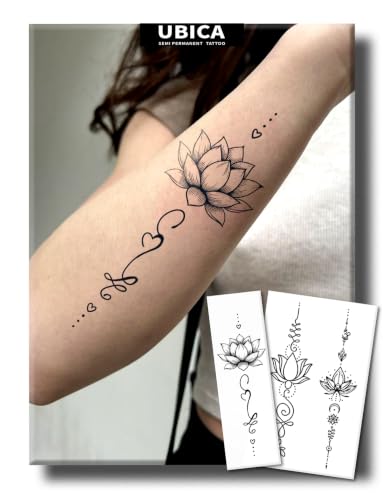
【Zen Lotus Flower Design】This semi-permanent tattoo set features stunning boho-style lotus flower spine tattoos, including intricate mandala lotus, vertical line-art lotus, and delicate floral spine designs. The intricate fine-line design symbolizes purity, rebirth, and spiritual enlightenment, capturing the essence of Zen aesthetics. With its graceful vertical composition, it is perfectly sized to create a stunning, elongated look on the spine, breast, or arm.

Unique Design Mandala Tattoos: Yazhiji Mandala tattoos are a beautiful blend of artistry, spirituality, and self-expression. They offer a way to wear a design that is not only visually stunning but also rich in meaning and symbolism. Whether you’re drawn to the traditional aspects of mandalas or prefer a modern interpretation, our mandala tattoo can be a deeply personal and reflective choice alowing you to embrace the harmony and beauty of these captivating symbols.
5. Blue Lotus Mandala Tattoo
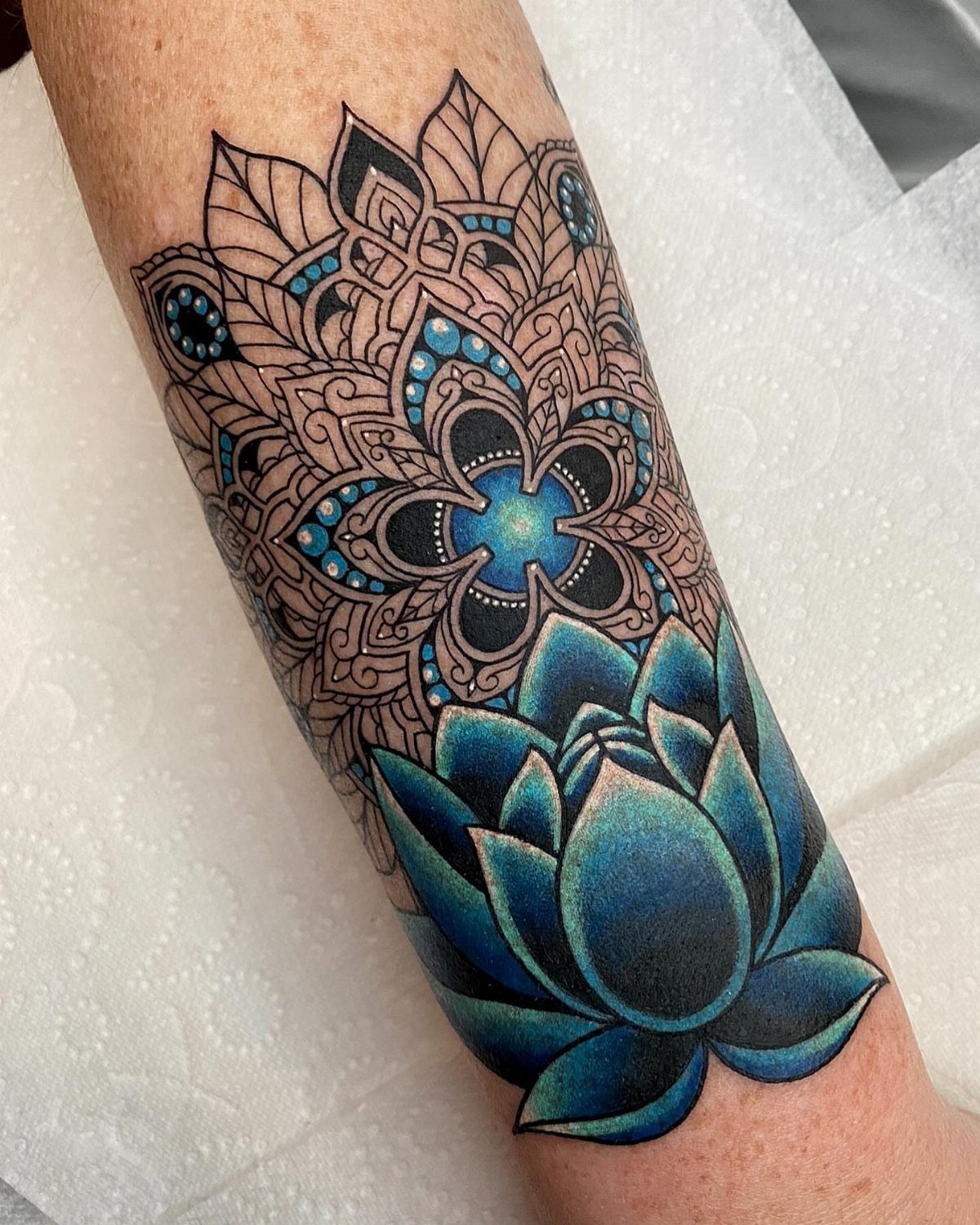
Mandala work surrounding a blue lotus demands precision that shows in the visible piece’s symmetry and in the dotwork beads that hang below.
The teal and blue shift keeps the lotus readable as the center, while the mandala’s geometry frames it without competing.
This much dotwork takes time; a piece this size on a forearm likely ran several hours, and the beads add weight that will blur faster than the central flower.
I would plan the mandala’s outer edge to stay within the muscle bulk of the forearm, not wrapping onto the wrist where thin skin distorts geometric work.

Realistic Finish: Different from you know ordinary temporary tattoo stickers or fake tattoos. It is so real and comparable to the real tattoo. It is a semi-permanent technology, Water-Resistant, friction-resistant, and can last for a long time, staying on your skin for 1-2 weeks.

【Safe & Skin-Friendly】10.5x6cm small temporary tattoos, No toxic Very friendly material, safe for all skin types including sensitive skin. No irritation, no sticky residue, portable for on-the-go use.

【Package Included】Each Sheets size about: 11 cm x 8 cm (4.3 inch x 3.1 inch). Contains 2 sheets temporary tattoo paper stickers which are printed with non-toxic 100% Plant-Based Ink.
6. Black and Blue Lotus Tattoo
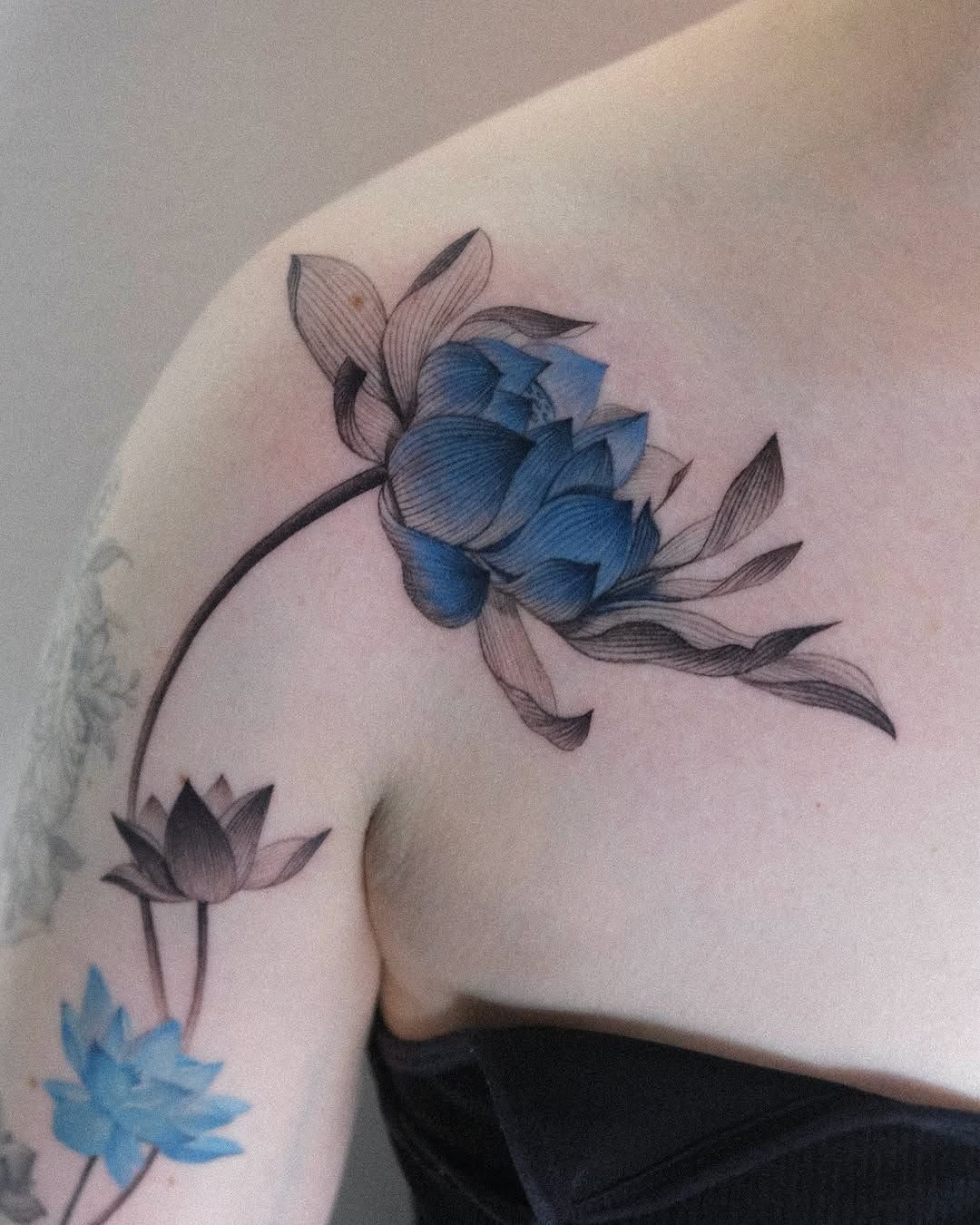
Blue and black together let the flower carry color while the stems and background stay in greyscale, which the visible shoulder piece uses to keep the composition from turning too bright.
The black ink outlines give the blue a boundary that will hold as the color ages.
A chest-to-shoulder placement like this moves with the arm and collarbone, so the stems need to be drawn with the arm at multiple angles before inking.
I would ask to see the stencil in both a relaxed and a raised-arm position; a stem that reads straight at rest can torque when the muscle flexes.

【Spiritual Lotus design】This design blends lotus flowers with OM symbols to express harmony, mindfulness, and inner strength. The fine-line approach keeps the artwork calm and refined, making it ideal for hands and arms. A quiet spiritual style with timeless symbolism.

SACRED LOTUS MANDALA ART: Features a breathtaking vertical alignment of blooming lotus flowers, a celestial crescent moon, and intricate unalome geometric mandala detailing. This elegant spiritual design is crafted using a digital hand-drawn fine line tattoo ensures crisp lines and flawless gradient shading to maintain absolute geometric symmetry, rich linework contrast, and clean dotted stippling effects.

【 575+ Fun Assorted Tattoo Stencils 】-The ChurlChurl tattoo stencils collection includes 575 high quality stencils with multiple themes. enjoy cute trendy tattoo stencil designs like butterflies, words, flowers, symbols, totem, Egypt style patterns and more.
7. Large Blue Lotus
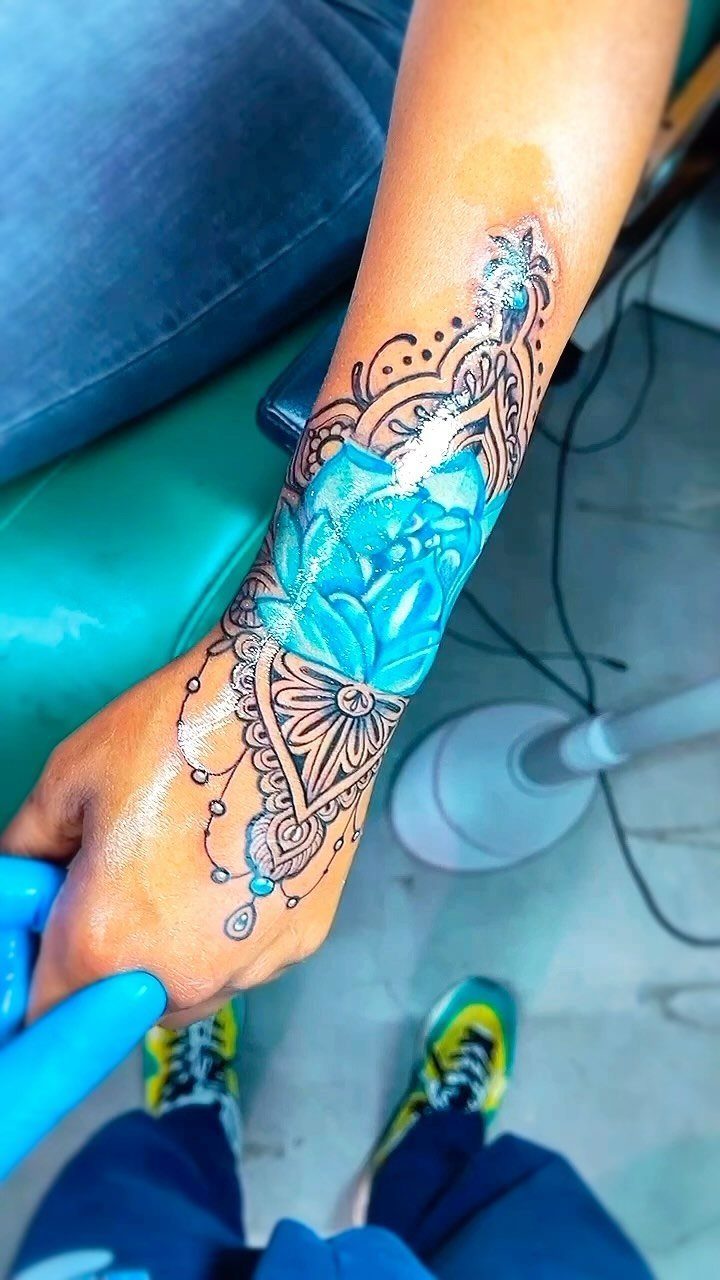
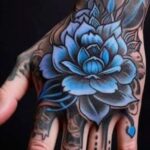
A large blue lotus tattoo covers enough skin that the design becomes architecture, not ornament. The visible piece runs from forearm onto the hand, with the lotus at the center and mandala lace filling the frame around it.
Color at this scale needs planning for how it ages. A teal-to-cobalt shift, framed by ornamental black linework and lace-like mandala patterns, keeps the flower readable longer than a single flat blue.
I would ask the artist to place the brightest saturation where the body sees the least sun, the inner forearm rather than the hand’s back.
The hand extension in the visible piece is a commitment; hand skin turns over faster and holds detail poorly.
I would consider stopping at the wrist and letting the mandala pattern carry the eye down, or accepting that the hand portion will need rework as the ink settles and spreads.

【PACKAGE】Contains 8 Sheets temporary tattoo paper stickers which are printed with non-toxic ink, each sheet measuring 190 x 90 mm / 7.48 x 3.54 inch in size.

【UNIQUE AMAZING DESIGNS】Each Size is about 10.5 x 6 cm / 4.1 x 2.36 inch. Contains 6 sheets temporary tattoo paper stickers which are printed with non-toxic ink.

【High Quality】The arm protection sleeves are made of 100% high-quality nylon fabric, providing a silky-smooth, sweat-wicking, and cooling touch for all-day comfort.
8. Gradient Shading Blue Lotus Tattoo
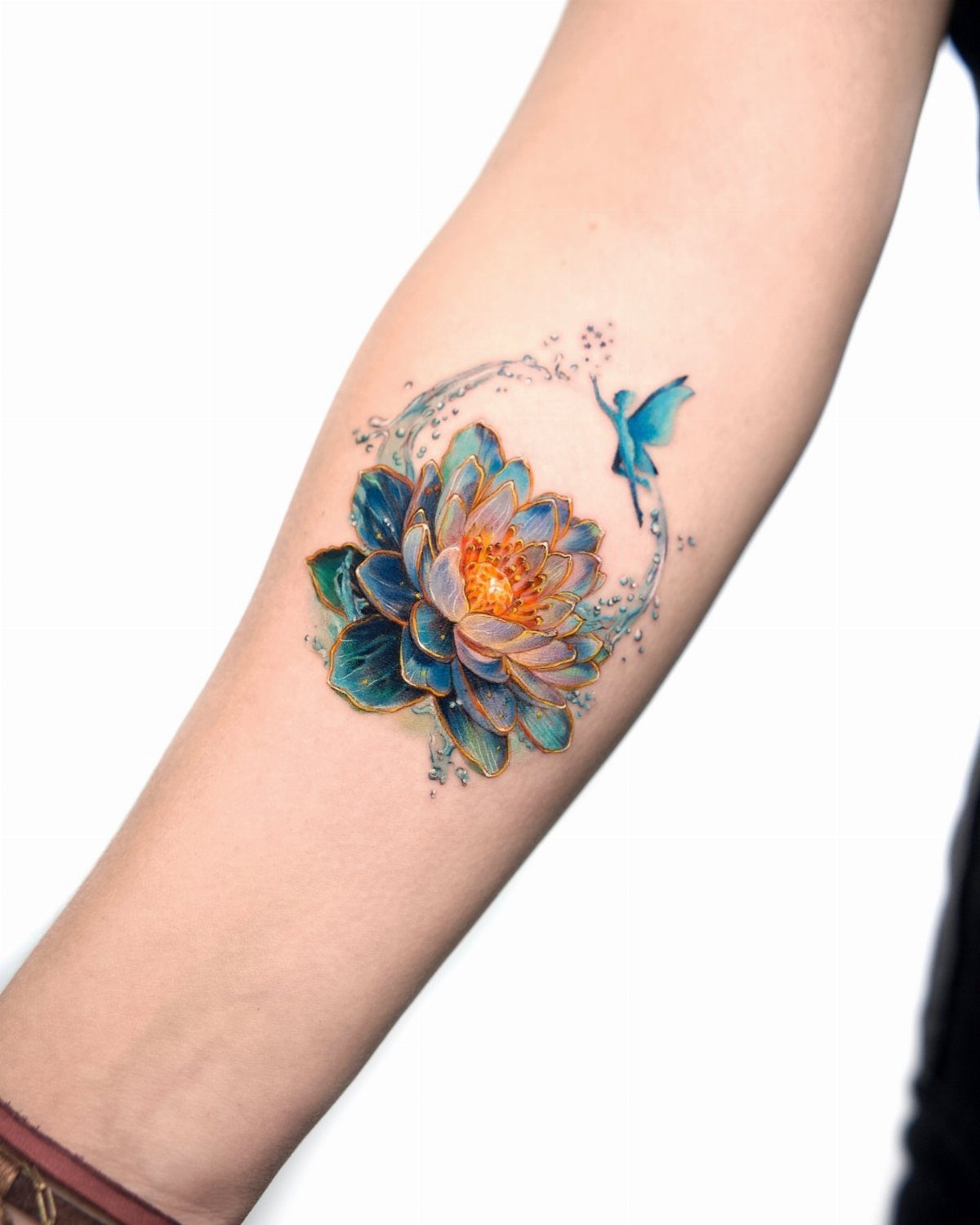
Gradient shading in a blue lotus moves the color from near-black at the petal base to sky blue at the tips, which gives the flower volume without relying on black outline alone.
The visible piece pairs this with an orange lotus behind it and a small blue fairy silhouette, the gradient letting the 2 flowers read as separate layers.
The fairy and water droplets in the visible piece are additions that shift the tattoo toward narrative illustration.
I would decide whether I wanted that story element or prefer the lotus alone; the gradient technique works either way, but the fairy’s fine lines will soften faster than the flower’s broader color fields.
A forearm placement like the visible one lets the gradient run vertically, which suits how light falls on the arm naturally.
I would check that the artist builds the gradient in enough steps; too few and the shift looks striped, too many and the blue can muddy where the tones overlap.

A slender Chinese dragon coils around a lotus flower in clean cream line art, drawn like a page of classic tattoo flash. A quiet, minimalist dragon illustration for anyone who loves Asian mythology and fine linework.

SACRED MANDALA LOTUS & MOON ART: Features an exquisitely balanced spiritual design uniting a blooming lotus flower nestled perfectly within a shaded crescent moon. This mystical unalome-inspired motif is crafted using a digital hand-drawn fine line tattoo ensures crisp lines and flawless gradient shading to flawlessly capture the intricate mandala geometry, delicate stippling dots, and trailing geometric accents with complete precision.

🌼 Beautiful Hand-drawn Fine Line Style Tattoos - Black and White Fine Line Flowers, Roses, Branch, Butterfly, Arrows, Hearts, Stars
Tattoo Placement Advice
Arms, shoulders, and backs give a blue lotus room to breathe, but each carries a constraint worth weighing before you book.
The forearm offers a natural vertical for stemmed designs, and you can check the stencil with the arm both straight and bent.
Muscle flex will torque a line drawn only at rest. The shoulder connects to chest and back in ways that move with the collarbone; stems crossing that joint need testing at multiple angles.
The back, especially along the spine, reads as structure rather than decoration. Weight change or muscle gain distorts fine lines there over time, so I would wait until my weight had held steady for a year.
Hand extensions, even from a forearm piece, turn over skin faster than almost anywhere else.
The ink settles and spreads, and detail that reads crisp fresh can blur a couple years later. I would stop at the wrist unless I had accepted the rework as part of the cost.

💕【64 Sheets Black Temporary Tattoos For Women Girls】--VANTATY 3D Realistic Temporary Tattoos For Adults Women Kids Adults Girls Body Art Stickers Look Real! 【Click Our Store/Brand Name To See More Fashion Designs】Tribal Lion Wolf Indian Feather Lotus Butterfly Bohemia Boho Lotus Mandala Flower Floral Animals Elephant Tattoos Dreamcatcher Serpent Dream Catcher Owl Moon Turtle Hummingbird Skull Skeleton Snake Bat Bowknot Dolphin Moon Crown.

[Semi-Permanent, Realistic Tattoos] INKARTLINK semi-permanent tattoos are lifelike, durable, waterproof, and sweat-resistant, lasting 7–14 days and gradually fading as the skin’s outer layer sheds. They’re perfect for everyday wear, events, or themed occasions. From the beach to the office, they stay vibrant, allowing you to effortlessly showcase your body art in any setting.

This Graphic shows a unalome lotus tree flower. Ideal for bohemian and mandala lovers who loves unalome spiral and unalome tattoo. Ideal for meditate and open the awareness. The Shivas eye shows wisdom and the path to perfection.
Tattoo Care Tips
UV exposure is the enemy of blue ink specifically. The cobalt and teal tones in a blue lotus shift toward green or gray as they age, and unlined watercolor washes fade fastest where the sun hits them.
I would keep a new piece out of direct sun entirely for the first month, then use SPF 30 or higher on it permanently.
Moisturizing matters more for large work with gradient shading or dotwork.
The mandala beads and fine-line lace in a big piece dry unevenly as they heal, and scabbing pulls ink out in patches. I would use a plain, fragrance-free lotion while it heals, nothing with petroleum that can suffocate the skin.
Touch-ups for watercolor or fine-line blue lotus work typically come sooner than for black-and-grey pieces. I would budget for one at the one-year mark, especially if the placement sees regular sun.

【Realistic Semi-Permanent Look】Boldink temporary tattoos are designed to look more like real tattoos than traditional temporary tattoo stickers. They are waterproof, smudge-resistant, and non-shiny for a natural-looking finish. The tattoo will appear silver at first and gradually darken into a rich, realistic color within 48 hours. For best results, avoid contact with bare skin, especially the face, and cover the tattoo with clothing while sleeping to prevent transfer.
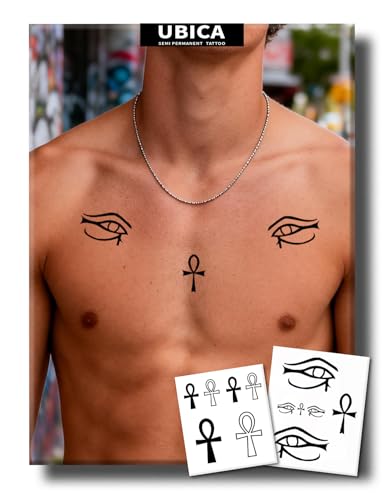
【Sacred Ankh & Eye of Horus Design】This semi-permanent tattoos set blends iconic Egyptian symbols—the Ankh (key of life) and Eye of Horus (protection, health)—with stylized eye motifs for a bold, spiritual, and mysterious look. Ideal for those drawn to symbolism and meaningful body art, it offers a powerful way to express inner strength and personal belief through minimalist, striking designs.

Eye of Horus temporary tattoo
Symbolism of the Blue Lotus
Paired with the Eye of Horus, the symbol shifts toward protection in this life rather than hope for the next.
Gold-toned shading alongside blue ink, common in Egyptian revival pieces, carries a practical risk. Healed photos of any metallic work are worth asking for before committing.
The meaning holds, but the visual language speaks more of contemporary tattoo fashion than of revivalist intent.