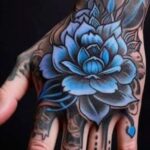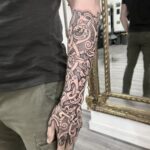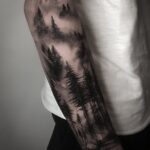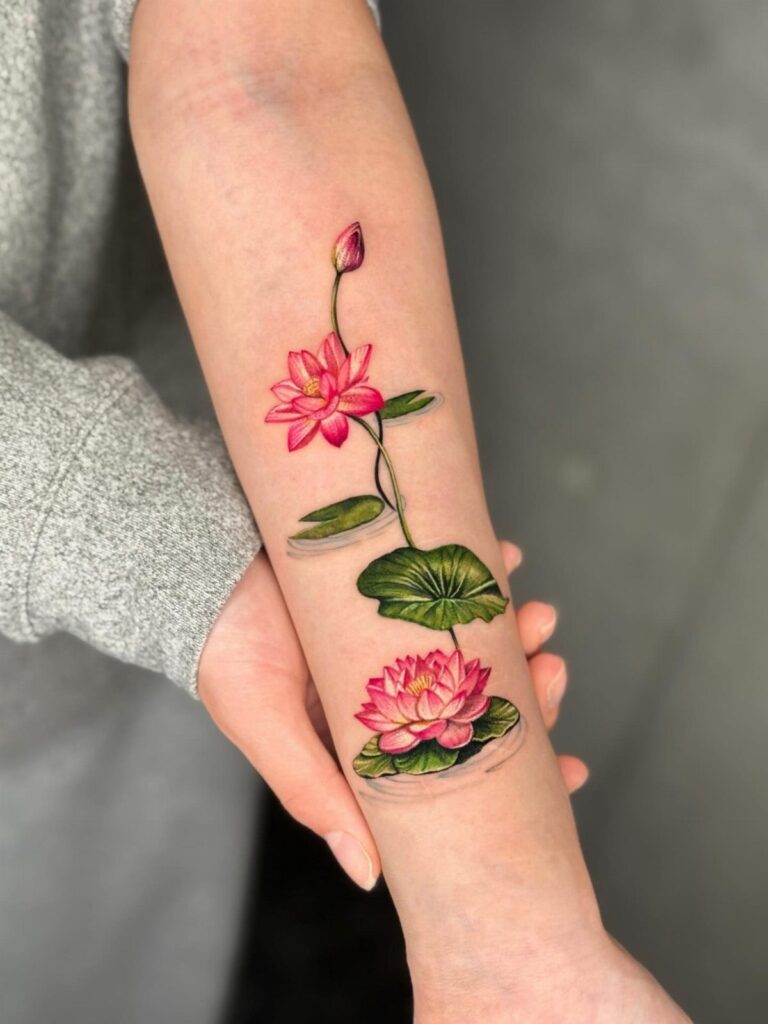
These 7 water lily flower tattoo ideas range from a single hour of fine-line work to multi-session botanical pieces that run into the thousands.
The right choice depends on how much skin you want to commit and whether you need the design to stay readable as the lines age.
[link-whisper-related-posts]1. Black Ink Floral Design with Layered Petals
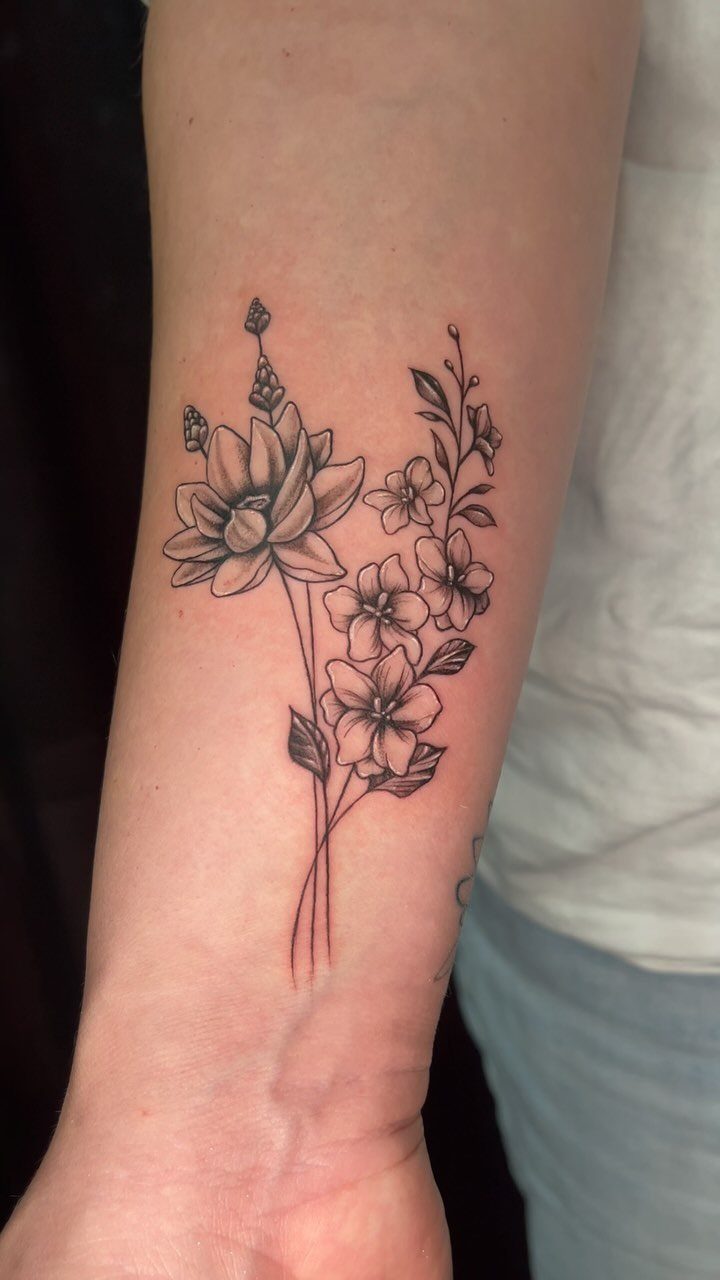
Black ink gives a water lily its structure without the commitment of color that fades unevenly.
Layered petals built from stippled shading and dotwork accents catch light differently than solid fill, so the flower keeps its depth even as the skin ages.
An artist working in this style needs patience for the radiating lines that separate petal from petal; rushed work collapses the layers into a dark blob.
I would ask to see healed photos before booking, since black ink petals settle and flatten over time.

TRUSTED FAMILY-OWNED BUSINESS: We are a USA trademarked brand dedicated to providing high quality stencils and our promise of satisfaction. If you are not satisfied for any reason, we will refund your order. Thank you for considering our stencils.

Saintly Lotus Pattern: These 9pcs stencils with different patterns are all based on the lotus flower as an element, the holy lotus flower not only represents the gentleman style, but also symbolizes the elegance of Buddhism, both in terms of pattern design and cultural content are awesome!

Lotus Design: This set includes 12 different lotus design stencils. The patterns feature clean lines and graceful compositions. You can use colors for painting, making it easy to apply them to home decor projects, handmade gifts, or personal crafts. They add an elegant oriental touch to walls, fabrics, and everyday items
2. Watercolor Pink Water Lily Tattoo
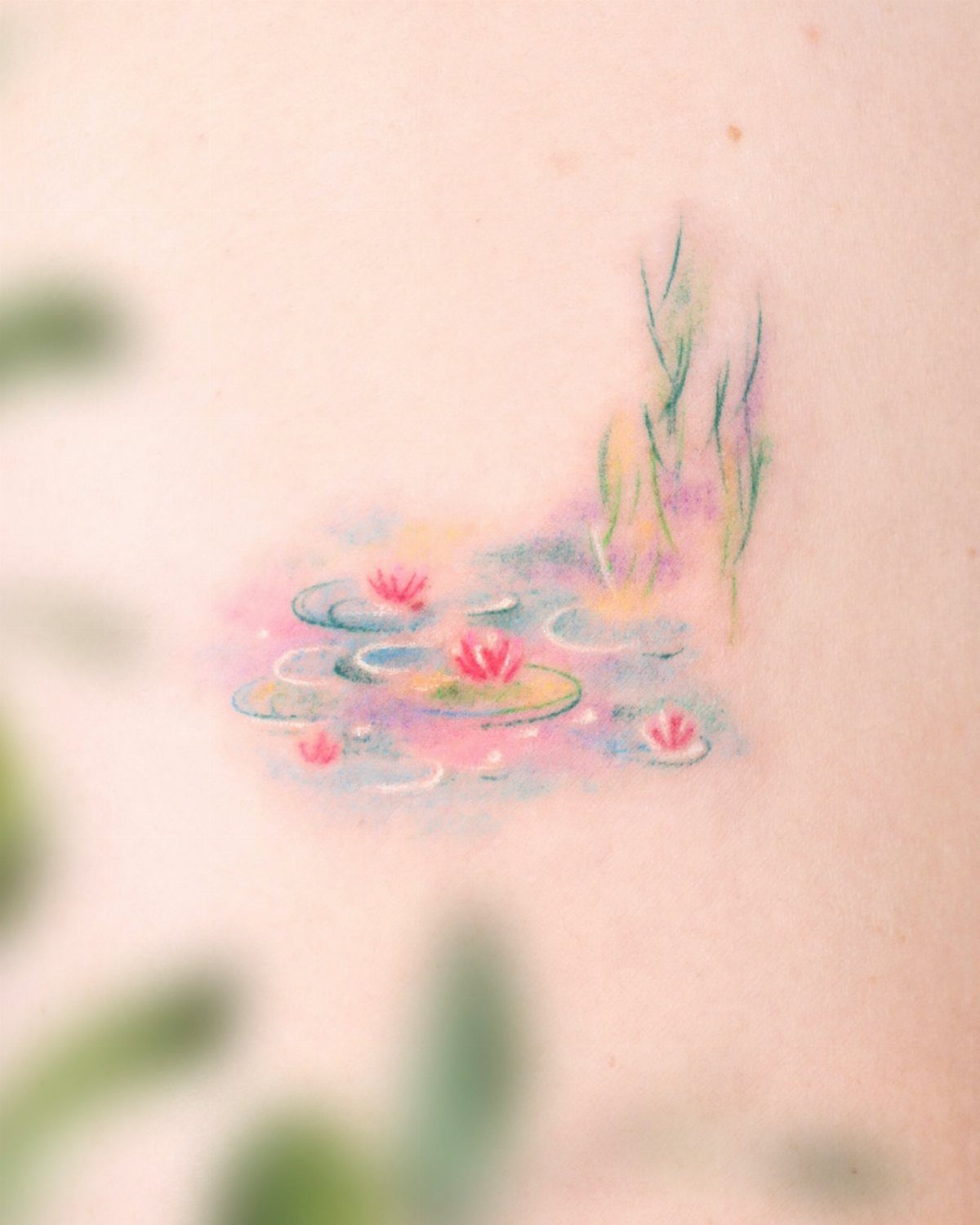
Watercolor pink stays readable longer on fair skin than on deeper tones, where the pale wash can heal to a muddy scar.
The pond scene with pink water lilies, green lily pads, and tall reeds framed by blurred green leaves keeps the composition busy enough that the watercolor bleed, which can ruin larger pieces, here has room to settle and soften without losing the subject.
A small bloom like this takes a single sitting, though watercolor demands patience from both the artist and the skin.
Touch-ups are the catch with watercolor: they need them more often than black ink, and not every shop includes the first one in the price.


【Delicate Nature Design】This set combines delicate hummingbirds with graceful lily flowers, creating a balanced composition inspired by nature and motion. The fine line details give the designs a light, airy feel, while the realistic style adds depth and softness. Perfect for arms and waist placement, these tattoos express beauty, freedom, and gentle strength.

3. Fine Line Blooming Water Lilies Tattoo
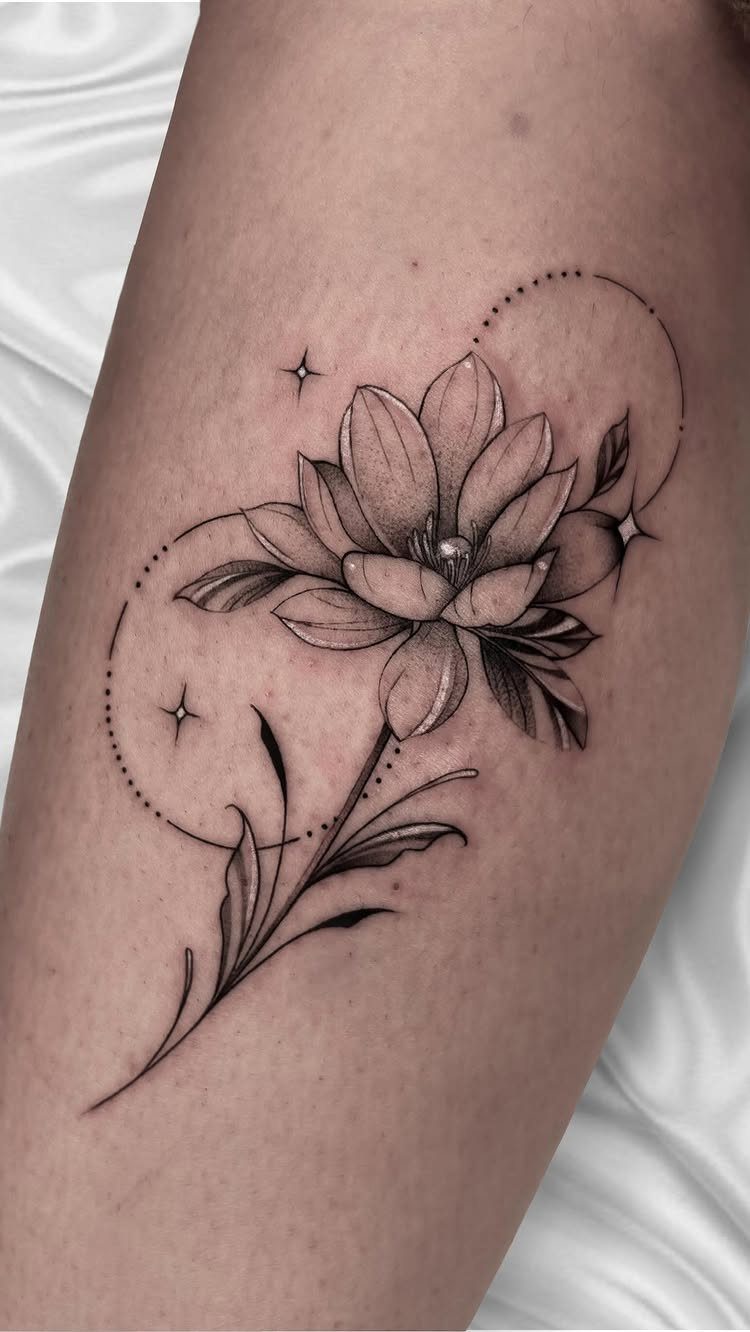
Fine line black ink outlines of water lilies, leaves, and small buds on slender stems suit someone adding to a collection rather than starting one.
The dotted circular accents visible here need a steady hand; they read as celestial only if the spacing stays consistent, and a single rushed pass breaks the illusion.
This style works best on limbs that see moderate sun. The thin lines blur faster on hands or feet, where I have watched relatively fresh tattoos turn to soft gray smudges.

- Easy Application Cut & remove clear protective film. Trim tattoo to desired size if needed, peel off transparent adhesive‑side film and expose sticky surface. Place tattoo face‑down on clean, oil‑free dry skin, press firmly. Fully soak paper backing, apply steady pressure for 30‑40 seconds to activate adhesive. Slowly peel off backing smoothly. Smooth edges lightly; your tattoo is ready.

FLOWER TEMPORARY TATTOOS--the fake temporary tattoos has 10sheets different rose flower lily patterns. you can used these tattoos for arms, face,shoulders, back,chest,legs,neck and worn any where on your body show your personality

Apply in 30 seconds with just water. No heat, no tools. Simply press a wet cloth on the back of the tattoo, wait half a minute, and peel off the paper. Instant floral art for any outfit or occasion.
4. Botanical Illustration with Swirling Vines
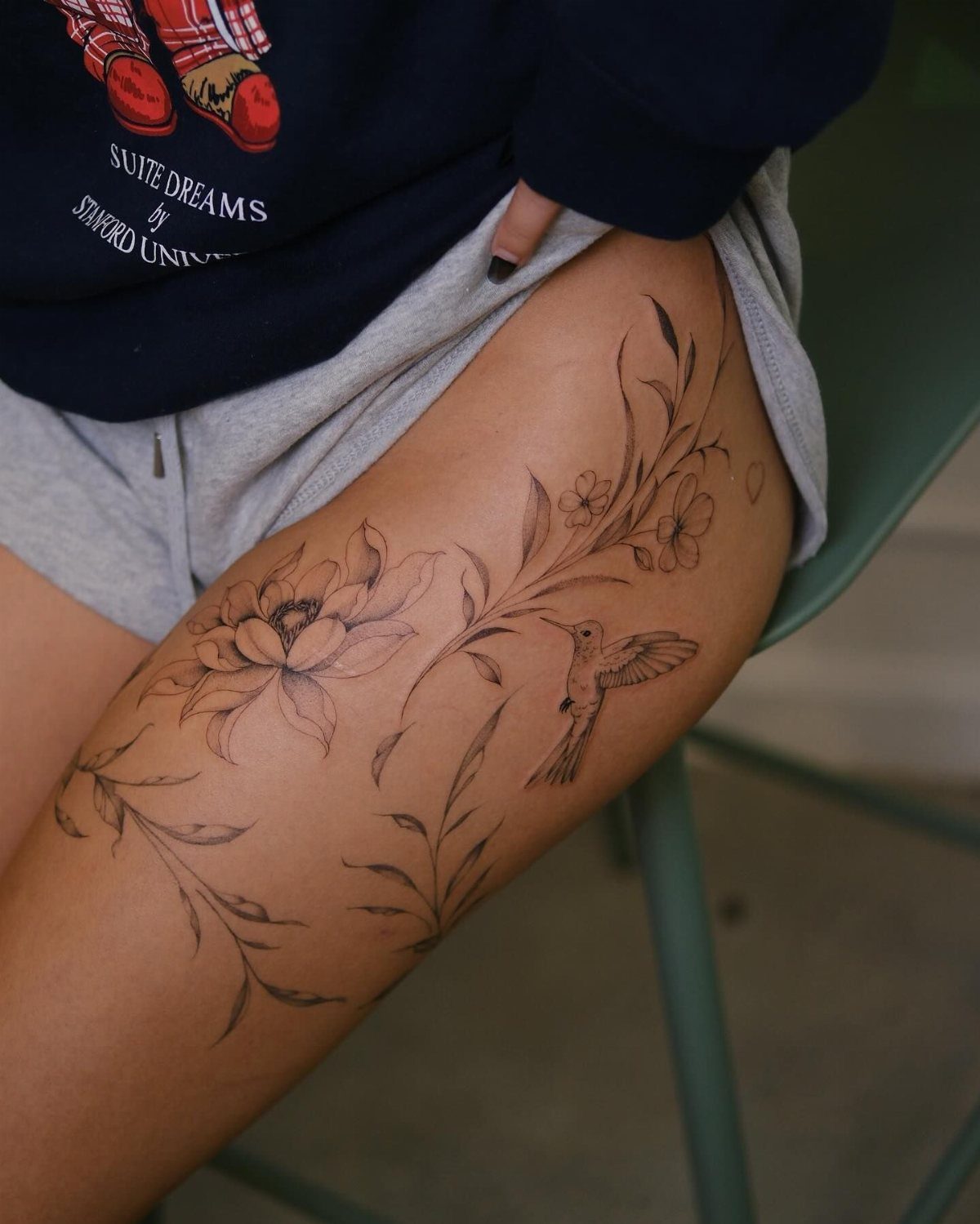
A central blooming water lily ringed by vines and a hummingbird fills thigh space without looking scattered. The botanical approach means every element connects; nothing floats alone.
The hummingbird here is a choice that already feels tied to a specific Pinterest era, still pretty but dated.
I would keep the vines and swap the bird for more leaves if I wanted this to read fresh years from now.
Black ink botanical work of this density takes multiple sessions; plan for that in both budget and healing time.

Enchanting Garden Décor: Measures 5.9’’x5.9’’x8.3’’. Transform your outdoor space with the stunning mosaic bird feeder from Lily's Home, a true reflection of your sophisticated taste that adds a splash of vibrant artistry to your garden. Designed to captivate, the mosaic glass dances in the sunlight, creating a charming focal point; perfect for nature lovers and those seeking unique gifts to enhance their garden ambiance.


5. Blooming Flower with Geometric Lines
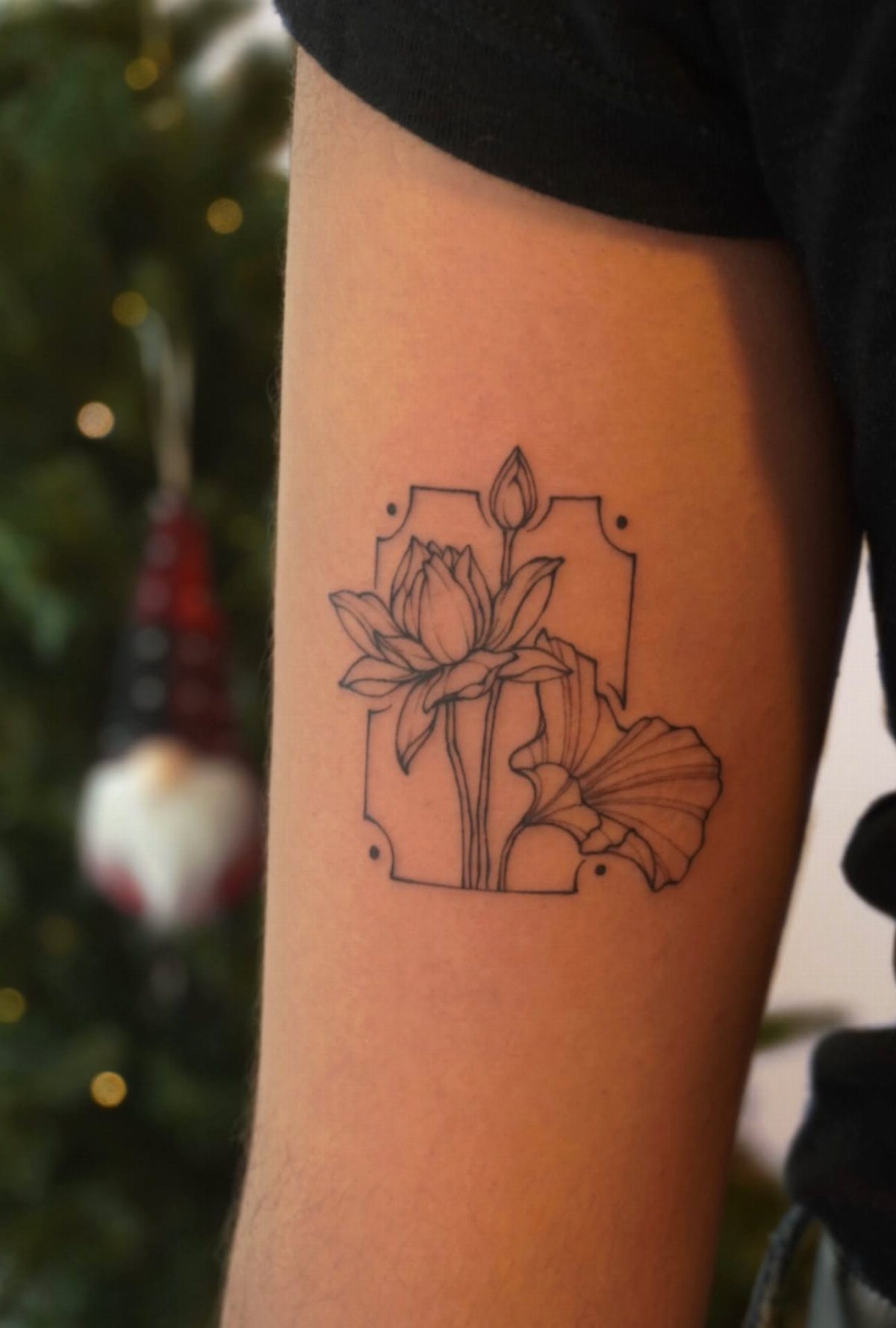
Geometric frames around organic subjects fail when the lines wander even slightly; the eye catches the error instantly. The diamond accents visible here add interest without competing, a balance that took me 2 consultations to find in my own piece.
Thin geometric lines need a specialist, not a generalist who lists "all styles" on Instagram. Ask who in the shop does the technical linework, and look at their healed results specifically.
The frame also limits placement: it reads as a badge, best on upper arm, chest, or calf where the geometry sits flat against the muscle.

Lotus Water Lily Stencil: You will get 1 pieces PET painting stencil of pond scene theme. Pattern elements include: lotus flower, lotus bud, lotus leaf, water pond, fish, dragonfly. A relaxed and tranquil nature scene, add an artistic touch to your home decor.

2Pcs Lily of the Valley Pattern Stencils: 2pcs various patterns can meet your different needs, well made and fun to create craft projects for families and friends, offers endless possibilities for transforming your home decor

Blooming Lily Pattern Stencils: Can meet your different needs, well made and fun to creat craft projects for families and friends, offers endless possibilities for transforming your home decor
6. Black and Grey Realism Landscape
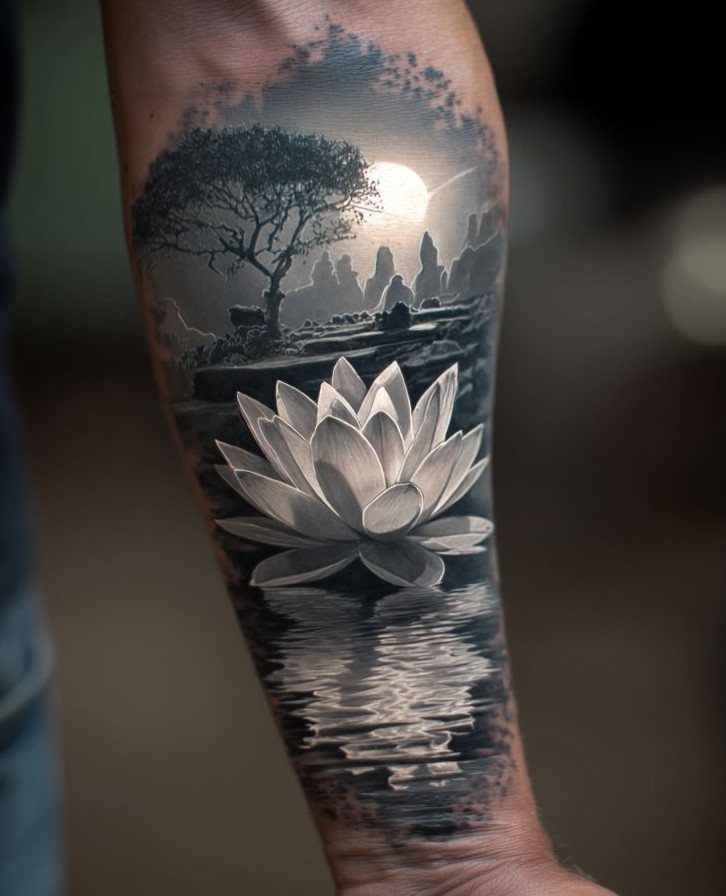
Black and grey realism on this scale demands a portfolio of landscapes, not just flowers.
The water reflections, silhouetted tree, and sun glow visible here require understanding how light sources layer in monochrome; an artist strong on petal texture alone will flatten the background to gray mud.
This much detail on a forearm takes a long session, sometimes split across 2 appointments. The cost reflects that, and so does aftercare: a healing sleeve this dense needs serious discipline, not the casual lotion-and-go of a small line piece.


Innovative Skin-Sync Technology: We don't just sit on the skin; we interact with it. By reacting organically with naturally occurring proteins in your skin's outermost layer (stratum corneum), our plant-based formula magically transforms from a transparent guide into a rich, ultra-realistic navy-black. It looks exactly like a healed, permanent tattoo—without the needles or depth.

7. Small Pink and Yellow Lily
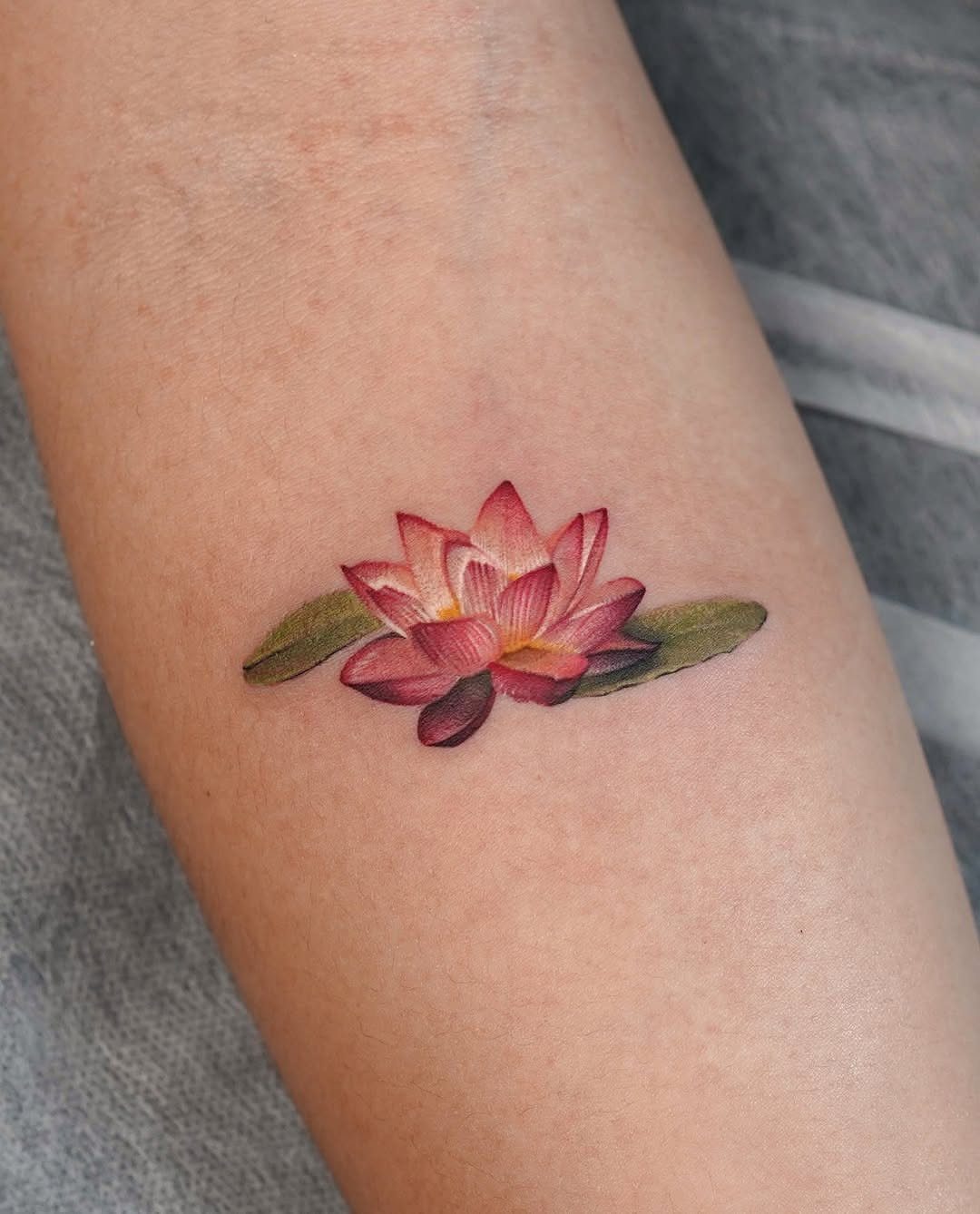
Pink and yellow on a small scale need saturation control; too much ink packed into a tight space heals thick and waxy.
The green leaves visible here frame the bloom without crowding it, a balance that keeps the tattoo readable from a few feet back.
Fine-line watercolor of this size suits the ankle or inner arm, where the skin sees less sun and the color stays truer.
A single bud and slender stem, like the variation I have seen from Alisha’s work, extends the composition vertically without adding width; that option works for someone who wants the flower to travel with the bone rather than sit static.
A piece this small takes under an hour, though the color layering adds setup time.
Bright yellows fade fastest of any pigment, so the trade for that pop of color is knowing a touch-up will be needed sooner than with other inks.

FLOWER TEMPORARY TATTOOS--the fake temporary tattoos has 10sheets different rose flower lily patterns. you can used these tattoos for arms, face,shoulders, back,chest,legs,neck and worn any where on your body show your personality

【Feminine Floral Design】These delicate lily tattoos are designed for subtle, meaningful self-expression. With fine lines and a natural matte finish, they blend seamlessly on the waist or arm. Perfect as a gift for May birthdays—when lilies bloom—or for anyone who loves elegant floral art. A beautiful reminder of purity and grace, artfully understated.

【UNIQUE AMAZING DESIGNS】Each Size is about 11.4 x 21 cm / 4.48 x 8.26 inch. Contains 8 sheets temporary tattoo paper stickers which are printed with non-toxic ink.
Placement Ideas
The ankle works for a single small water lily because the bone sits close to the surface and gives the thin stem something to anchor against.
A fine-line piece there stays readable if you keep it above the sock line, though the skin on the inner ankle heals thicker than most spots and can swallow detail.
Shoulder placement suits a bloom that needs to open across a flat plane.
The cap of the shoulder carries color well; the front, where the skin stretches with arm movement, blurs faster. I would place a geometric frame on the outer shoulder rather than the front, letting the muscle hold the lines steady.
Thigh skin takes large botanical work without the distortion you get on a stomach or side.
A piece that wraps slightly onto the outer thigh reads from the front and the side both, which matters if the vines connect around the leg.
The lower back, what some still call the tramp stamp zone, has actually become interesting again for horizontal compositions.
A water lily with spreading roots fits the width there, though sitting during healing is a genuine problem and the skin stays irritated longer from chair pressure.
The ear is a placement I have seen attempted more than executed well. The cartilage curve fights any design with depth; a water lily flattened to that space reads as abstract petal shapes rather than a recognizable flower.
If you want something there, a single bud smaller than a dime is the only scale that holds up.

STUNNING Hummingbird Sunset WALL ART THAT TRANSFORMS ANY SPACE – Instantly elevate your home or garden with this beautifully detailed metal wall art. The precision-cut design creates captivating light-and-shadow effects, bringing color, warmth, and nature-inspired charm to any indoor or outdoor space.

Maintenance: Maintains its vibrant color and original shape even with frequent washing; easy to clean and store without compromising quality
Maintenance: Maintains its vibrant color and original shape even with frequent washing; easy to clean and store without compromising quality
Symbolism of Water Lily Tattoos
A water lily closes at night and opens with morning light, which is why the flower got tied to rebirth long before tattoos existed.
That cycle matters most to people who have actually lived through a marked change, recovery, or a period they needed to survive.
Larkspur and water lily both get assigned to the month, which means the design sometimes carries a birthday meaning and sometimes does not, depending on who you ask.
If you were born in July and want the reference clear, adding the month as text or numeral removes doubt, though text ages worse than image.
Koi paired with water lilies in Japanese work carry their own ladder of meaning: upstream swimming for perseverance, color variations for family members, number for children.
The combination is not random decoration; the fish and flower share an ecosystem and the symbolism layers. If you add a koi, know which direction it faces.
Downstream means you have already achieved the struggle; upstream means you are still in it. Artists have placed them wrong for clients who did not know to ask.

Charming & Fun Design:Add a delightful touch to your crafts and décor! This listing includes 1 reusable stencil featuring an adorable design—perfect for adding personality to any project.

What's in Package: You will receive 10 pieces of large painting stencils for this flower stencils set. There are 6 different flower stencils, got lotus, iris, lily and cosmos flower patterns design, and 4 for stems and leaves patterns

Innovative Skin-Sync Technology: We don't just sit on the skin; we interact with it. By reacting organically with naturally occurring proteins in your skin's outermost layer (stratum corneum), our plant-based formula magically transforms from a transparent guide into a rich, ultra-realistic navy-black. It looks exactly like a healed, permanent tattoo—without the needles or depth.
Tattoo Styles
Fine line and fineline, which some shops spell as one word and some as two, describe the same approach: single-needle or tight-group work that keeps the weight of a hairline.
The style needs a specialist. A generalist who switches between bold traditional and fine line in the same week will have shaky days, and fine line does not forgive a shaky day.
Japanese sleeve work with water lilies is a different category entirely.
The flowers float on water that may contain koi, waves, or wind bars, all rendered in a limited palette of black, red, green, and the skin itself as negative space.
The commitment is years, not sittings, and the cost reflects that. A half sleeve of this density runs into the thousands, with touch-ups scheduled across the decade.
The stem becomes a banner or ribbon, the leaves simplify to green shapes, and the water itself disappears.
This reads bolder from distance and ages more predictably than botanical accuracy, which is why it persists in shops that have been open for decades.
Color choices in water lily work follow the flower’s actual range: white, pink, yellow, red, and the blue that only certain cultivars carry.
Blue pigment is also the hardest to source in a stable formulation; the bright cobalt in fresh work often settles to a grayed slate.
If you want blue, ask which brand the artist stocks, and look for healed photos specifically of that color in their portfolio.


ELEGANT LILY FLOWER MOTIF: Features blooming lilies intertwined with flowing ornamental vines and delicate shading. Advanced digital hand-drawn fine line tattoo ensures crisp lines and flawless gradient shading.

【Lily Flowers & Moon Elegance in One】This semi-permanent tattoo design beautifully combines a detailed lily, symbolizing purity and renewal, with a delicate crescent moon above, representing intuition and feminine energy. The fine lines and soft shading create a lifelike, elegant flow that follows your body’s natural curves—perfect for the forearm, thigh, or side. Ideal for the nature-inspired, spiritually-minded woman who values both beauty and meaning, it’s a wearable work of art for festivals, travel, or adding a touch of poetic grace to everyday style.
Frequently Asked Questions
What does a water lily tattoo mean?
A water lily tattoo carries the flower’s natural cycle of closing at night and reopening with morning light, which ties it to rebirth and survival through marked change.
That meaning hits different once you have actually fought through something, not just watched someone else do it. Pinterest often pairs it with larkspur for July birthdays, though that adds a secondary meaning some wearers want and others skip entirely.
What birth month is a water lily?
July. The water lily shares that month with larkspur, which is why you will see the 2 flowers paired in birth-month designs online.
A small "July" or "7" beside the bloom makes the birth-month link instant, though words blur faster than line work over the years.
Is water lily the same as lotus?
No. They look similar floating on water, but they are different plants with different botanical structures and different symbolic histories in tattoo work.
Lotus and water lily are different plants with their own symbolism; this page stays with water lily, since the two get mixed up often enough that your artist should know which one you actually want.