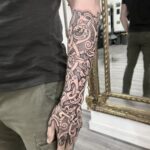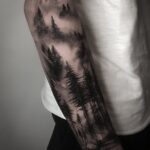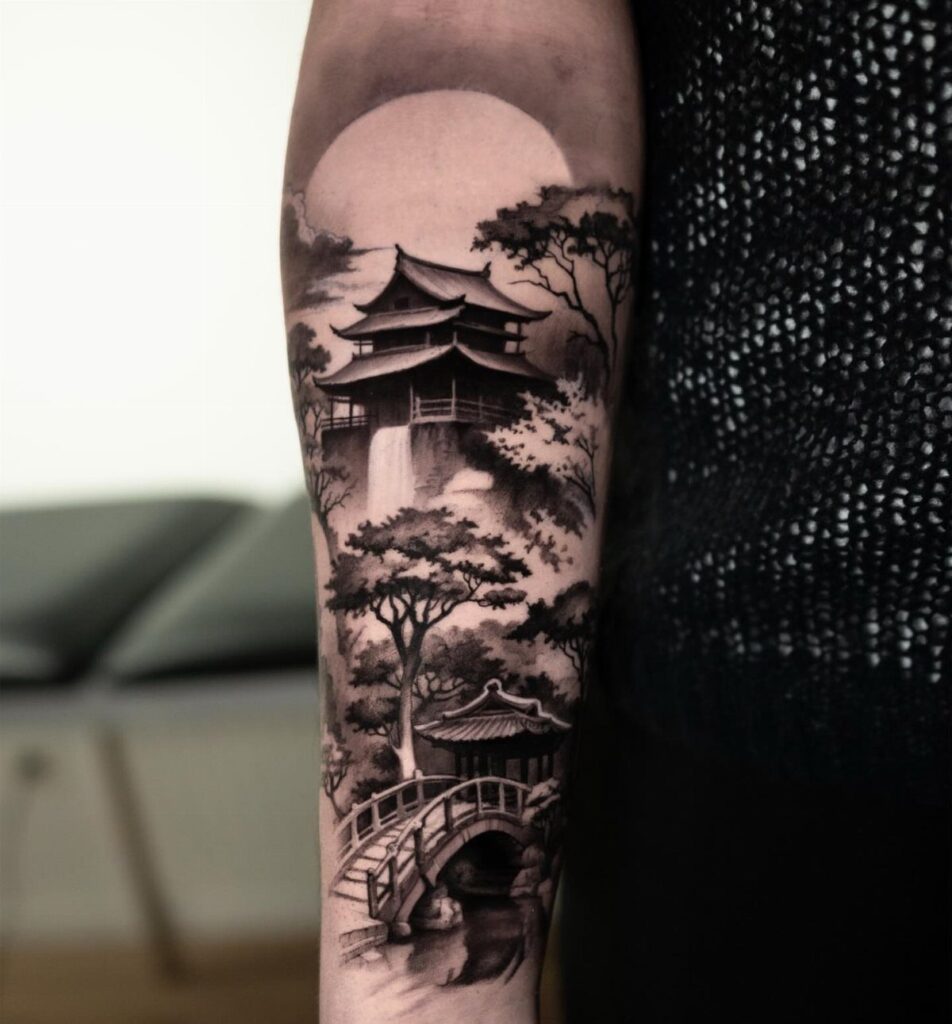
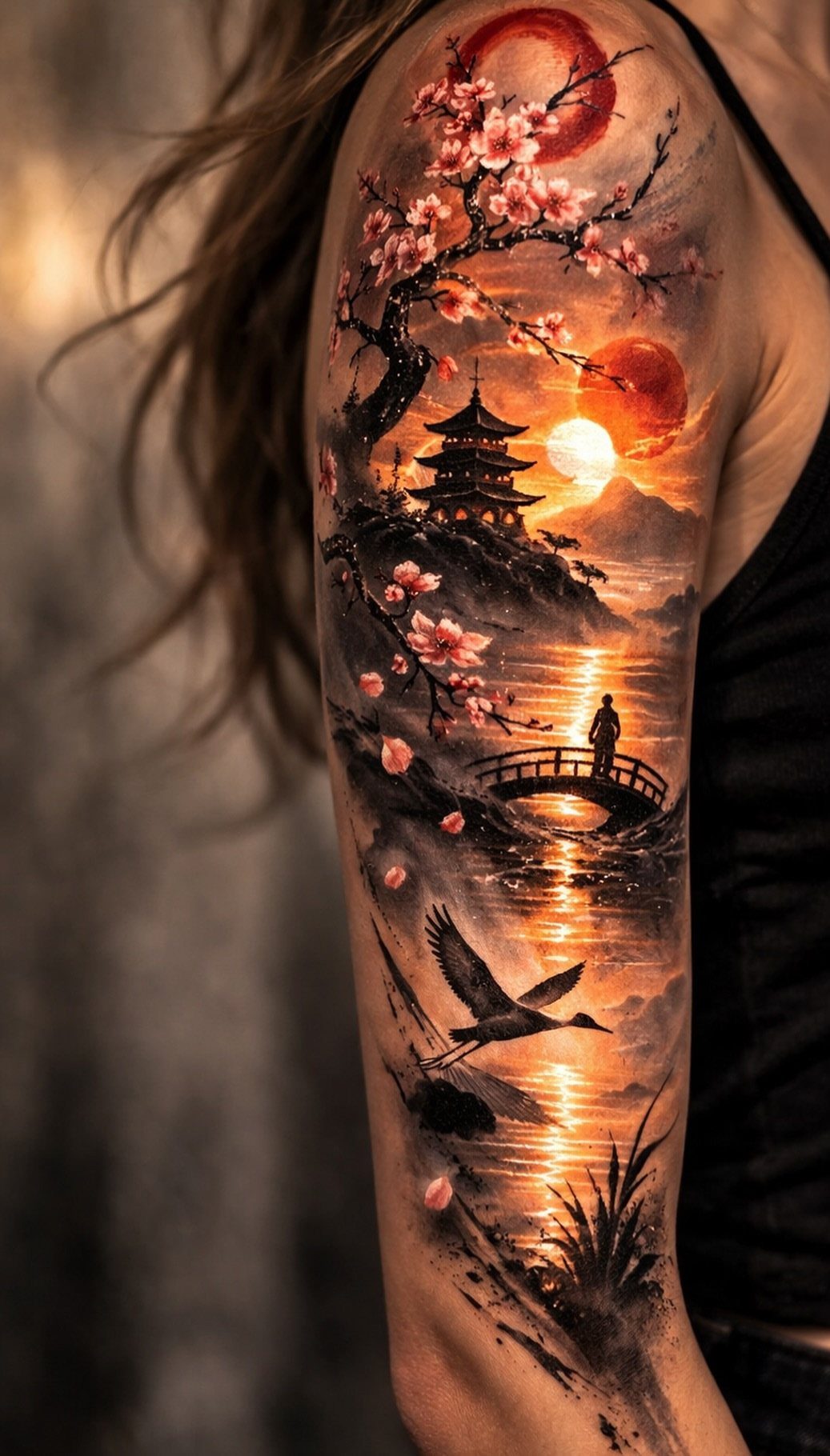
These 8 designs run from a single forearm pagoda to a full back panel with samurai and mist, and the right one depends on how much skin you are willing to give and how quiet you want the piece to stay.
The grey-wash suibokuga clouds alone need an artist who has practiced that specific technique; a traditional liner turns them to mud.
[link-whisper-related-posts]1. Pagoda and Mountain Scene
A pagoda against mountains reads as a journey, not a snapshot. The vertical composition fits a forearm or calf sleeve where the eye travels upward through tiers.
Black ink keeps the architectural lines sharp against softer mountain shading.
Snow caps on the peaks add contrast without needing color. Cherry blossoms, if you want them, work best as scattered accents rather than a full border; too many petals and the pagoda gets lost.
The stepping-stone motif I have seen paired with this works on a larger piece where the path can actually lead somewhere on your body. On a smaller scale, stick to the building and its backdrop.
Pain level sits moderate. The straight lines of the pagoda roof demand a steady hand and a patient sitter.

24PCS Unique Henna Stencil Pack – This complete henna tattoo kit accessory set includes 24 sheets of reusable mehndi stencils (6.89" x 3.34"). Featuring exclusive designs like long arm bands, moon motifs, vine flowers, and large floral templates, it is ideal for creating DIY temporary skin art on wrists, arms, back, and full body.

【Package & Size】--This package contains 2pcs exclusive self-adhesive silk screen printing stencil, the size is about 220mm/8.66inch wide, 280mm/11.02inch long.

Package Comes with: you will receive 1 piece reusable painting stencil, which is A4 size 8.3 x 11.7 inches / 21 x 29.7 cm
2. Cherry Blossoms and Torii Gate
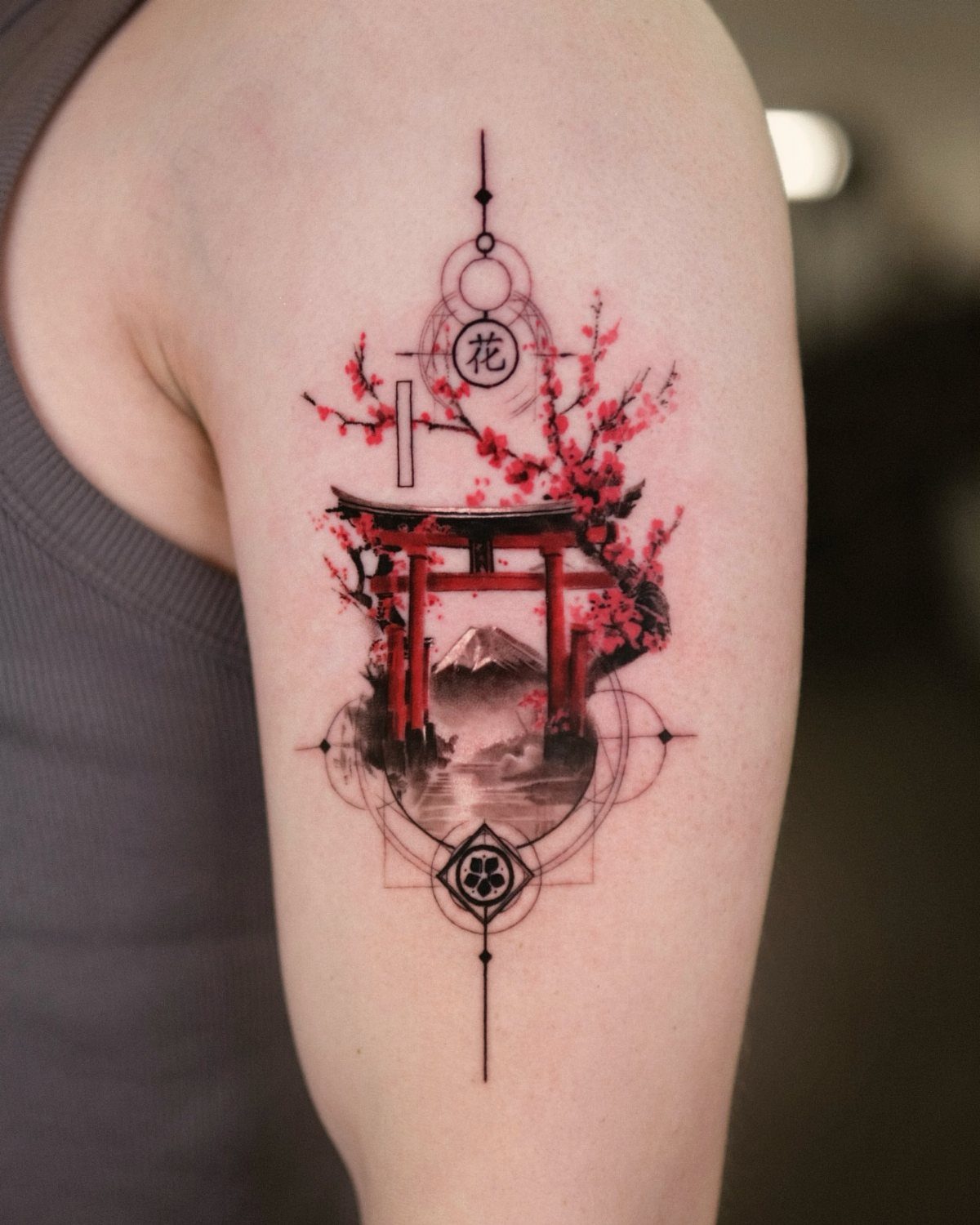
The torii gate frames whatever sits behind it, which makes it a natural choice if you want Mount Fuji or a distant pagoda to read as a view through a doorway.
The red ink holds up better than you might expect, though it will soften toward rust as the years pass.
Cherry blossoms in pink or left as black-grey shading change the whole mood. Pink reads seasonal and bright; grey reads timeless and pairs easier with existing blackwork.
The geometric line work some artists add around the gate works as a sleeve filler, but I would keep it sparse. Too much pattern and the gate stops looking like an entrance and starts looking like a sticker.
This one suits an upper arm or thigh where the arch of the gate can follow muscle shape.

Professional Tattoo Ink - Many of the most popular tattoo artists around the globe turn to World Famous' bold, beautiful tattoo ink, tattoo supplies & tattoo kits to deliver a flawless work of art.

VERSATILE TATTOO INK COLOR SET: Our vinrant tattoo ink color set features four shades of gray tattoo ink—Light, Light Medium, Medium Dark, and Dark. Ideal for blending and mixing, this professional tattoo ink simplifies your color palette, saving time for artists.

Professional Tattoo Ink - Many of the most popular tattoo artists around the globe turn to World Famous' bold, beautiful tattoo ink, tattoo supplies & tattoo kits to deliver a flawless work of art.
3. Mount Fuji Tattoo
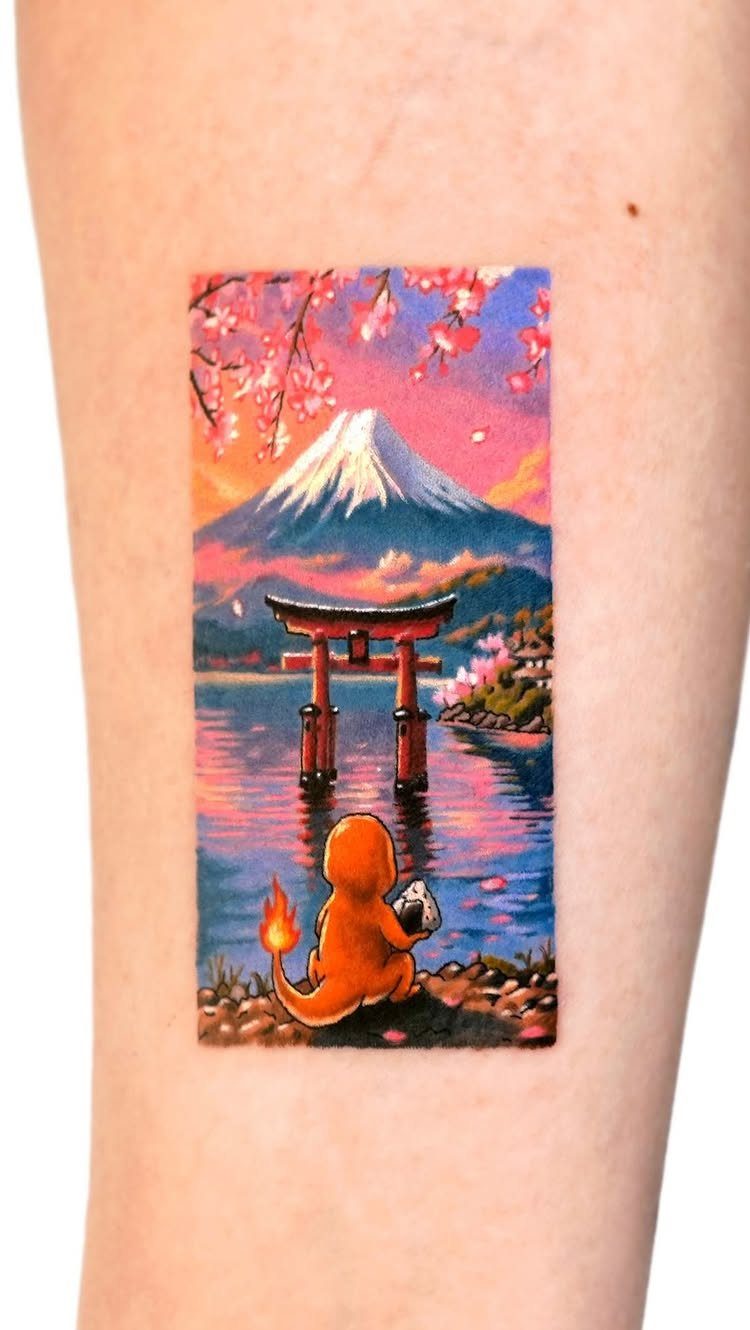
The mountain is the easiest Japanese landscape element for an artist to render recognizably, which also makes it the easiest to botch.
A too-symmetrical cone looks like a grade-school drawing. The best versions I have seen let the summit break slightly left or right of center and use the surrounding elements, pagoda or torii gate, to unbalance it deliberately.
Black and grey ink handles the snowline through negative space; the skin does the work. Color pieces like the Charmander example prove you can subvert the whole tradition, but the mountain itself still needs to read correctly first.
Lake reflections double the vertical space needed. Plan for enough vertical space or skip the water.

⯁ 400+ Reusable Henna Stencils: Get 24 sheets of high-quality, self-adhesive hollow templates featuring over 400 unique patterns. These temporary tattoo stencils allow you to create stunning body art including mandalas, butterflies, and dragons. Perfect for practicing techniques without permanence

Oriental Garden: This silk-screen stencil faithfully reproduces classic Chinoiserie garden motifs, featuring pavilions, arched stone bridges, weeping willows and figures in boats. Its fluid, delicate lines perfectly capture the refined elegance of Eastern aesthetics, making it an ideal choice for creating a vintage, understated luxury home décor style

This product is NOT dishwasher safe. SOAK IN WARM WATER WITH DISH SOAP.
4. Samurai and Landscape
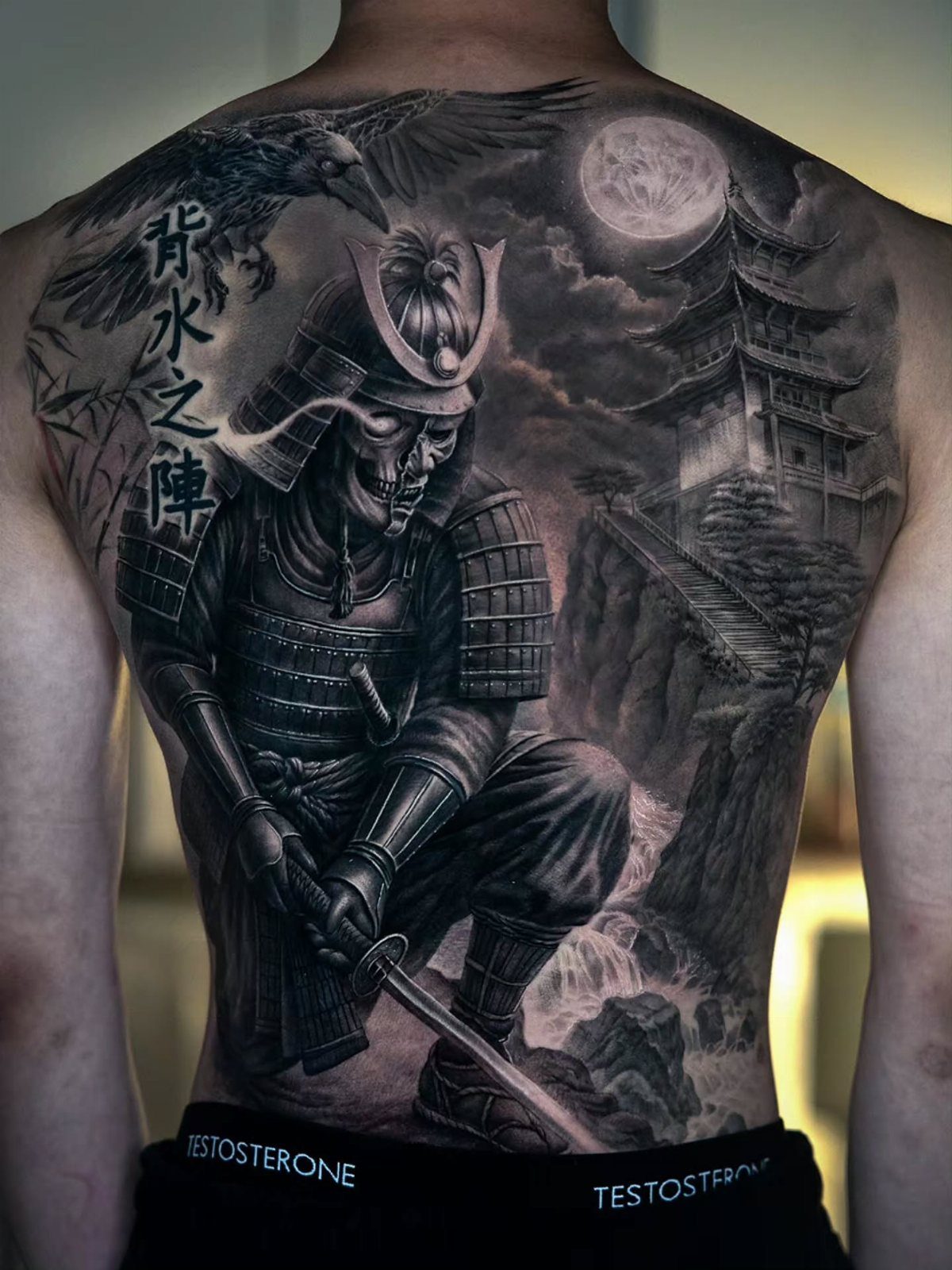
The figure dominates by default, so the landscape has to earn its place. A skeletal samurai, like the back piece shows, solves this by letting the armor become architecture itself; the ribs and pagoda roof share a visual rhythm.
For a living samurai in color or grey, the landscape recedes through atmospheric perspective: darker and more detailed near the figure, softer toward the edges.
The katana angle matters more than most clients think. Pointed upward, the blade breaks the composition; horizontal, it leads the eye back into the scene.
Vertical composition fits a back panel or outer thigh. The armor detail takes time for a full figure with background, so budget and sit accordingly.

Immerse yourself in the beauty of Japan with this captivating 'I Love Japan' design. Featuring a Torii gate surrounded by cherry blossoms, it's perfect for those who cherish Japanese culture.

SAFE FOR ALL SKIN - temporary tattoo which are printed with non-toxic ink, Your friends will think you had a new cherry blossom flower tattoo! beautiful cherry blossom tattoo temporary tattoos on 2 x transfer sheet 8 Inch x 6 Inch sheet size Great fun for adults and kid Hawaiian parties, cosplay, halloween, special events Also for testing to see if you like a real tattoo look like

👑[Instant Glamour, Zero Pain] Want the edgy look without the needle? Our realistic cherry blossom and bird temporary tattoos deliver stunning, salon-quality body art in seconds. Perfect for women and girls wanting to switch up their style effortlessly.
5. Traditional Japanese Landscape
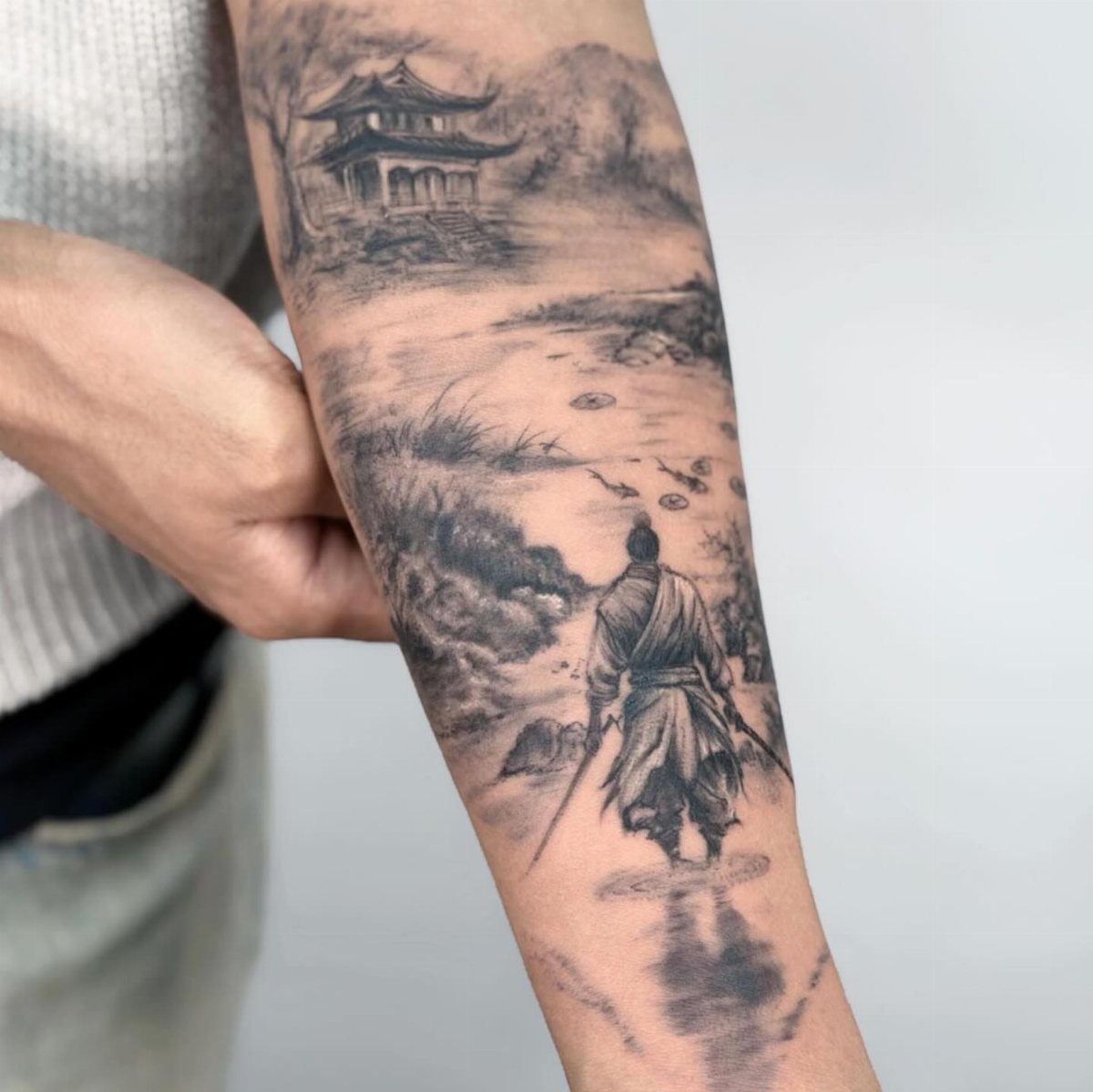
Misty mountains and swirling clouds live or die on the artist’s skill with grey wash. The forearm piece I looked at handles this through value contrast alone, no black outlines holding the forms together.
That technique, suibokuga adapted for skin, needs an artist who has practiced it specifically; a traditional liner will overwork the clouds into mud.
Stone bridges and waterfalls give the eye a path.
Without one, the scene drifts. Pine trees anchor the composition, usually placed low and left in the classic arrangement, though your body shape may rotate this.
The style suits someone already collecting Japanese pieces. As a first tattoo, the subtlety is lost on you until you have something bolder nearby to compare.

Innovative Skin-Sync Technology: We don't just sit on the skin; we interact with it. By reacting organically with naturally occurring proteins in your skin's outermost layer (stratum corneum), our plant-based formula magically transforms from a transparent guide into a rich, ultra-realistic navy-black. It looks exactly like a healed, permanent tattoo—without the needles or depth.

6 sheets body tattoo sticker as picture shows. Each sheets size about:21 x 16 cm / 8.27 x 6.3 inch.

6 sheets body tattoo sticker as picture shows. Each sheets size about:19 x 12 cm / 7.48 x 4.72 inch
6. Koi and Mountain Tattoo
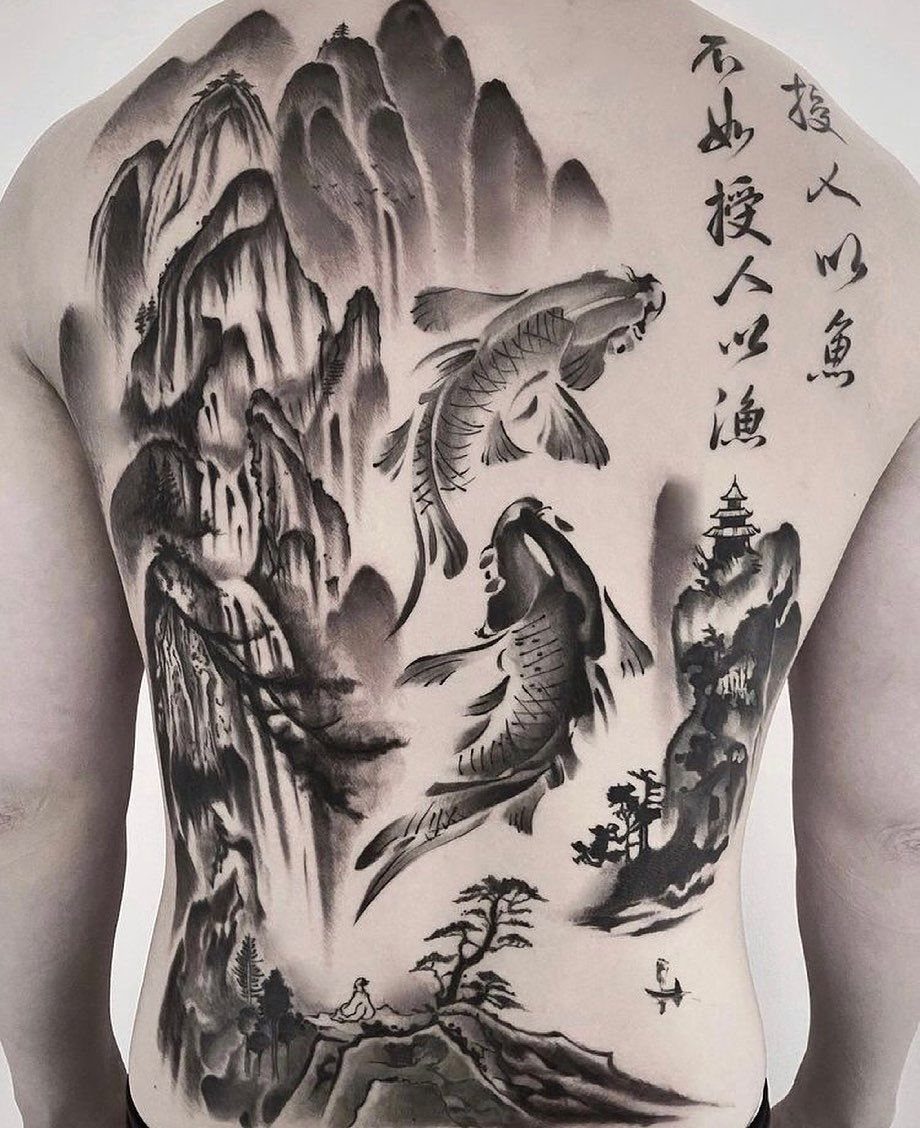
Koi carry their own meaning upstream, against current, transformation which can either reinforce the mountain as obstacle or compete with it.
The black-and-grey ink-wash version works because the fish are large enough to be the subject and the mountain small enough to be setting.
Ink-wash mountains behind literal koi in color create a style clash unless the artist bridges them through shared grey tones in the water. The waterfall does this naturally, carrying the same white highlight from fish fins into falling water.
Two koi read as a pair, a balance; one reads as struggle. Placement on the back gives the horizontal space for the swim, but a thigh or ribs can force the movement vertical, which changes the story to ascent.

【 575+ Fun Assorted Tattoo Stencils 】-The ChurlChurl tattoo stencils collection includes 575 high quality stencils with multiple themes. enjoy cute trendy tattoo stencil designs like butterflies, words, flowers, symbols, totem, Egypt style patterns and more.


2 Pc Landscape And Yard Design Template Set Uniquely Designed With Exceptional Accuracy
7. River Landscape with Cranes
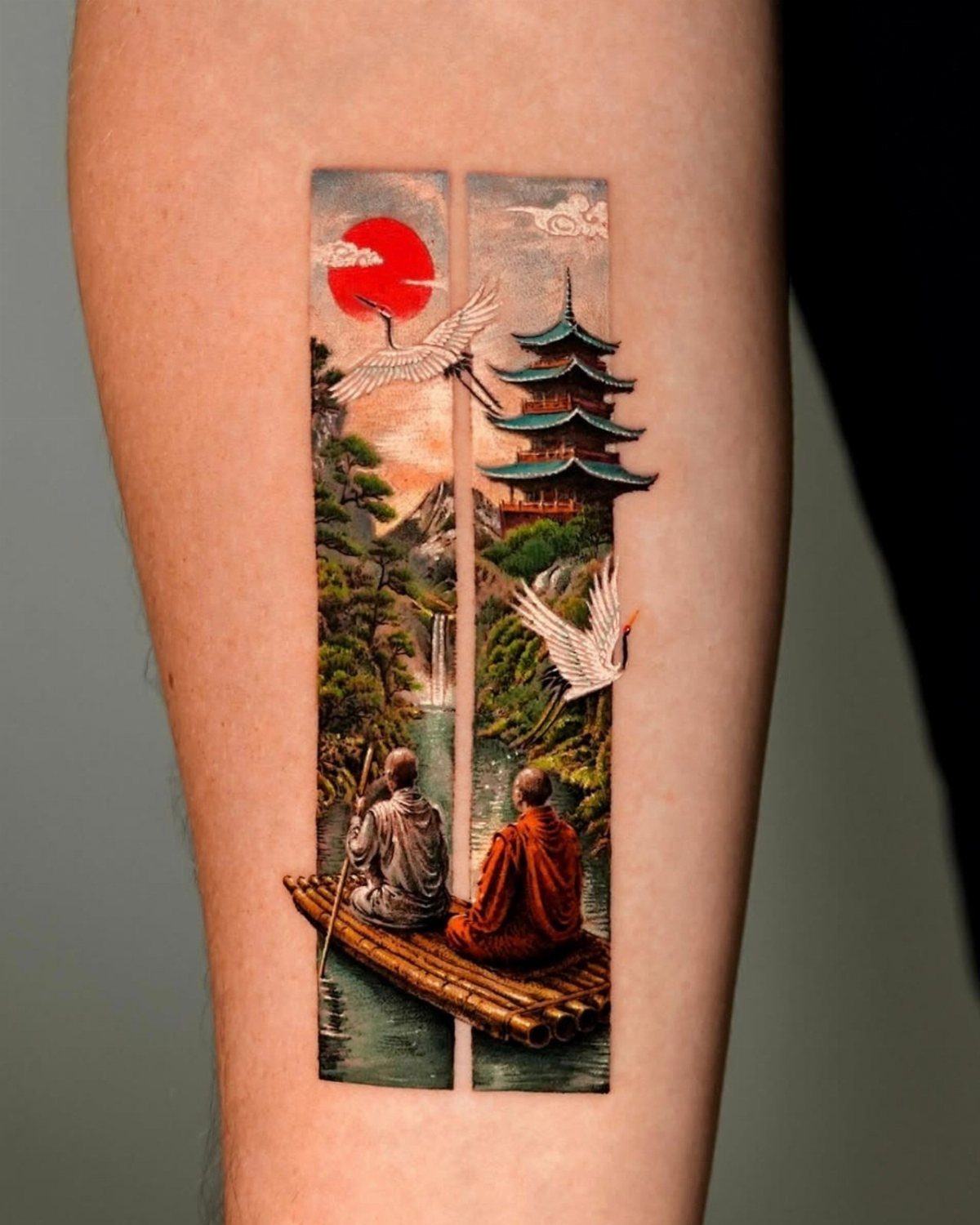
2 figures on a raft turns the landscape into a story someone is living through, not just viewing.
The red sun behind them reads as time of day, not decoration, and the cranes overhead mark the scene as Japanese without needing a single character of text.
The vertical arm placement works because the river flows with the limb, not across it.
Waterfall at top, raft low, the eye moves downward like current. White cranes need clean skin to stay visible; on darker or heavily tattooed arms, swap them for herons in black ink.
Keep the human figures small.
Large enough to read as people, small enough that the landscape still dominates. The raft’s wood grain is where an artist shows off, or where an impatient one wastes an hour you’ll pay for.

Achieve Artistic Precision: Xtreme Tattoo Ink Whitewashes provide the perfect tools to add depth, dimension, and stunning highlights to your tattoo designs, helping you achieve professional precision.

Professional Tattoo Ink - Many of the most popular tattoo artists around the globe turn to World Famous' bold, beautiful tattoo ink, tattoo supplies & tattoo kits to deliver a flawless work of art.

VIVID COLOR AND DIMENSION - Originally formulated in Japan, Kuro Sumi tattoo inks give your tattoos life and dimension. The molecular structure of our ink provides long lasting vivid color.
8. Mountain Lake and Pine Trees
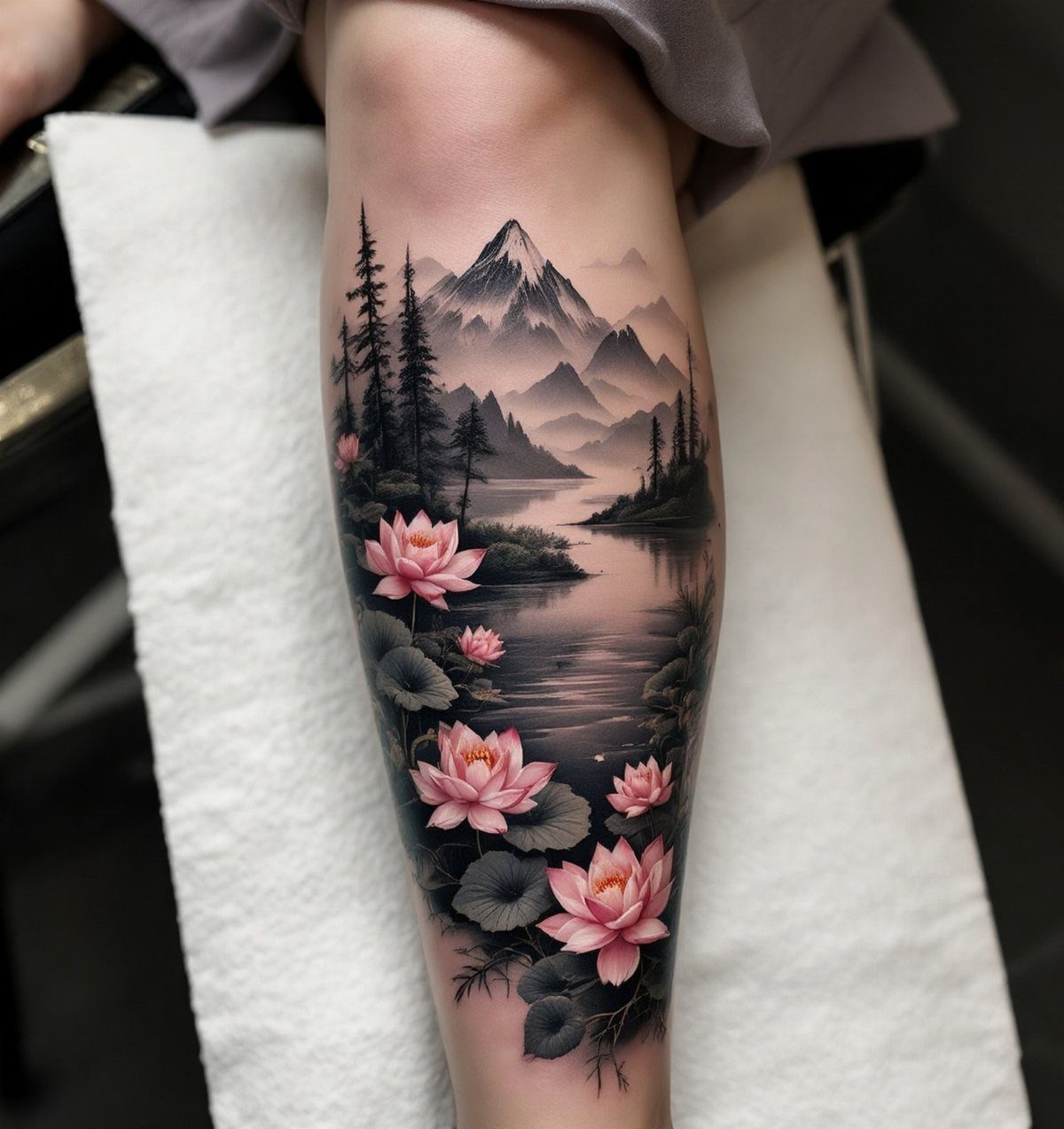
A lake surface gives you mirror symmetry without demanding it be perfect; ripples break the reflection naturally and hide any slight asymmetry in the mountain shape.
The lotus in pink, if you choose color, sits where the composition needs weight, not scattered like afterthoughts.
Black and grey pine needles hold detail longer than color flowers, so the trees carry the piece as the lotus softens.
On a lower leg, the mountain peak can sit at the calf’s widest point, with the lake wrapping toward the ankle.
A mountain lake with pine trees sits naturally across the upper back or chest, where the water settles low and the peaks rise toward the collarbone.
The calm water needs contrast against something textured: rough bark, jagged rock, mist rendered through negative space.
Without that tension, the whole thing goes flat. A small hut or distant boat, borrowed from other versions, gives scale but is not required; the empty lake is its own statement.

142+ Nature-Inspired Tattoos Stencil Designs in 12 Sheets: This temporay tattoo template set features over 142 unique, delicate designs centered on enchanting botanical and natural elements. Discover a vast collection of flowers (daisies, roses, sunflowers, lavender), intricate leaves, winding stems, complete bouquets, elegant wreaths, crowns, bees, and butterflies. Perfect for creating floral temporary tattoos, henna-inspired patterns, and nature-themed body art.

Unique Design: The painting template is designed with oriental theme shape patterns, including patterns of pagodas, cranes, clouds, and trees, which are vivid and cute.

Stencil Material: mylar plastic
Common Japanese Landscape Styles
The ukiyo-e woodblock print gives bold outlines, flat color areas, and the crisp silhouette of Mount Fuji against a graded sky.
The suibokuga ink wash painting drops the outlines entirely and builds mountains from tone alone, mist from negative space, water from a single pale grey pass.
Most tattoos on American skin lean toward the print tradition because the black outlines hold definition as the ink ages. Grey wash in a Japanese landscape is a specialty, not a side skill.
The gradation from solid black to empty skin has to read as mist, distance, and weather, and an artist who only does portraits or realism usually misses that.
Ask to see healed photos at 2 years minimum. The soft forms blur faster than lined work if the value range is too narrow.
Circular compositions borrow from tsuba guard designs and suit shoulders or knees where the body curves.
Vertical scroll formats fit forearms and ribs. The format choice changes which elements the artist can include; a circle forces economy, a scroll allows narrative sequence.

PACKAGE CONTENTS: Set of 30 sheets featuring diverse pink cherry blossom and floral designs, including wreaths, petals, and various flower arrangements

[Semi-Permanent, Realistic Tattoos] INKARTLINK semi-permanent tattoos are lifelike, durable, waterproof, and sweat-resistant, lasting 7–14 days and gradually fading as the skin’s outer layer sheds. They’re perfect for everyday wear, events, or themed occasions. From the beach to the office, they stay vibrant, allowing you to effortlessly showcase your body art in any setting.

Iconic Japanese Scene: This intricate metal wall art captures the essence of Japan with a harmonious silhouette of Mount Fuji, a traditional Torii gate, and a blooming cherry blossom tree. A serene and symbolic piece of authentic Japanese wall art for your home.
Tattoo Placement
The back panel remains the classic placement for a full Japanese landscape because the flat surface lets the artist build depth without the distortion muscle movement causes.
A back piece also ages evenly; sun exposure, which fades ink fastest, hits the back less than arms or hands in most daily life.
Forearms work for vertical compositions but the inner face sees more rubbing against desks, dogs, and denim.
The outer forearm preserves detail longer. Calf sleeves carry the same vertical logic with less daily abrasion, though pant legs can catch on fresh work.
Upper arms and thighs let the design wrap slightly around the limb, which adds a three-dimensional quality a flat back cannot match. A sleeve or back piece moves with the body, so no one ever sees it all at once.
The design has to work in fragments and still hold together when the full shape is finally visible in a mirror or a photograph.
Ribs and sides hurt more and stretch with breathing and weight change.
A landscape there should avoid fine detail near the floating ribs where skin shifts most. Stomachs are similar but worse; most artists will steer you away unless the design is bold enough to absorb future distortion.

Innovative Skin-Sync Technology: We don't just sit on the skin; we interact with it. By reacting organically with naturally occurring proteins in your skin's outermost layer (stratum corneum), our plant-based formula magically transforms from a transparent guide into a rich, ultra-realistic navy-black. It looks exactly like a healed, permanent tattoo—without the needles or depth.

JAPANESE TRADITION: Made from top-secret recipes handed down through generations of Japanese tattoo artists, Kuro Sumi tattoo ink gives your tattoos life and dimension

FUN TATTOOS - Enjoy this fun sheet of temporary tattoos that can be applied on skin or used as a waterslide decal on a variety of surfaces. Temporary tattoos are great for party favors, events, costumes and dress-up, permanent tattoo testing or just for fun.
Color Schemes
The sumi ink aesthetic lets the artist build atmosphere through value alone, and the work ages into a softer version of itself rather than into color mud.
Red enters through the torii gate, the sun, or accent details. It is the single color most likely to hold its identity over decades; older Japanese tattoos often read as black and red even when other pigments were originally present.
The rust shift is real but gradual, and many collectors prefer the weathered tone.
Teal and blue appear in koi and water pieces, borrowed from the nishiki-e full-color print tradition.
These need more frequent touchup than black or red, especially where the blue is light. Pale colors in a landscape tattoo are the first to go.
A deep navy or forest green holds its place in the design; a light sky blue or soft lavender tends to drop back into the grey wash around it as the years pass.
Peony red is a reliable choice for Japanese landscape tattoos because it photographs well fresh and fades to a vague warmth that no longer reads as flower.
If you want the blossom reference without the maintenance, grey-wash petals with white highlight are the compromise most long-term collectors wish they had chosen.
Frequently Asked Questions
What are Japan’s views on tattoos?
Japan’s relationship with tattoos remains complicated, with body art still tied to Yakuza associations in many public spaces.
Onsen baths, gyms, and some beaches may refuse entry to visibly tattooed visitors, though younger generations and urban areas have relaxed this stance.
In Japan the stigma sits on the wearer, not the image; a crane or pagoda or Fuji itself carries no criminal weight, though the person wearing it may still face a locked gym door or a pulled rental application.
Which tattoo is lucky for men?
Koi fish rank among the most luck-linked Japanese motifs, representing perseverance upstream and transformation through struggle.
A koi swimming upstream through a mountain stream reads as perseverance made visible, and that pairing lands often on ribs or thighs where the current can carry the full length of the body.
A single koi reads as individual struggle; two suggest balance and partnership, a distinction that matters more in Japanese tradition than in Western copying of it.
What are some common Japanese landscape styles?
Ukiyo-e woodblock prints supply bold outlines and flat color areas, the style most American artists default to because those black borders hold definition as ink ages.
What does a Yakuza tattoo look like?
Yakuza ink runs to full bodysuits, hand-poked irezumi packed with symbols that mark belonging; the partial landscapes here share some of the same motifs but not the same purpose or scale.
The motifs overlap, dragons, koi, cherry blossoms, but the scale and intent differ entirely. A pagoda on your forearm or Mount Fuji on your calf carries none of that signaling; the public conflation is the problem, not the design itself.