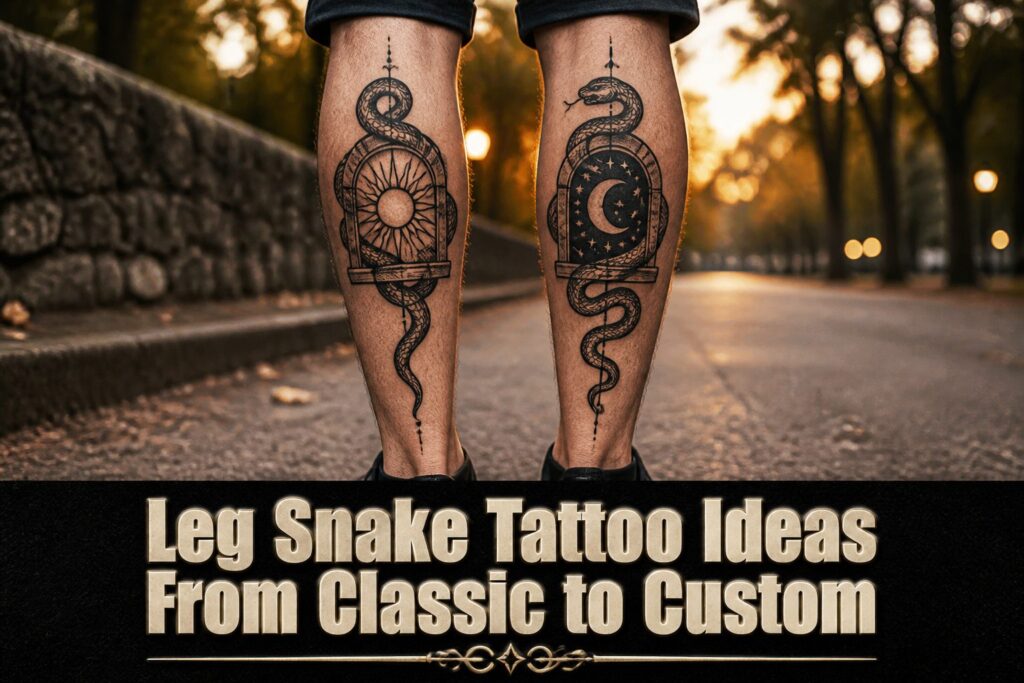
The Both Leg Portkey Snake wins for anyone who wants their tattoo to tell a story across both calves, with the snake threading through a sun window on one leg and a moon window on the other so the body itself becomes a doorway.
Skip it if you cannot commit to matching placement measured from the floor, not eyeballed freehand, since the windows must read as a pair when you stand straight.
The black-heavy linework ages clean, though the star dots around that crescent moon will want touch-ups sooner than the bold sun discs.
[link-whisper-related-posts]1. Both Leg Portkey Snake
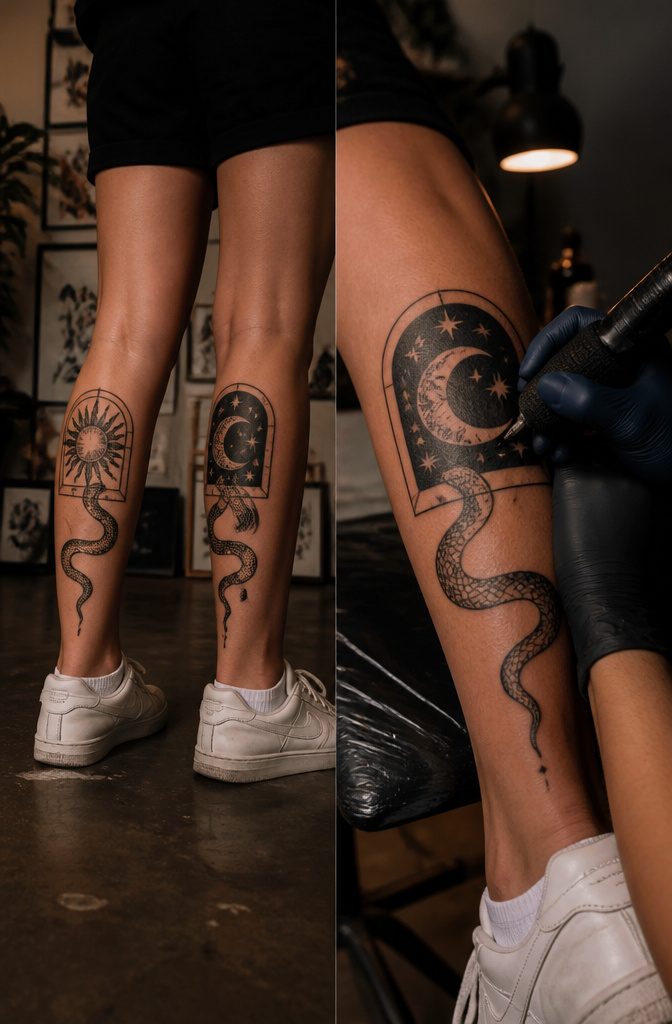
A snake threading through two windows on opposite legs turns the body itself into a doorway.
The window on one calf frames a sun done in bold black with clouds underneath; the other leg holds a crescent moon in the same heavy linework, stars scattered around it.
The snake’s body splits so that its head enters through the morning scene and its tail exits through the night, or vice versa.
Leg snake tattoos on both sides create storytelling across your legs in a way single pieces rarely manage.
The sun and moon pairing shifts the meaning from simple transformation to something more cyclical, morning and evening held in the same continuous motion.
Pain sits where the wrap crosses the shin bone near the ankle and rises toward the back of the knee on either leg.
The black-heavy approach keeps aging clean, though the fine star dots around the moon will want touch-ups earlier than the bold sun discs.
Placement needs thought on height: the windows should read as a matched pair when you stand straight, which means measuring from the floor or a fixed body landmark like the back of the knee, not eyeballing it freehand.
This design scales to shoulders too if you ever want to echo the motif upward, but on the legs it gets the full narrative space to breathe.

SIZE - 4 sheets large gold sun moon star temporary tattoos with beautiful metallic designs, original brand of Briyhose fake tattoos for adults women girl, size is 8.27 * 5.83 inch (21 * 14.8cm) 4 Sheets tatoos kit, used for wrist, arms, half sleeves, forearm, shoulder, back, neck, hands, finger, ear, legs, thigh and any other part of your body skin.
Thin, flexible Mylar stencils perfect for face and body painting

【48H Natural Color Development | Realistic Boho Tiny Sun Moon Star Snake Tattoo】This semi-permanent tattoo features realistic boho tiny sun moon star snake patterns. It looks silver at first, darkening naturally to a rich tone in 48 hours. Avoid sensitive skin like the face; cover with clothing while sleeping to prevent transfer. Perfect for back, thigh, arms and wrists, suited for adult men and women who love subtle lifelike body art
2. Tribal Snake With Throne
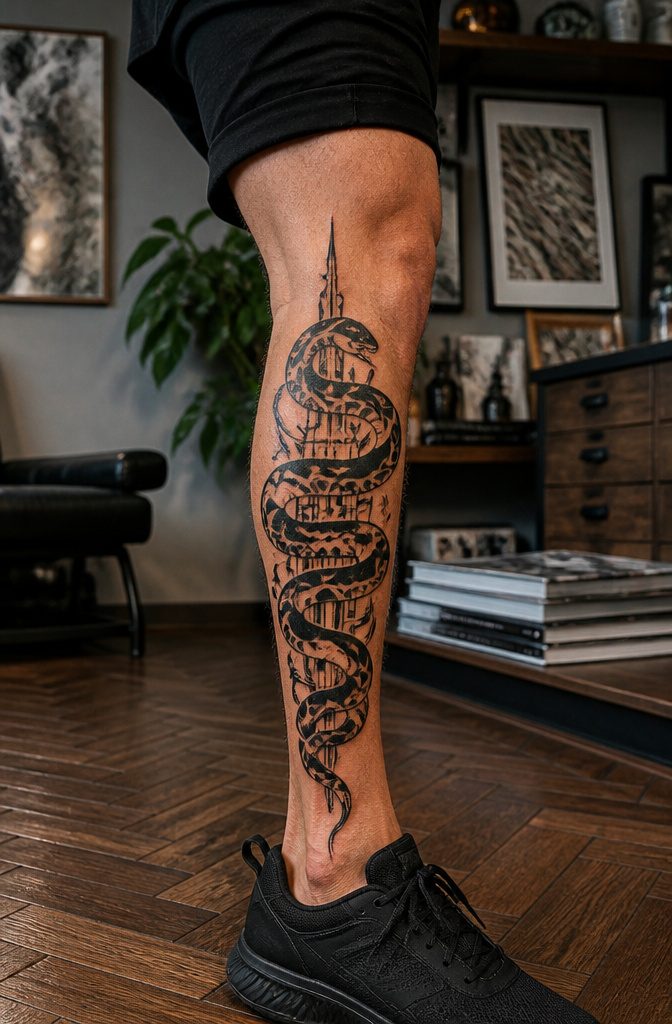
Tribal linework lives or dies on how the leg moves. Thick black bands that read solid on paper can distort when the quadriceps flex or the knee bends, turning a deliberate curve into something that looks stretched or pinched.
The dragon-like snake coiled around a throne depends on that architecture staying intact; the throne’s vertical lines and the snake’s wrapping form need to read as a single locked image, not two shapes sliding past each other.
The absence of color and shading keeps the design legible from a distance, but the back of the calf is the safer placement here, not the thigh or the knee itself.
The calf’s flatter plane and more predictable stretch pattern let the thick lines hold their weight.
Someone who wants the throne centered on the outer thigh will fight more migration over time, especially if they train legs regularly or carry weight that shifts the muscle underneath.
Skip this if you need fine detail to carry the meaning. The opened mouth and visage the design includes work because they are bold silhouettes, not because anyone will count fangs from across a room.
It suits someone who wants the symbol first and the story second, and who will commit to the blackwork maintenance that keeps those saturated fields from going patchy.

8 sheets body tattoo sticker as picture shows. Each sheets size about:21 x 12 cm / 8.27 x 4.72 inch

Eye-Catching Design: Enhance your Halloween look with our Gold Snake Scales Tattoo Stickers, specifically designed to add an exotic and unique flair to any costume, ensuring you stand out at parties and events

🌊【8 Sheets Groovy 3D Realistic Snake Temporary Tattoos For Women Men Adults 】TASROI Unique Design Snake Tattoos For Men Realistic Halloween Black Cobra Serpent Tattos. 【Size】8 Sheets Fake Tattoos For Women Template 7.4"x3.7".
3. Snake and Flowers for Temptation and Innocence
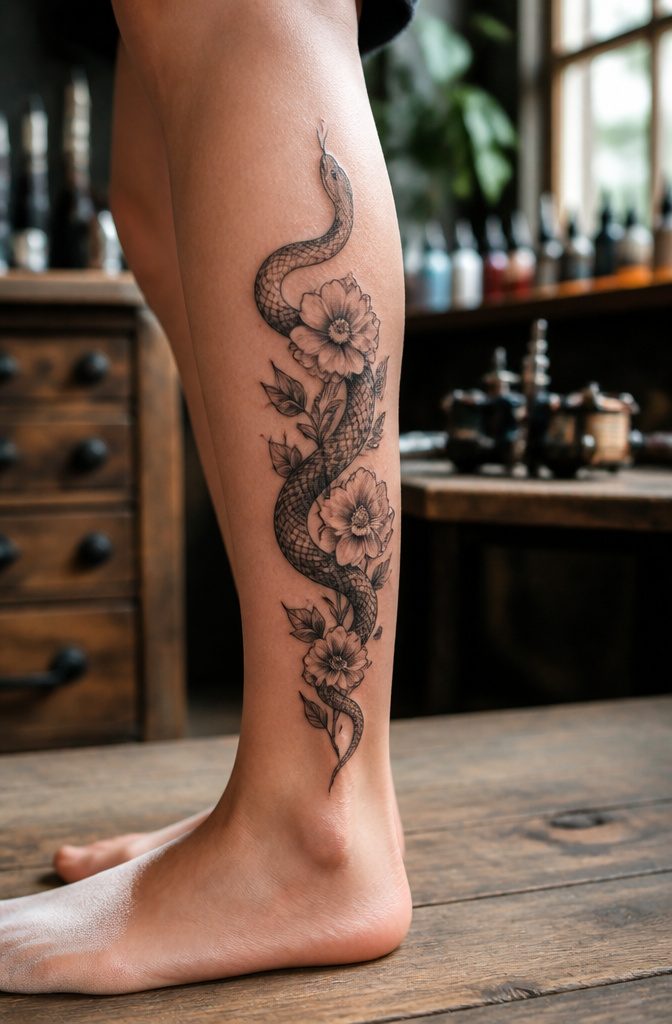
Black ink and grey wash let a snake-and-flower piece sit on the leg without shouting. The snake carries its usual weight: ruin of purity, temptation, the cold logic of something that strikes.
Flowers beside it, or pinned in its mouth, soften that read just enough to keep it from turning into a villain origin story. On the leg, that tension pays off because the eye has room to travel.
The snake’s body should run with the muscle, not across it, so the flow reads as movement rather than a sticker slapped sideways.
Flowers break the line at the head or coil, giving the viewer a place to rest before the eye slides back to the scales.
Longer leg placements, thigh to calf or hip to ankle, let you repeat that rhythm: strike, bloom, coil again. Shorter spots flatten it into a single gesture, which wastes what the pairing can do.
Grey wash keeps the flowers from turning into competing focal points. Too much detail on the petals and the snake reads as background; too little and the innocence half of the equation goes missing.
Somewhere around mid-tone on the leaves, lighter on the petals, darker on the shadow side of the coil. The leg’s length is what lets you stage that contrast at scale without crowding either symbol.

🎃[10 Sheets Long Lasting Temporary Tattoos Snake] There are 10 Sheets Large Snake Temporary Tattoos For Men Women Kids Children Adults,You Can See Different Designs Including Black Rose Flower Sword Cobra Mamba Viper Serpent Skull Snake Tattoos Snakes.

Temporary Tattoo Sticker

⚡Realistic Black Snake Temporary Tattoos for Adults -- The pack contains 23 unique tattoo sheets filled with varied snake artwork. You’ll find coiled snakes matched with skulls, peonies, thorns and daggers, alongside slim winding small snakes. Timeless black and grey line art brings bold gothic vibes. The collection includes large wrap around snake graphics and tiny minimalist serpent patterns for plenty of styling options.
4. Entwined Snakes With Geometry
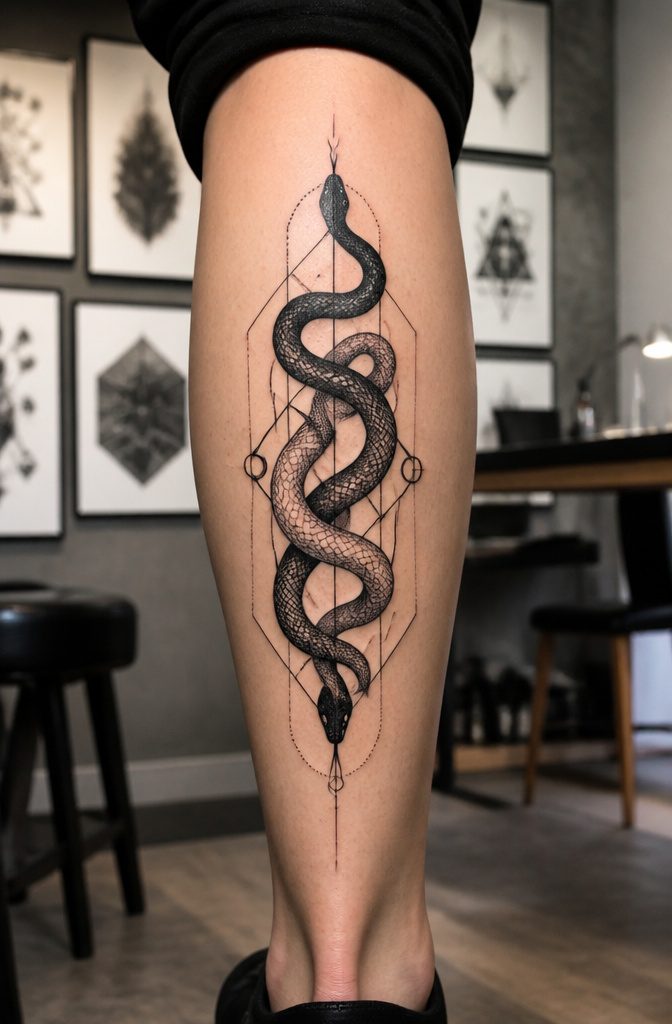
Two snakes winding together, one pointed north and the other south, carry the old meaning of eternal life, but the geometric framing is what keeps a leg snake tattoo readable ten years out.
Circles and triangles set inside a hexagonal structure give the whole piece a scaffold that resists the way a calf softens or a thigh fills in.
Without that geometry, a snake coils into a blur; with it, the eye still finds the shape even as skin shifts.
A two-headed or entwined snake sits well on the lower leg, the upper arm, or down the center of the back and chest.
On the leg specifically, the design works best when the hexagons or triangles run with the length of the muscle, not across it.
That alignment lets the geometry do its job of holding the form as the body changes. The Gucci snake reference points to the same idea, luxury or not: a snake locked into pattern reads as intentional, not just decorated.
Color or black and gray both work here. The snake and the frame work only if they fight each other visually: thin against thick, curved against straight, dark against light.
Low contrast, and the entwining becomes mud; high contrast, and the eternal-life symbol still scans from across a room.

Easy to Use : These stencils ensure a flawless finish, making them suitable for both beginners and professionals. Experiment with different paint patterns and unleash your creativity!

Snake and Botanical Flowers Stencil: You will receive 9 pieces of painting stencils which have beautiful patterns in animal theme. There are snake and botanical flowers, stars, moon, moon phases, human hands patterns on the stencils. Our templates are suitable for you to make handmade projects by yourself.
Durable Reusable Stencil Set: Includes multiple snake and alligator skin pattern templates made from high-quality, flexible stencil material for repeated use without tearing or warping.
5. Simple Black Snake for Any Placement
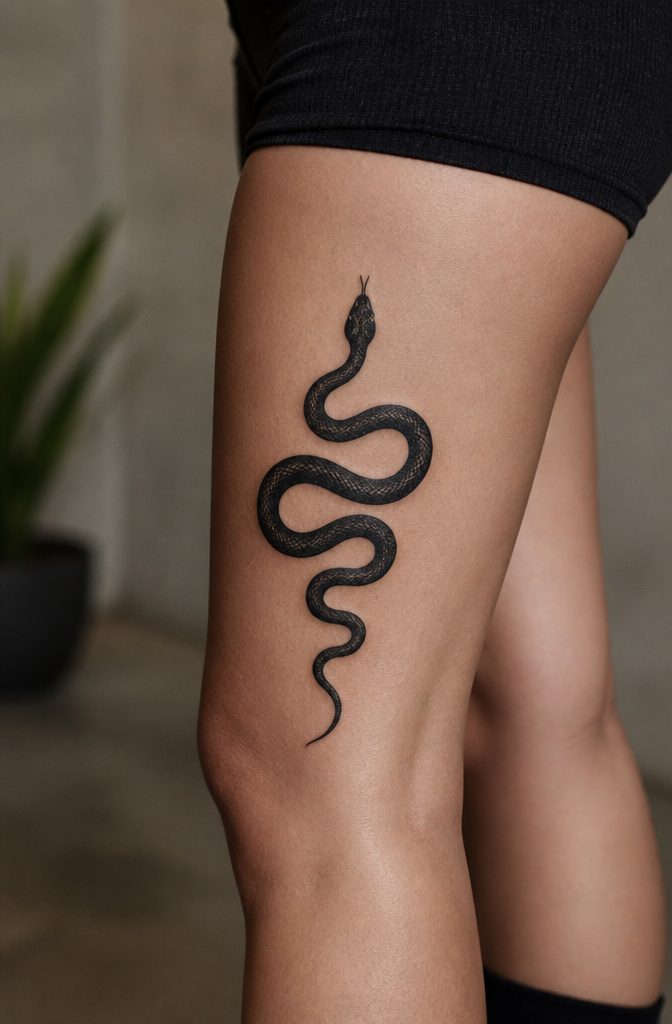
A basic black-ink snake tattoo carries more flexibility than most leg pieces because the design reads as symbol rather than scenery.
The snake’s coiled body stands for emergence and dynamic force, the kind of meaning that travels with you whether it sits on a calf, a thigh, or tucked along the outer edge of the shin.
Three to four inches is the floor where the shape still resolves as snake and not as a stray squiggle. Below that, the head and tail collapse into each other and the eye stops reading reptile.
Placement on the leg matters more for a simple design than for a busy one. The calf’s flat plane keeps straight lines straight; the outer thigh does the same.
Muscle movement distorts the image least in those spots. The inner thigh and the back of the knee are the opposite problem, skin shifting enough that a clean black silhouette warps into something accidental when you walk.
The style takes modification well. A basic snake can stretch to a chest piece or compress to a finger band without losing its identity.
For the leg specifically, the calf or outer thigh gives you the cleanest canvas for lines that stay where the artist put them.

Package Includes: You will receive 12 pieces celestial star paint template 12 x 30 cm(4.7 x 11.8 inch) in different design. Various specifications and patterns offer you more painting options

What You Get: nature stencils for painting include 60pcs 3 x 3 inch small spray paint stencils with cloud, sun, boho sun, moon, stars, celestial patterns ect. Rich drawing style to create any DIY art projects, share your creativity and imagination with friends and family.

❤[LARGE WALL STENCIL] - Include 1pc sun and moon stencil, 11.8x11.8 inch/30x30cm. Large size meets your more needs.
6. Snake and Rose for Seduction and New Life
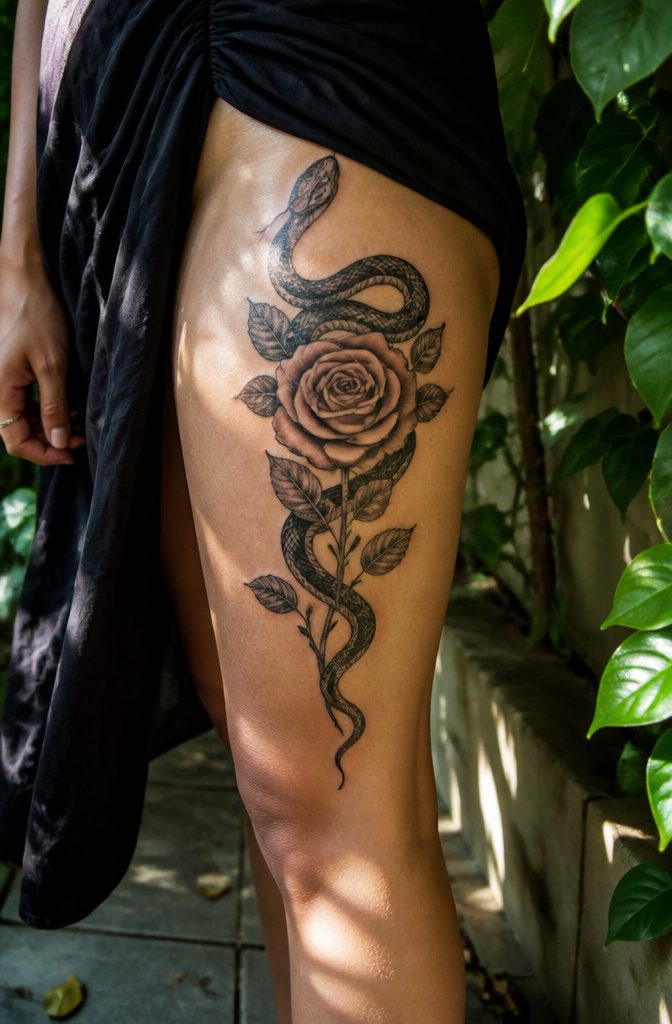
A snake coiled around a rose on the leg carries two readings that hinge on placement.
Position the rose so the snake’s head rests beside it, mouths nearly touching, and the design leans into seduction: the pairing becomes intimate, almost confrontational.
Let the snake rise above the bloom with the rose lower on the calf or thigh, and the meaning shifts toward new life and renewal, the snake shedding toward something that grows.
At leg scale, thorn detail demands restraint. The calf and thigh have enough flat plane to hold fine linework, but thorns spaced too tight or drawn too small will blur inside two years as the ink settles.
A few heavier barbs, placed where the snake’s body actually presses against the stem, read cleaner than a hedge of tiny points.
The rose itself benefits from the same discipline: open petals with defined edges hold up better on the leg than dense stippling that will soften into a smudge.
Black ink keeps the contrast sharp and the story legible from a distance, which matters on a limb that moves through doorways and across rooms.

Exquisite body art that can be worn in place of jewelry. Celebrity inspired.

Package Includes: You will receive 20 sheets reusable tattoo stencils, enough quantity to meet your daily requirements. The mehndi stencils are suitable for airbrush painting, glitter tattoo, and so on.

Package:You will get 4 Sheets snake tattoo stickers for Halloween medusa cosplay costume
7. Detailed Black Snake for Transformation
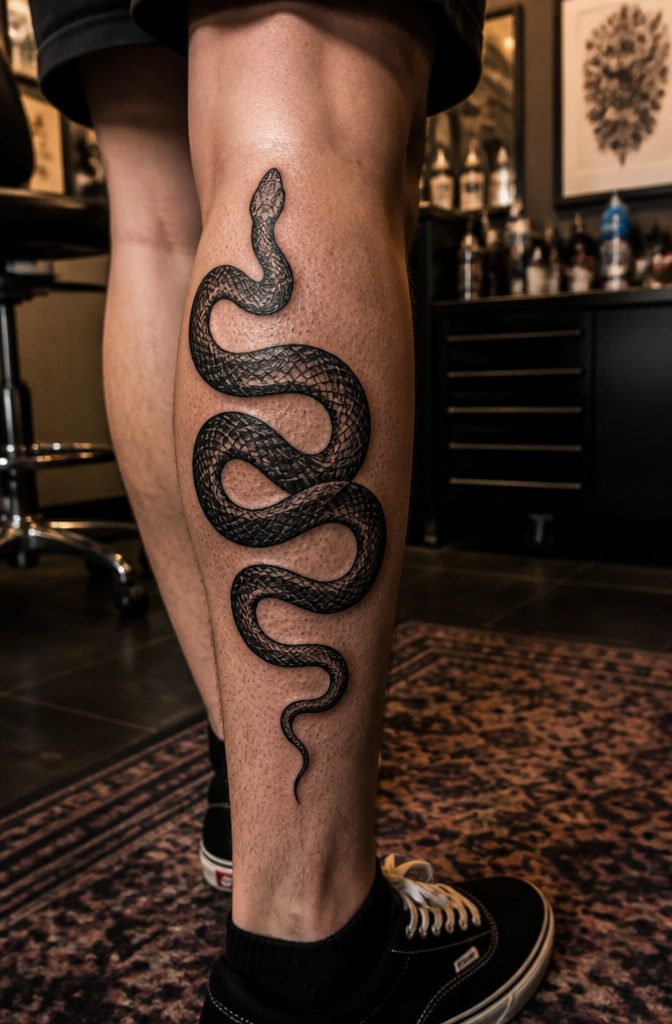
A detailed black snake in the 6–8 inch range sits right where the leg’s flat planes give an artist room for scale texture without the design warping around a joint.
That length lets the body coil once or twice, enough to read as movement, while the head and tail still finish sharp.
Black ink on calf skin tends to hold its edges longer than on the thigh, where more movement and softer tissue blur fine lines over time.
Color saturation fades faster on the leg overall, so a solid black snake keeps its contrast; the fertility and transformation symbolism stays readable because the silhouette survives.
The creative life force meaning, tied to the snake’s form in many cultures, works best when the detail is precise enough that someone across a room still knows what they’re looking at.

6 Sheet Tribal Tattoos temporary, Each sheet measures 9cm* 19cm/3.54*7.48 inches (L*W).

★【15 Sheets Realistic Cool Y2K Black Temporary Tattoos For Women Men Adults】--COKTAK Brand Vintage Y2K Black Cool MUCH QUANTITY Mixed Style Package Includes 15 Sheets Realistic Waterproof Tribal Totem Half Sleeve Forearm Arm Hand Temporary Tattoos For Adults 3D Snake Spider Scorpion Eye Bat Compass Arrow Blood Vessels Lightning Tattoo Stickers.

6 Sheet Tribal Tattoos temporary, Each sheet measures 6cm*10.5cm/2.36*4.13 inch (L*W).
8. Retro Color Snake With Strong Lines
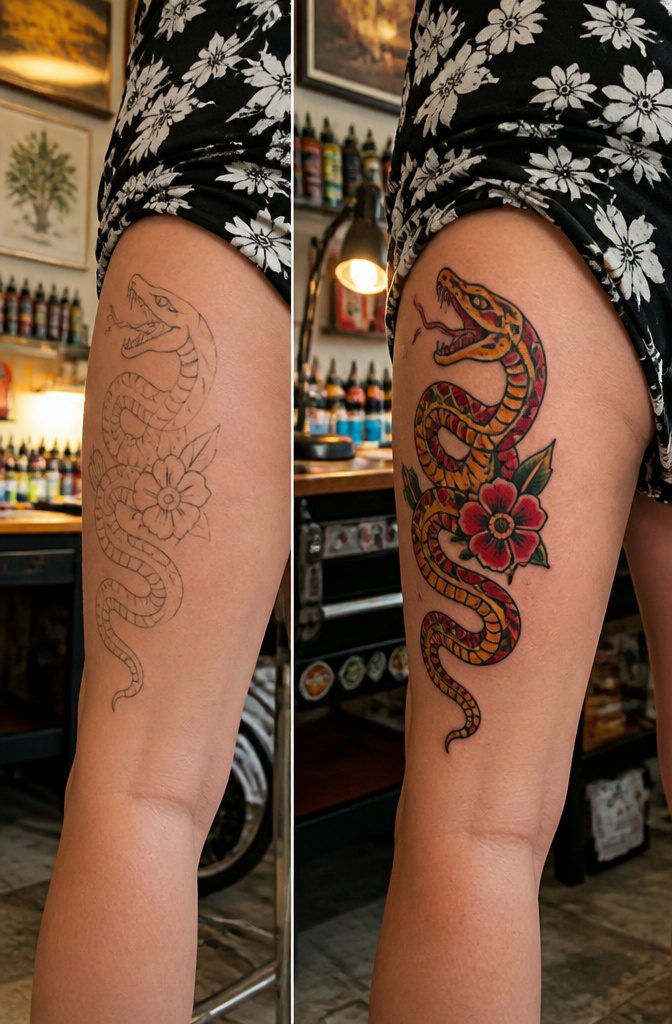
A retro color snake lives or dies on its line weight and saturation balance, especially on the leg where sun hits harder than your back or chest.
I watched enough Ink Master episodes to know that judges prize bold outlines for exactly this reason: without a strong black border, those vintage reds and yellows bleed into mud within a few years of UV exposure.
The classic approach pairs thick outer lines with slightly thinner interior detail work, then fills with saturated blocks of color rather than soft gradients.
Think Sailor Jerry meets 1970s hot rod art: cherry red against pitch black, maybe a cream belly.
On the calf or thigh, where fabric rubs and sunlight concentrates, that heavy line weight acts like a dam keeping each color in its lane.
Color choice matters too. The brightest pigments, fiery oranges and deep greens, fade fastest on legs simply because that skin sees more daylight.
A smart artist accounts for this by packing ink slightly denser than on torso work, knowing the first six months of healing will soften it to the intended tone.
The retro feel comes from that deliberate, almost poster-like separation, nothing bleeding, nothing muddy. If your reference image looks like it could sit on a vintage matchbook, your artist can translate it to skin that holds up.

Package includes: 6 Sheets realistic tattoo stickers.

PERSONALIZED STYLE: Sheet size 19 x 12 cm (7.5 x 4.7 inches). Package includes 2 sheets temporary tattoos stickers. Express yourself and show off your unique style with these fun and fashionable temporary tattoo stickers!

GORGEOUS:Temporary Tattoos For Women Girls Adults Body Art Stickers,fashion Boho For Adult Sternum Sexy Chest
9. Small Snake With Heart Pattern Scales
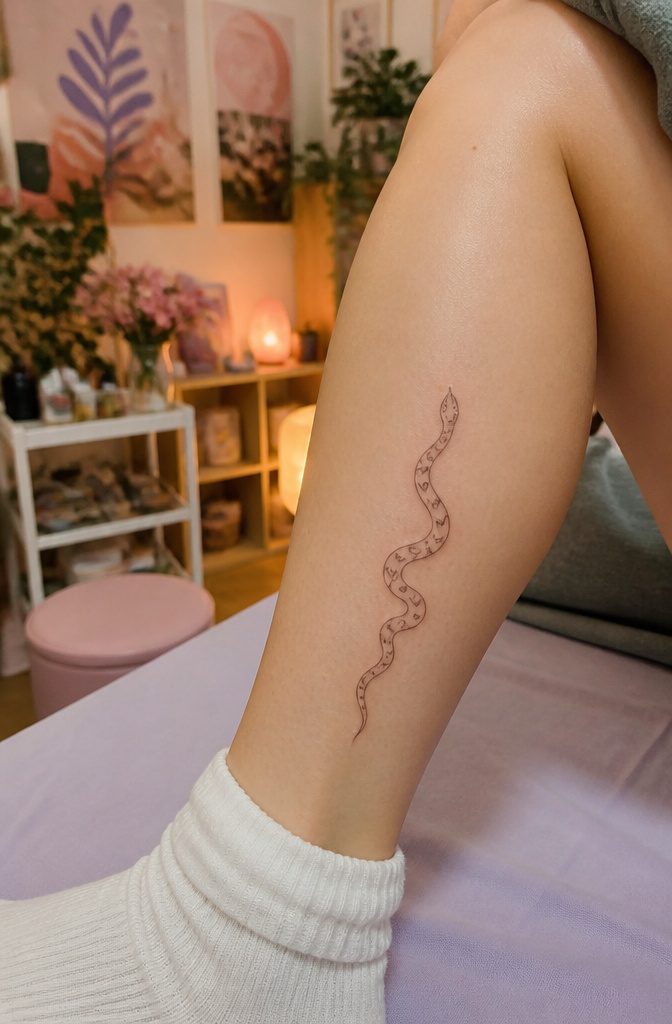
Fine line work with heart-shaped scale patterns reads as delicate jewelry on the leg, but the design only holds if you keep it away from the knee and ankle.
Those stretch zones flex hundreds of times daily, and the thin strokes of a 1-needle or 3-needle grouping blur faster there than anywhere else on the limb.
I have watched otherwise crisp hearts feather into soft blobs within two years on a calf that moved too much.
A piece this size, roughly the length of a hand spread, runs about one to two hours in the chair.
Most artists price fine line by the piece rather than the hour for work this contained, landing in the $50–$150 range depending on studio minimums and the complexity of the scale pattern.
The hearts themselves are not hard to render, but spacing them evenly along the snake’s curve takes steady line work that commands a slight premium over a plain silhouette.
Placement sweet spots sit on the outer thigh or the inner calf, flat planes that stay still when you walk.
The snake can coil small and tight, head tucked toward tail, which lets the hearts read as texture rather than individual elements competing for attention.

Package Includes & Sizes – The large star stencil set includes 8 PCS reusable star stencils in different sizes, featuring a classic 5 point star template design. Sizes: 9.84"x8.86", 8.86"x7.87", 7.87"x6.89", 6.89"x5.91", 5.91"x4.92", 4.72"x3.74", 3.54"x2.56", and 2.36"x1.38". A complete star stencil set to meet your DIY crafts, art projects, and decoration needs.

【 575+ Fun Assorted Tattoo Stencils 】-The ChurlChurl tattoo stencils collection includes 575 high quality stencils with multiple themes. enjoy cute trendy tattoo stencil designs like butterflies, words, flowers, symbols, totem, Egypt style patterns and more.
10. Ankle Wrap Snake
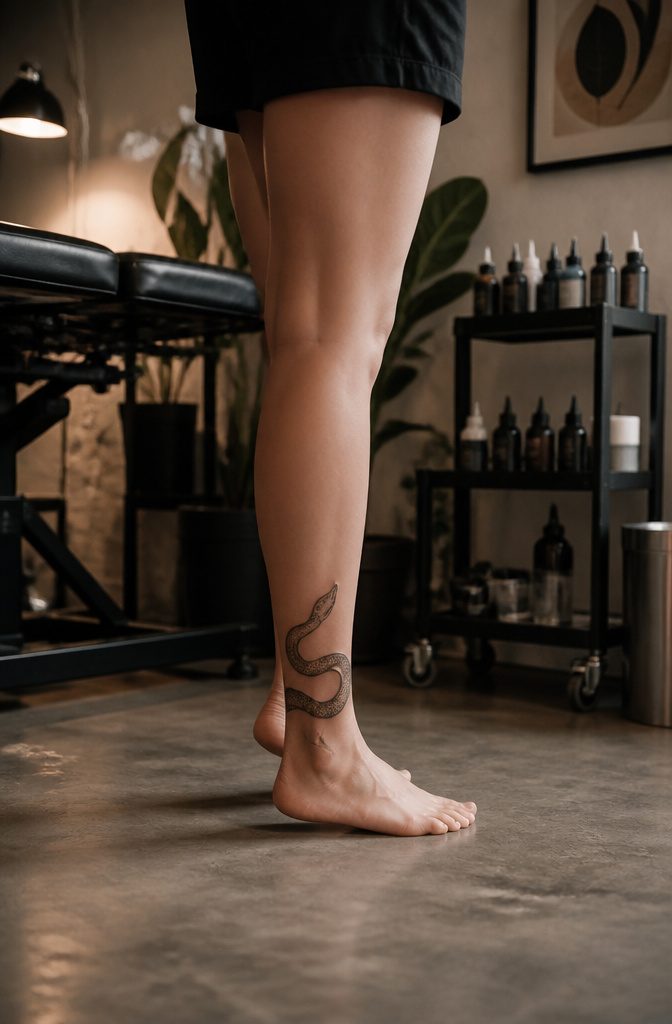
An ankle wrap snake lives or dies on how it handles the bone. The inner ankle sits right against the surface, skin thin and nerve endings dense, so the needle there registers sharper than on the calf or outer ankle.
Most artists budget extra time for that stretch, and the swelling after compounds the problem: a snake that coils tight to the bone can distort as fluid pools, turning a clean scale pattern into something blurred.
The fix is giving the design breathing room, letting the body of the snake cross the ankle at a slight angle rather than tracing the bone edge for line after line.
Skip this placement if your work boots, running shoes, or anything with a collar hits that spot daily. Friction during the two-week heal is the fastest way to push pigment out and leave a patchy line.
The wrap composition also means you are committing to a full circumference from day one; unlike a flat piece that can stop at a natural boundary, the snake has to meet its own tail, and the artist needs to draw for the cylinder of your ankle, not the front-on view in the stencil.

Moon Stencils Set: You will receive 9 pieces of moon sun stencil in different patterns with 1 pieces of open ring, various designs will enough to meet your crafting and DIY needs

Sun Moon Stencil: You will receive 4 pieces of painting stencils which have beautiful patterns in fantasy theme. There are 2 suns and 2 moons with emoticon and stars patterns on the stencils. Our templates are suitable for you to make handmade projects by yourself.

Package Includes:10pcs moon star stencils for painting on wood, each reusable stencil is 12”x12”,12”x10” and 12”x8”.
Choosing Your Snake Species
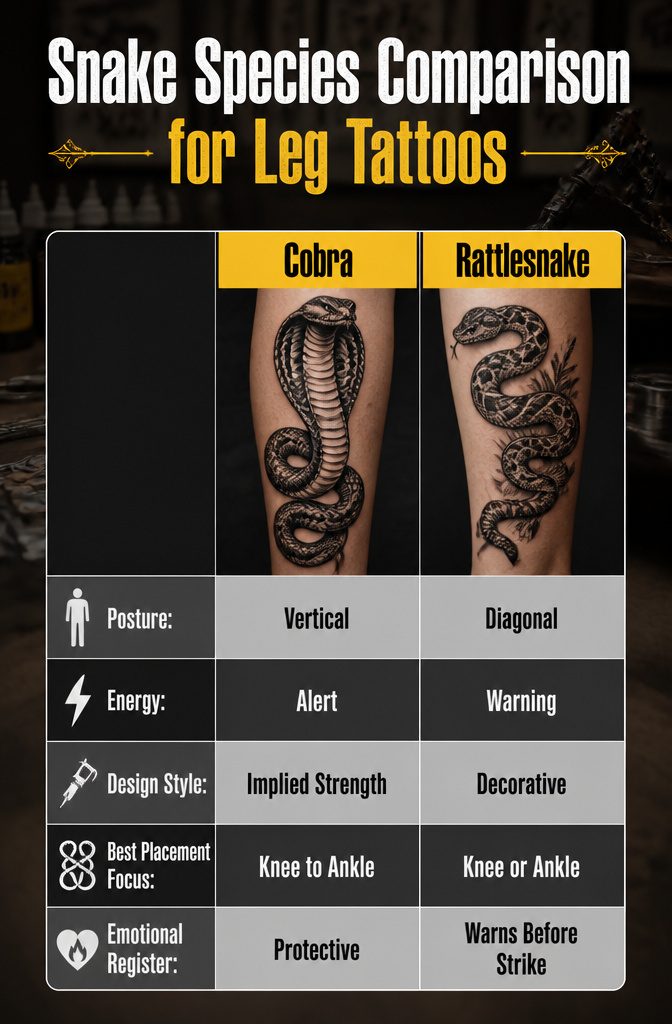
A cobra’s raised hood changes the whole posture of a leg snake tattoo, turning the limb into a vertical stage for that defensive flare. The body coils upward, so the design reads as alert and protective rather than hunting.
Rattlesnakes carry the opposite energy: the tail sets up a diagonal rhythm, and the rattle itself becomes a punctuation mark near the knee or ankle that warns before the snake strikes.
Pythons read heavier and slower, their thick loops wrapping the calf with implied constriction, which some artists use to suggest strength and fertility rather than threat.
Vipers pair well with entwined compositions; their triangular heads and crisp patterns let two snakes mirror each other down the shin without looking decorative.
The species sets the emotional register first, and the leg placement either amplifies it or fights it.
Sizing for the Leg
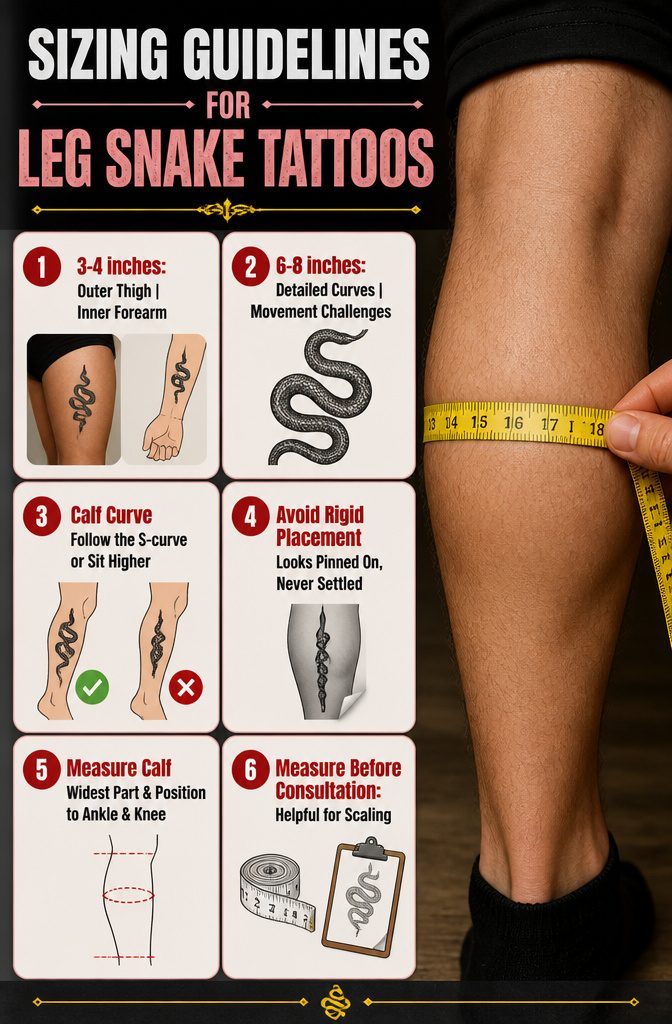
A 3–4 inch snake fits the outer thigh or inner forearm of the leg without fighting the muscle underneath.
Anything smaller and the scales blur inside a year. Larger pieces, around 6–8 inches, give the artist room to let the body curve actually guide the snake’s path instead of cutting across it.
The calf is where sizing gets honest.
A straight snake drawn on paper will want to flatten out as the muscle rounds, so the design either follows the S-curve of the calf itself or sits higher, above the belly of the muscle where the skin stays relatively flat.
I have seen a rigid vertical snake on a calf look pinned on, like a sticker that never settled.
Measure your own leg before you walk into the shop. Wrap a soft tape around the widest part of your calf and note where that curve sits relative to the ankle and the knee.
For a thigh piece, measure the flat plane you actually want to look at daily, not the whole circumference.
Bring those numbers to consultation. The artist can scale the stencil to your tape, and you will both know before the first line whether the snake owns the space or shrinks inside it.
Color Decisions That Last
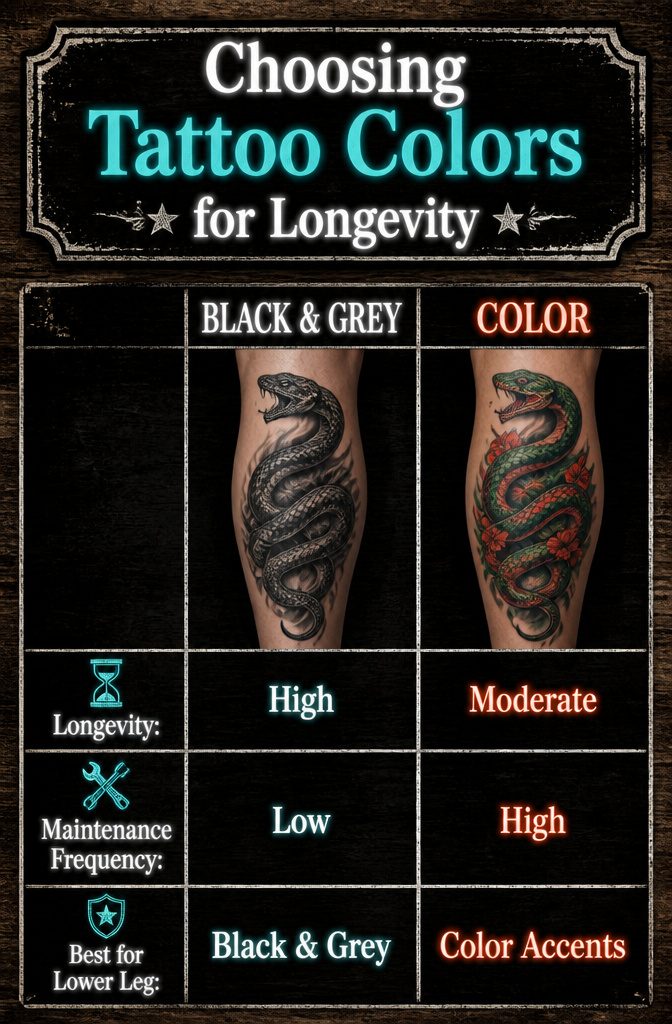
Black and grey ink on a leg snake tattoo holds up longer than most people expect, especially below the knee.
The lower leg gets steady sun whenever shorts are out, and UV exposure drains color faster than anything the artist does.
That is why a calf or shin piece in solid black still reads sharp after years of walking around in daylight.
Color can work, but it asks more of you. A snake done in greens or reds will need touch-ups sooner, and the lower leg’s constant friction from socks and pants speeds the fade.
If the design relies on fine color gradations, the leg is a rough place to keep them crisp.
I have watched friends choose bold color for a thigh piece where the skin sees less abuse and the ink sits under cover more often.
On the lower leg, black and grey is the safer bet for longevity, and the contrast still lets a snake coil look alive.
If you want color, keep it to accents rather than the full body, or plan for maintenance every few years.
Time and Cost on the Leg
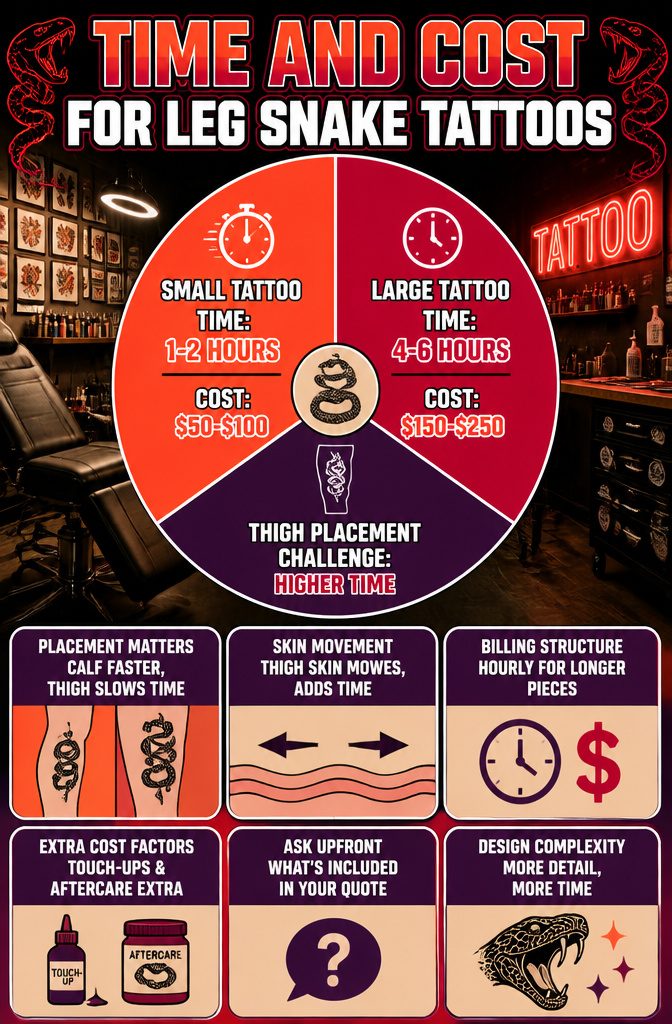
A small leg snake tattoo usually clocks in at 1–2 hours, while a larger piece can stretch to 4–6 hours depending on how much detail the artist packs in.
Price lands somewhere between $50 and $250, with size and complexity doing most of the driving.
Where on the leg matters more than people expect. The calf sits still; the skin doesn’t shift much when you breathe or shift your weight, so the artist can work faster and cleaner.
Thigh skin moves with every small adjustment, which slows the needle and adds time to the clock. Most shops bill by the hour, so a thigh placement can nudge the total higher even for the same design.
Some artists will quote a flat rate for smaller work, but anything over a few hours typically flips to hourly, and that leg movement becomes part of what you pay for.
Touch-ups and aftercare sit outside that base quote, so ask upfront what the shop includes.
What Snake Tattoos Mean
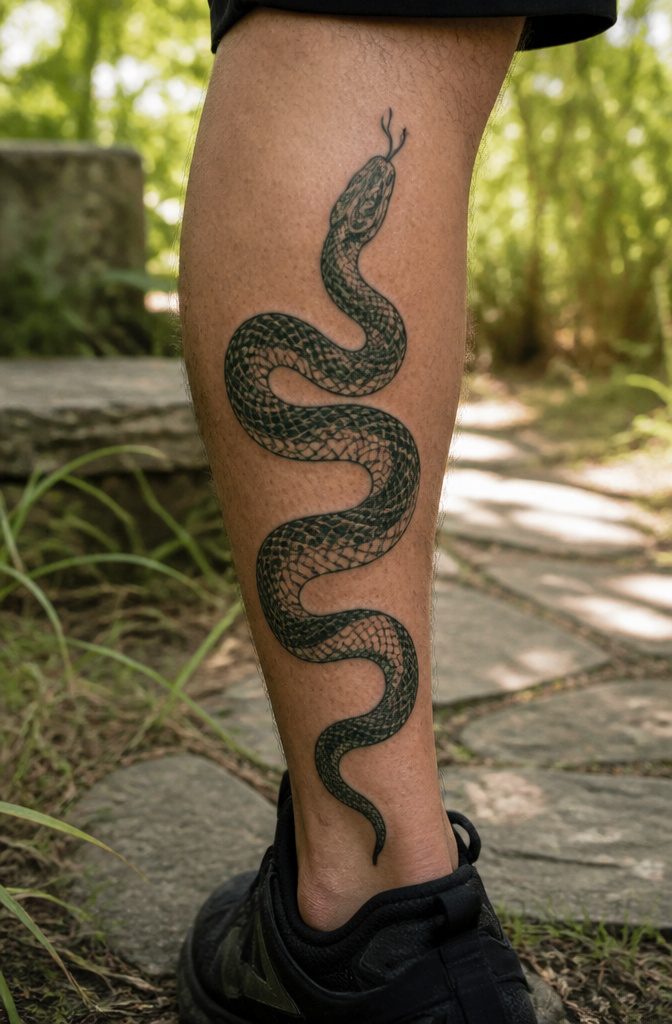
Snake tattoos carry layered meanings that shift depending on where the body carries them. A serpent climbing the calf, head up, reads as rebirth and transformation to most people who see it in passing.
That upward motion suggests shedding, moving forward, leaving the old skin behind. The leg’s length gives the artist room to stretch the body, so the eye follows the ascent naturally.
A snake coiled at the ankle sends a different signal. The closed loop looks defensive, guarding the joint, and that posture has long tied serpents to protection and fertility in tattoo culture.
The ankle’s bone makes the coil sit visibly even from across a room, so the protective meaning lands before anyone asks.
The thigh sits between those two reads. Enough space there lets the snake rest in a figure-eight or strike from foliage, which pushes the meaning toward raw power rather than change or guardianship.
Where you place the leg snake tattoo decides which story strangers pick up first, and that first read matters more than most people think when they’re still choosing flash off a wall.
Frequently Asked Questions
How much does a snake tattoo on leg cost?
A leg snake tattoo runs between $50 and $250, with size and complexity doing most of the driving.
Thigh work can nudge the total higher than calf work because the skin shifts with every small adjustment, slowing the needle and adding billable time. Ask upfront whether touch-ups sit inside or outside that base quote.
How big should a snake tattoo on leg be?
Three to four inches is the floor where the shape still resolves as snake rather than a stray squiggle.
Six to eight inches gives the artist room to let the body curve guide the snake’s path instead of cutting across the muscle.
Measure your own leg before you walk into the shop: wrap a soft tape around the widest part of your calf and note where that curve sits relative to your ankle and knee.
What kind of snake should I get for my tattoo on leg?
Cobras turn the limb into a vertical stage for defensive flare, reading alert and protective. Rattlesnakes set up a diagonal rhythm with the tail as punctuation near a joint.
Pythons read heavier and slower, their thick loops suggesting strength and fertility. Vipers pair well with entwined compositions because their triangular heads let two snakes mirror each other without looking decorative.
What color should my snake tattoo on leg be?
Black and grey is the safer bet for longevity on the leg, especially below the knee where sun hits harder and UV exposure drains color faster than anything the artist does.
If you want color, keep it to accents rather than the full body, or plan for maintenance every few years. Brightest pigments like fiery oranges and deep greens fade fastest on legs simply because that skin sees more daylight.
How long does it take to get a snake tattoo on leg?
Small leg snake tattoos usually clock in at one to two hours, while larger pieces can stretch to four to six hours depending on detail density.
Calf skin sits still, so the artist can work faster and cleaner; thigh skin moves with every small adjustment, which slows the needle and adds time to the clock.
Most shops bill by the hour, so that leg movement becomes part of what you pay for.
What does a snake tattoo on the leg mean?
A serpent climbing the calf, head up, reads as rebirth and transformation because the upward motion suggests shedding and moving forward. A snake coiled at the ankle looks defensive and guarding, tying it to protection and fertility.
On the thigh, enough space lets the snake rest in a figure-eight or strike from foliage, pushing the meaning toward raw power rather than change or guardianship.
Should a snake tattoo go up or down?
Upward reads as rebirth and transformation, the eye following the ascent naturally along the leg’s length.
Downward or coiled sends a more defensive, protective signal. The snake’s body should run with the muscle, not across it, so the flow reads as movement rather than a sticker slapped sideways.