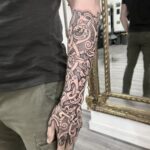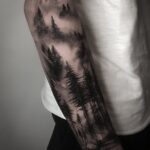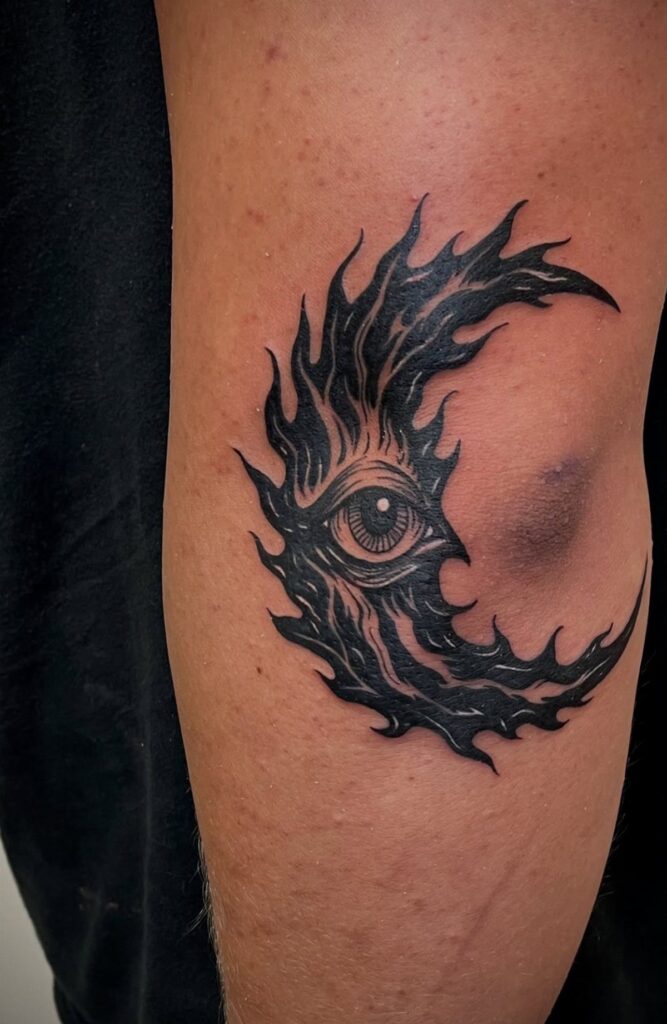
These 9 pieces of sick tattoo art range from a tiny spoon on a wrist to a full Japanese leg sleeve that swells for days after each sitting.
What decides which is yours is how much of your body, your budget, and your healing calendar you are willing to commit.
The eyeball-and-botanical piece alone needs the vertical space of a shoulder and upper arm to keep 5 hanging irises from collapsing to muddy circles.
[link-whisper-related-posts]1. Spoon Tattoos
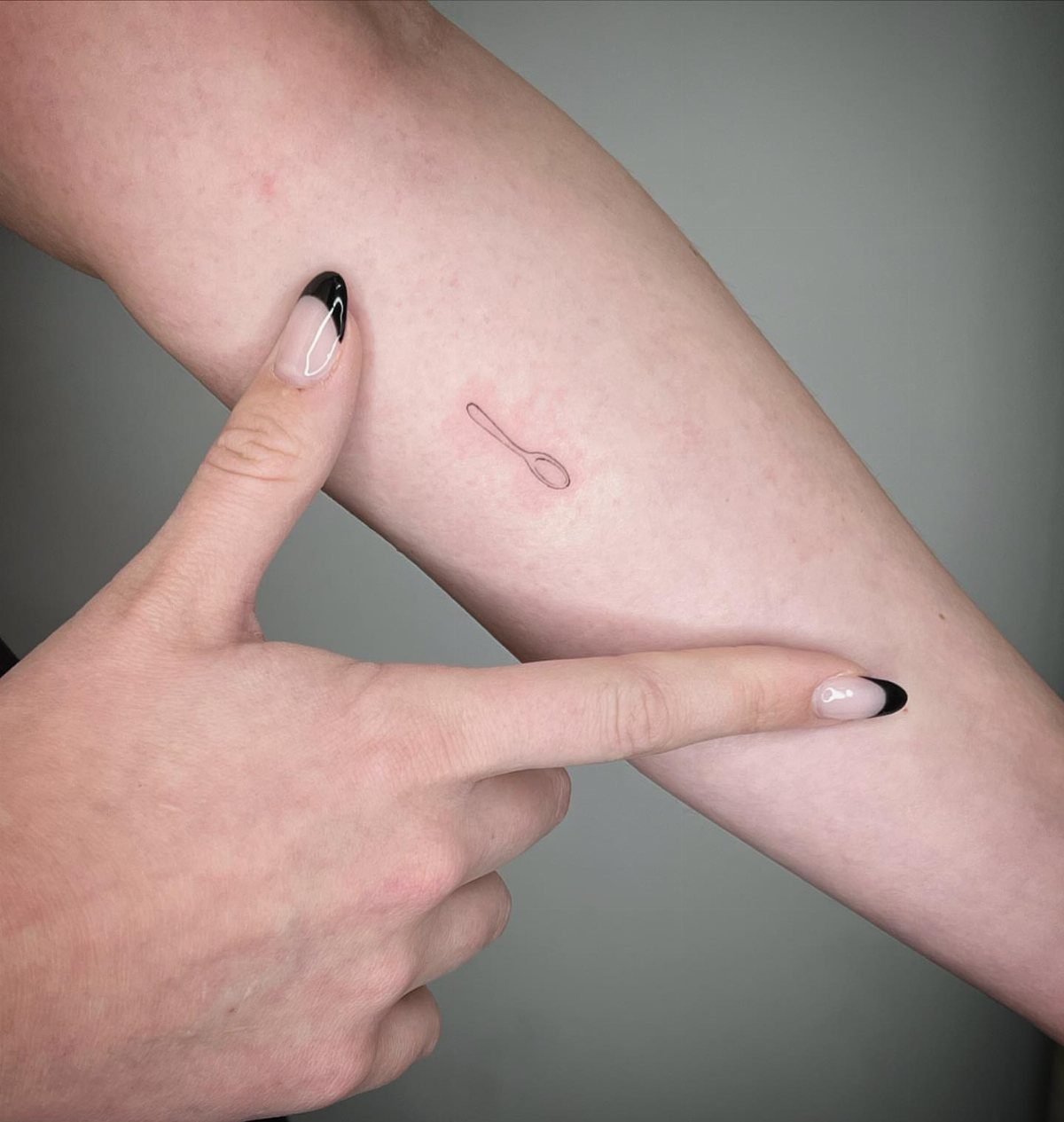
A spoon tattoo on the inner forearm turns a quiet, domestic object into a badge of endurance.
The "spoon theory" comes from Christine Miserandino’s essay about living with lupus: each spoon represents a unit of energy, and the count is finite.
Someone with chronic illness might start the day with twelve, spend two on showering, three on commuting, and have none left for dinner out. The tattoo marks that arithmetic.
Fine line work keeps it readable at the small size most people want, an inch or two at most.
Black ink ages cleaner than color here; the spoon’s bowl and handle need to stay distinct or the shape collapses into a blur.
Placement on the inner forearm lets you see it, show it, or cover it with a long sleeve.
This idea suits someone who wants the symbol without the explanation.
A stranger sees a spoon. The meaning stays private unless you offer it.
Sick Tattoo Patterns – Resilience and overcoming challenges embracing imperfections personal growth and transformation Web from spoon tattoos to semicolons, women with chronic illnesses and chronic pain share the tattoo ideas that are so significant to them.

Package include:1x Tattoo Cover Up Band Customized fabric,this tattoo sleeve is made of spandex +nylon,breathable and soft,super comfortable and has great elasticity....
2. Semicolon Tattoos
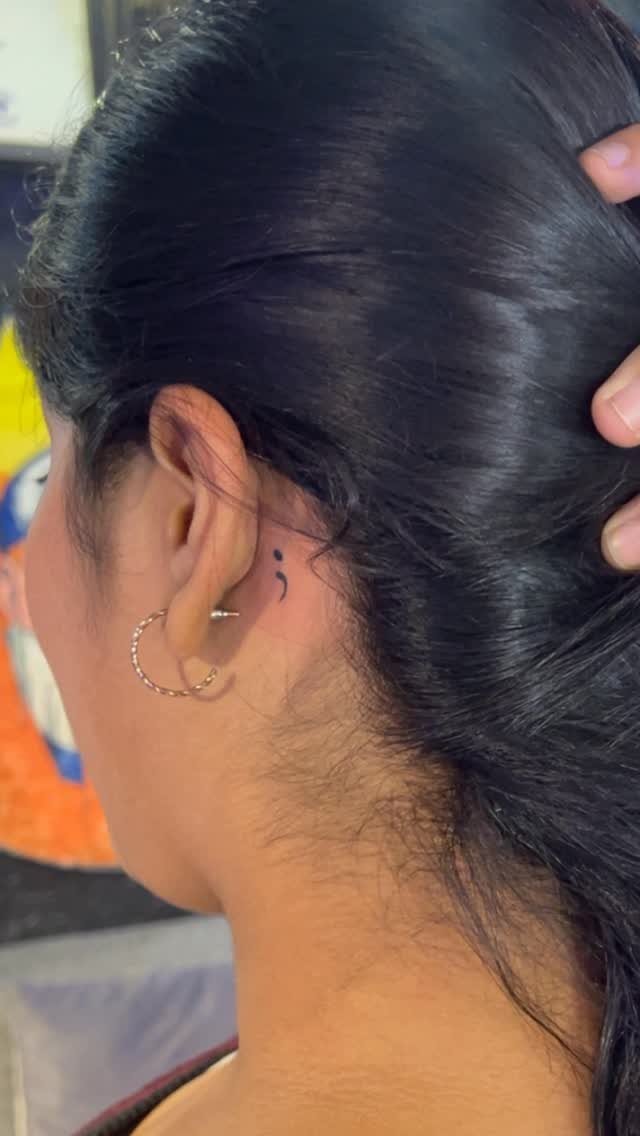
The semicolon behind the ear sits where you can hide it with hair or reveal it with a tuck.
In grammar, the semicolon joins two related independent clauses where a period would break them apart; in tattoo culture, it signals that the wearer’s story continues. Project Semicolon began as a social media movement and the mark spread from there.
A semicolon tattoo small enough to heal fast and large enough to hold its shape sits well on the inner wrist or behind the ear.
Behind the ear, ink tends to fade faster than on the arm or leg; the skin is thin, the sun hits it, and hair products irritate during healing.
Plan for a touch-up once the lines soften; how soon depends on sun exposure and skin type.
Black ink is the standard. A semicolon in color reads as decorative rather than symbolic, which may be what you want, but the original meaning carries in black.
This placement works for someone in a professional setting where visible tattoos still draw notice. The meaning is secondary to the fact of concealment; choose it for both or neither.
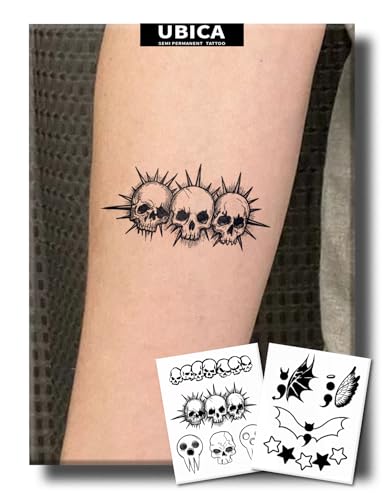
Spiked Skull Devil Wing Design: This semi-permanent tattoo pack holds two sheets with spiked triple skull strips, single skull graphics, bat silhouettes, paired devil-and-angel semicolon wings and tiny star accents with rough sketch outlines. Skulls stand for fearlessness and reflection on life’s journey; semicolon wings symbolize survival and choosing to keep going, balancing bold individuality and gentle hope, while bat motifs represent unique self-expression.

🐙180+ PCS 13 Sheets Unique Black Small Temporary Tattoos:🐠 There Are 12 Sheets Cute Tiny Temporary Tattoos For Women Adults And Temporary Tattoos For Men Including Various Popular Creative Designs Little Crown Flower Leaf Dots Snake Diamond Starfish Shell Manta Coconut Tree Butterfly Lotus Star Sun Crescent Moon Arrow Temporary Tattoos For Hands Tattoos For Finger Tattoos For Ear Neck Tattoo Sticker.

Self-Love Symbol Dual Design: This semi-permanent tattoo pack has two unique sheets with tiny mini graphics: semicolons, crown heart hands, floral blooms, arrow accents and positive affirmation "I am enough". Semicolons stand for mental strength & survival, crown hearts represent self-worth, quotes deliver positive affirmation. The small, minimalist design makes it perfect for subtle placements on fingers, wrists, or arms.
3. Tribal Tattoos
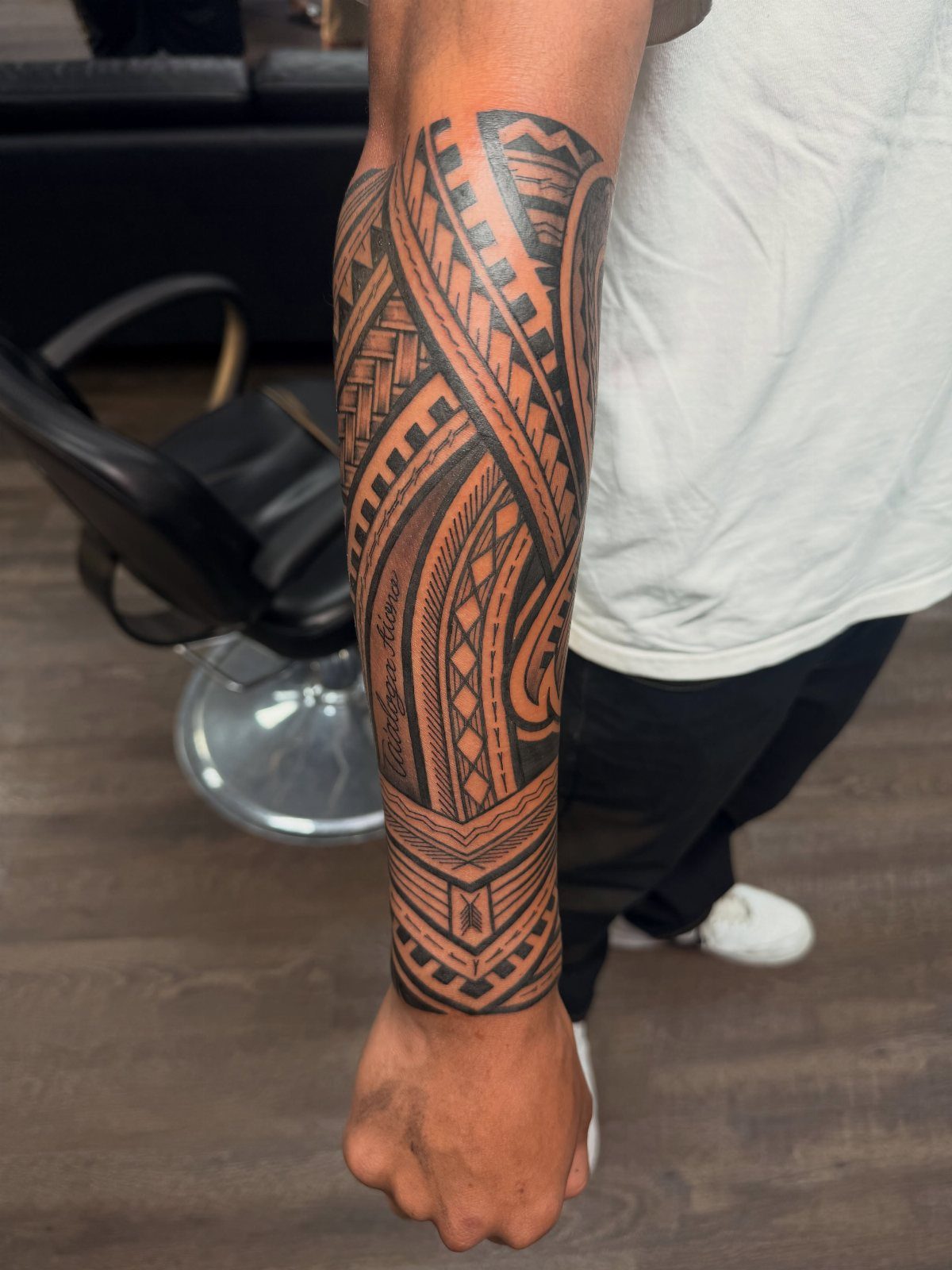
Polynesian tribal work builds from repeating geometric units, each with a name and a purpose: the enata figure represents the human form, the etua is a spiritual guardian, the niho mano traces shark teeth.
The patterns are not decorative first; they are genealogical and protective. The forearm carries banded tribal designs well because the cylinder of the arm keeps the pattern continuous as the body moves.
To wear this work with any claim to authenticity, you need to know which island tradition you are drawing from.
Hawaiian, Samoan, Maori, and Tongan styles each have distinct pattern vocabularies. A practitioner trained in that tradition should draw it; the stencil is freehanded from knowledge of the family of patterns, not traced from a reference book.
Tribal work rewards patience: the solid black fill takes hours of saturation, and a cheap or rushed job shows in the gray heal.
A solid forearm wrap takes multiple sessions and runs into hundreds per hour at a specialist shop. The alternative is to borrow the visual language without the cultural content, which many artists now decline to do.


⚡Awesome Realistic Tiny Finger Temporary Tattoos for Adult -- Super stylish cute small design temporary tattoos, set includes variety tiny small tattoos (black heart star flower symbol butterfly crown cartoon skull key animals tattoos..) that you can use for different locations on your hands, fingers, ear, brest etc. Easy to share it with your family and friends.

🌼 Beautiful Hand-drawn Fine Line Style Tattoos - Black and White Fine Line Flowers, Roses, Branch, Butterfly, Arrows, Hearts, Stars
4. Japanese Tattoos
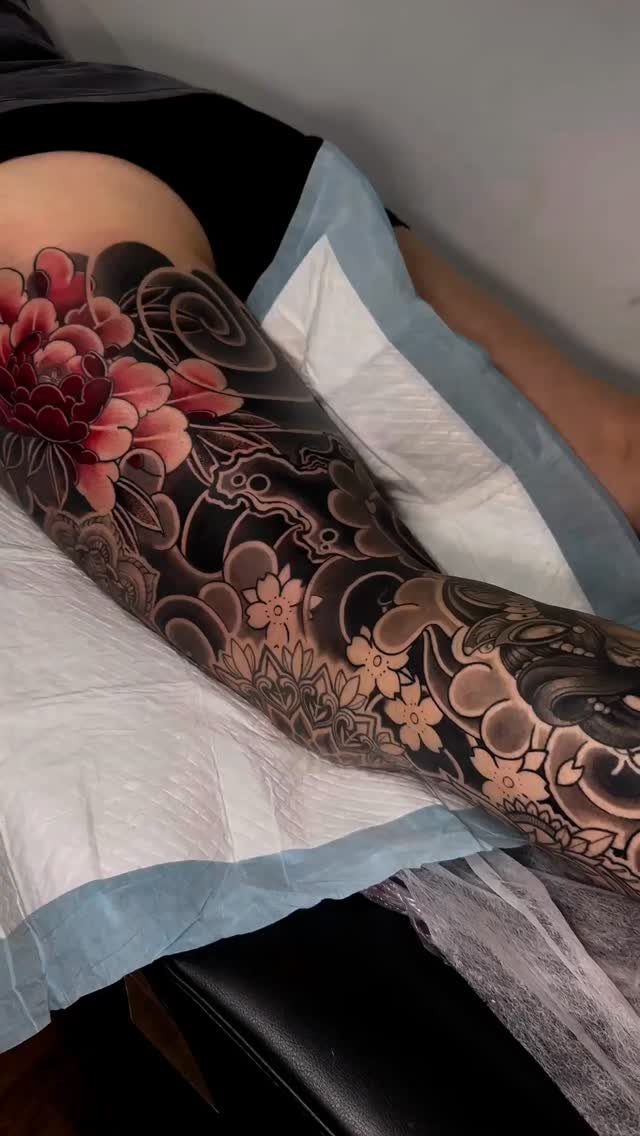
Japanese tattooing, irezumi, developed its visual system during the Edo period and still works by established rules.
The background determines the subject: wind bars, waves, or clouds set off the central figure, and the whole composition is designed to move with the body. Peonies in Japanese tradition pair with lions and symbolize wealth and honor.
Color saturation is the technical challenge.
The pinks and reds need to sit at full density or they heal to a muddy rose. Shading around the flowers creates depth; without it, flat color looks pasted on.
The scale matters too. A single peony the size of a fist can work, but the style’s impact comes from coverage, the way the design wraps and continues.
This is not a style for a single afternoon. A half-leg piece takes as many sessions as the complexity demands; the solid color fields and fine linework cannot be rushed.
The commitment is financial and physical; the leg swells, the knee is difficult, and healing between sessions takes as long as the skin needs.

Mental Health Awareness Semicolon Temporary Tattoos - Apparel Accessories - 72 Pieces

Blue Purple Semicolon Butterfly is a retro vintage Graphic design for anti-suicide motivational for people suffering from depression, stress, panic attacks, self-harm, anxiety, addiction, bullying, suicidal thoughts or any other mental health disorder.

【Spiritual Quotes Design】This design blends unique handwritten-style quotes like “soul” and “dream” with subtle spiritual symbols and the angel number 444. The clean fine-line lettering feels personal and intimate, while the small, minimalist icons add a soft, playful touch. Created for everyday wear, these temporary tattoos deliver quiet meaning and gentle charm with a non-reflective, ink-on-skin look and a comfortable no-glue feel.
5. Skull Tattoos
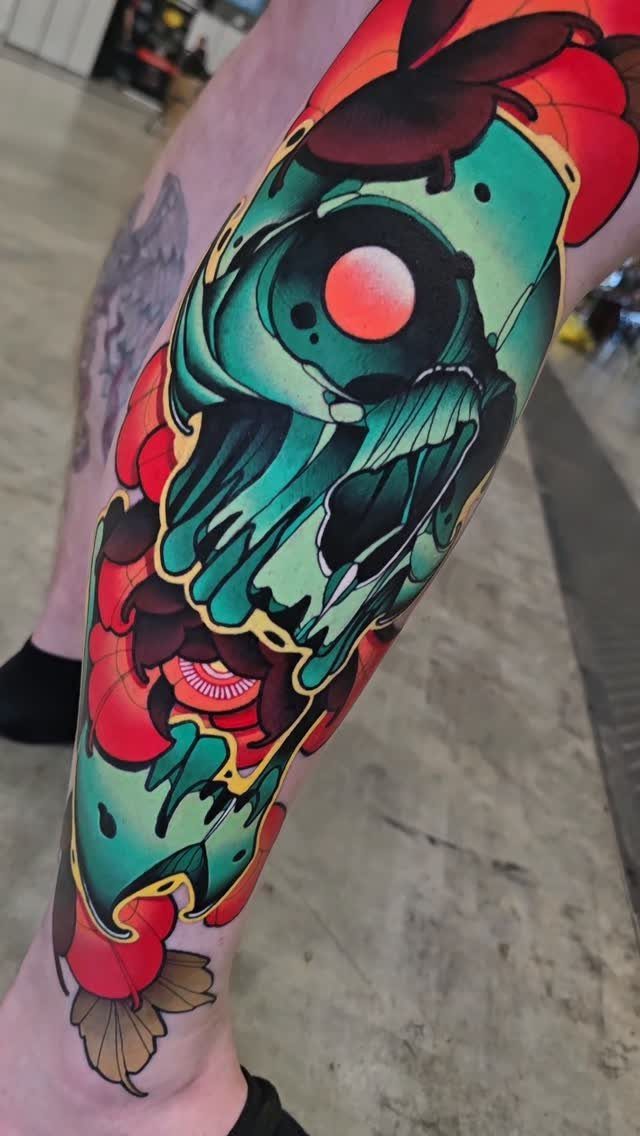
A skull with flowers is a pairing old enough to have its own name, memento mori, though the neo-traditional version pushes the color further than the historical precedents.
The teal skull and red florals read as decorative rather than mournful; the green is unusual, most skull work stays in black, gray, or warm earth tones.
The lower leg handles large designs well and heals relatively flat, though the shin bone hurts more than the calf meat.
The calf has enough flat surface for detail, enough muscle to sit the ink on, and heals more predictably than the shin or ankle.
Color saturation on the lower leg lasts better than on the thigh or upper arm; less sun exposure, less friction from clothing.
Combining the skull with living flowers creates the contrast that makes the design work. Both elements need equal weight; a small skull with huge flowers looks accidental, 2 small elements floating on a large field looks lost.
The balance works best when skull and flora each command roughly half the space, neither element shrinking to ornament.

WICK AWAY FABRIC -- Full leg cover sleeve made of nylon/spandex blend to keep you comfy --

Set Includes: 3 pairs of tattoo leg sleeves with different prints, offers look These leg tattoo covers fit adult legs, providing a convenient and cost effective option for outdoor activities

WICK AWAY FABRIC -- Full leg cover sleeve made of nylon/spandex blend to keep you comfy --
6. Infinity Symbol Tattoos
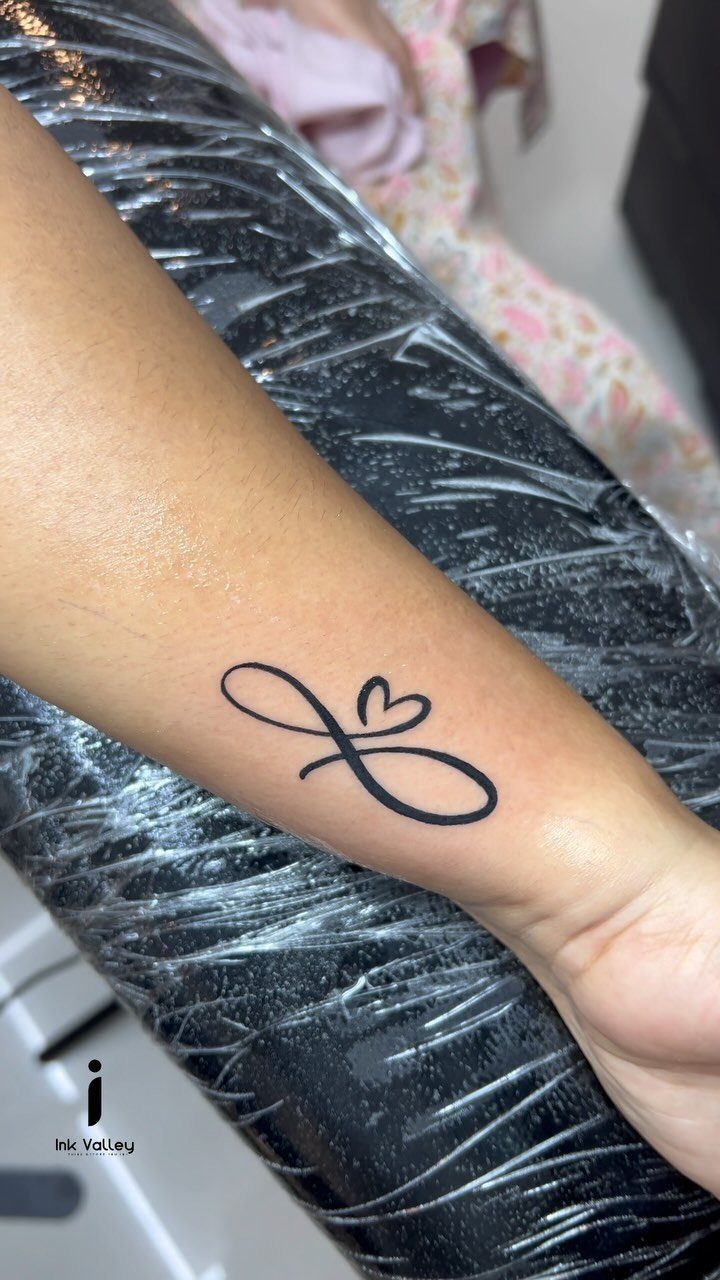
The infinity symbol merged with a heart compresses two familiar marks into one. The infinity loop alone has been common long enough to feel familiar; adding the heart personalizes it without complicating the linework.
Fresh black ink looks sharp against lighter skin and holds its contrast for years.
The problem with any loop design is closure: the point where the line crosses itself can blur if the artist is heavy-handed or the skin holds ink unevenly.
A single-needle or three-needle line gives the finest result; a shader running a larger magnum will leave a heavier, fuzzier mark.
This is a design that carries personal meaning cheaply and quickly. An hour of work, maybe two, at a rate most shops publish openly.
The symbol is common enough that yours will not read as unique unless the modification is your own. The heart helps, or a date, or a pair of initials worked into the loop.
7. Skate Tattoos
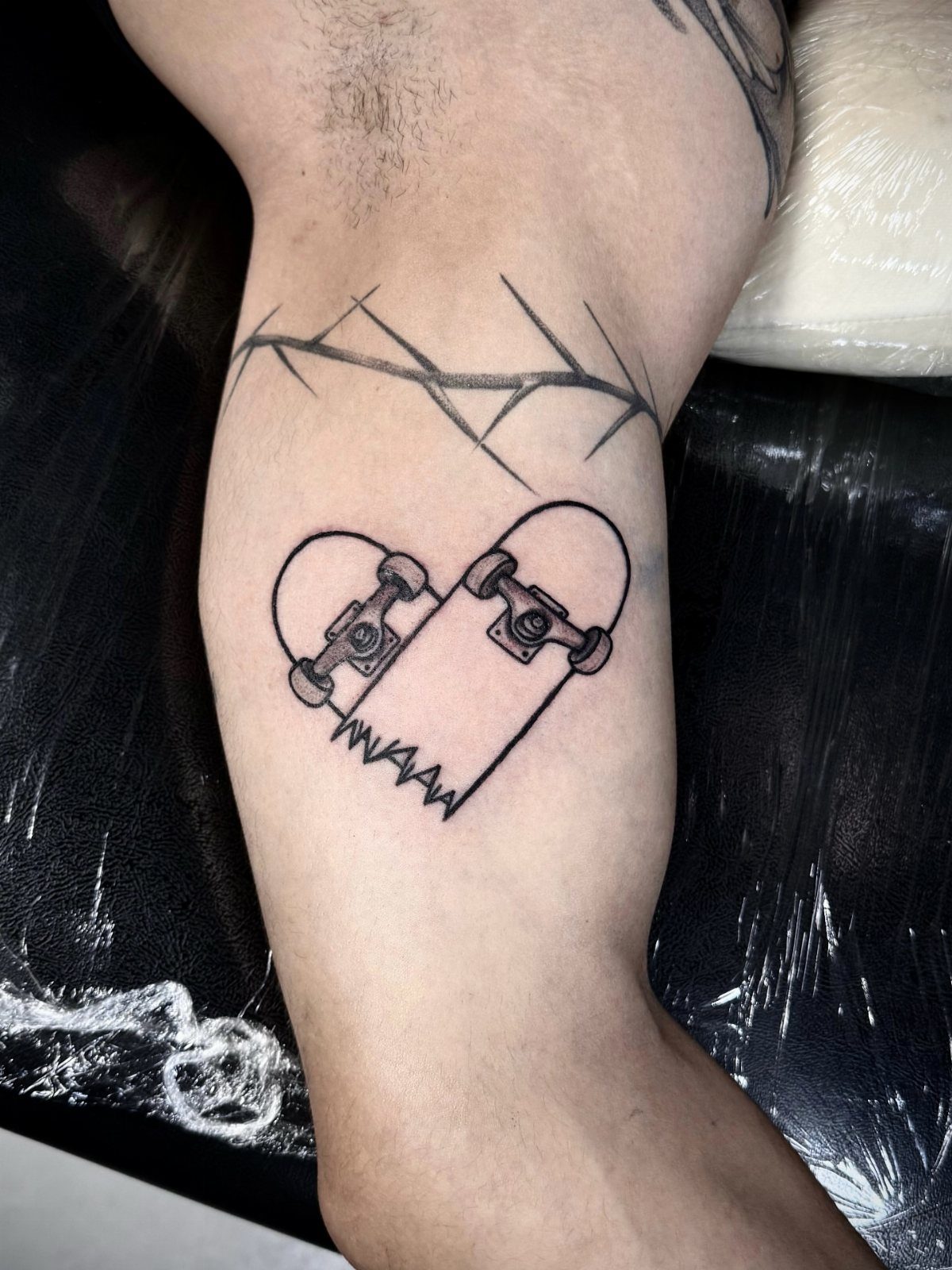
A broken skateboard reassembled into a heart shape turns wreckage into devotion.
The inner bicep carries it well, the curve of the muscle giving the heart its natural bulge, though the ditch of the armpit makes the upper edge tricky to sit flat.
Barbed wire bands above it frame the piece without competing.
Black ink keeps the graphic punch; color would read as illustration rather than emblem. The broken deck still needs to read as wood and truck bolts or the joke is lost.
This suits someone whose boards have actually snapped, who has the scar tissue and the stories, not someone borrowing the aesthetic. The lifestyle is the prerequisite.

Halloween Freckles Face Tattoo Set: Halloween freckles face tattoo set includes 6 sheets of temporary face tattoos (2 bat freckles, 2 pumpkin freckles, 2 ghost freckles) and 3 pairs of matching dangle earrings (bat, pumpkin, ghost styles) for a cohesive Halloween look

【Your Story Continues: The Power of a Semicolon】Semicolon tattoo designs are a symbol of silent fight. This small semi-permanent tattoos set is a quiet commitment to continue your story. Each sheet features delicate symbols of resilience: angel and devil wings paired with semicolon hearts, ECG lines, and celestial motifs, all rendered in fine minimalist lines. Created for anyone navigating depression, anxiety, loss, or simply seeking a token of inner strength, these tattoos are a wearable whisper of hope and a statement that your story isn’t over.

🌼【300+ PCS VARIETY POPULAR Small Temporary Tattoos For Finger Hand】Brand FANRUI 16 Sheets High Quality Mixed Style Black Realistic Women Temporary Tattoos For Hands Fingers Including Lovely Tiny Cute Flower Butterfly Crescent Moon Sun Planet Cloud Star Viking Symbol Cat Starfish Seahorse Jellyfish Mushroom Manta Turtle Shell Conch Rose Snake Leaf Geometric Lotus Arrow Jewelry Pandant Chains Temporary Tattoos For Women Adults.
8. Eyeball and Botanical Tattoo
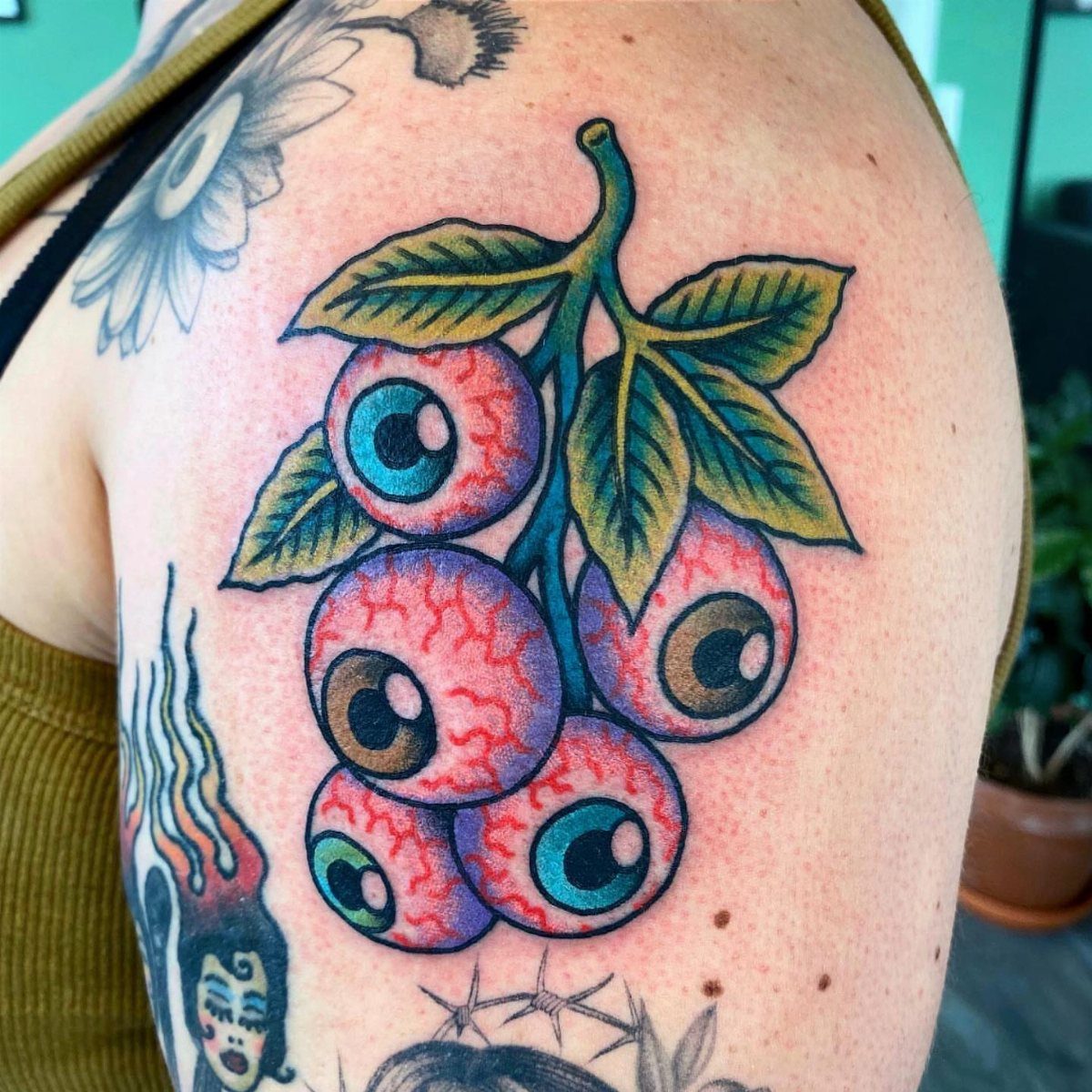
5 eyeballs hanging from a stem like fruit is the kind of image that only works at scale.
The shoulder and upper arm give the vertical room the composition needs; anything smaller and the detail in each iris collapses to a muddy circle.
Color is the point here.
The bloodshot whites, the varied iris hues, the green stem tying them together, all need to sit at full saturation or the piece goes flat. Black and grey would read as medical illustration; the color makes it surreal.
Healing on the shoulder means sleeping on your back until the swelling goes down, which is harder than it sounds if you are not already a back sleeper.
This is not a first tattoo. The visibility, the weirdness, the commitment to the joke all assume someone already comfortable in their skin.
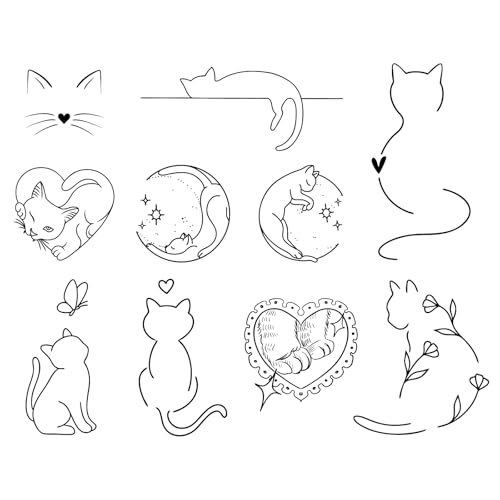
MINIMALIST KITTEN LINE ART: Features an adorable assortment of abstract feline designs, including sleeping crescent-moon cats, continuous-line cat outlines with little hearts, floral silhouettes, and cute tiny whiskers. This charming botanical and celestial cat collection is crafted using a digital hand-drawn fine line tattoo ensures crisp lines to maintain playful expressions, perfect heart symmetry, and clean, elegant line work.

🌲 Beautiful Hand-drawn Nature Tattoos - Black and White Illustrative and Fine Line Style of Flowers, Branches, Trees, Birds, Butterflies, Bees, and More.

PREMIUM USA-MADE FORMULA – Eternal Ink is proudly made in the USA in a certified, state-of-the-art facility. Every batch is sterilized and tested to meet the highest industry safety and quality standards.
9. Eye and Roses Realism Tattoo
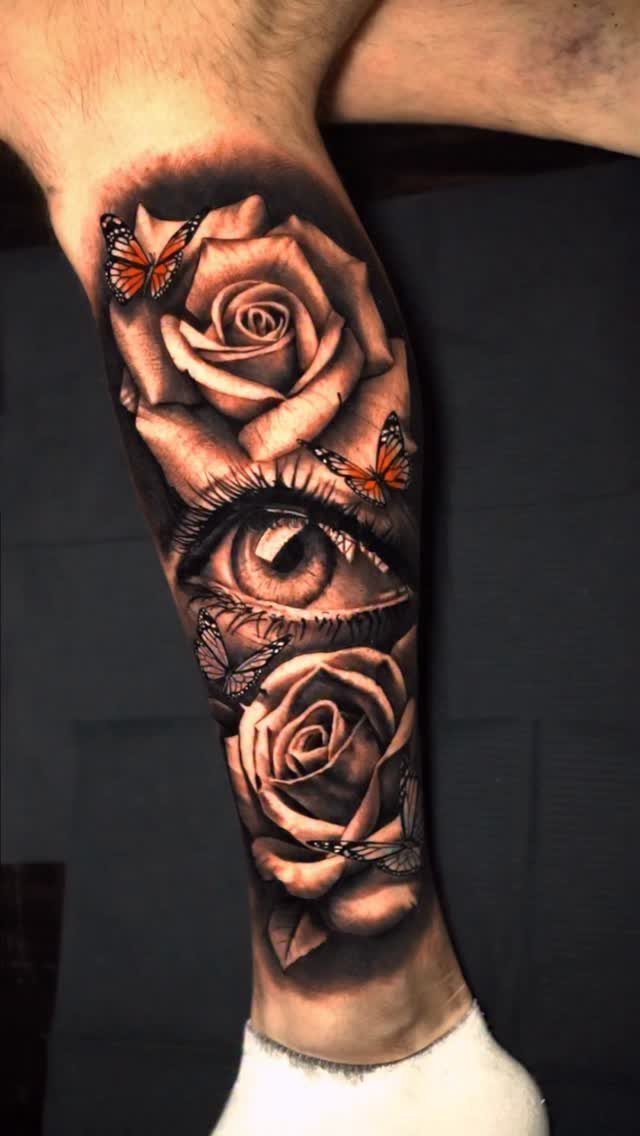
A realistic eye surrounded by roses and monarch butterflies on the lower leg is a study in contrasts: the mechanical precision of the iris against the soft irregularity of petals, the fixed stare against the implied motion of wings.
Black and grey keeps the focus on texture rather than color drama.
Realism on the lower leg succeeds or fails at the edges. The eye’s sclera needs to stay white, not heal to a grey that reads as infection; the roses need depth without the black shading swallowing the detail.
The calf’s flat plane is forgiving, but the wrap around the shin bone demands foreshortening that few artists manage well. Check the portfolio for healed work, not fresh photos.
Butterflies add motion but also clutter.
Two or three work; more and they become wallpaper. Decide whether the eye is watching them or ignoring them, and tell the artist which.

Amazing Product: Different from you know ordinary temporary tattoo stickers or fake tattoos. It is so real and comparable to the real tattoo. It is a semi-permanent technology, waterproof, friction-resistant, and can last for a long time, staying on your skin for 1-2 weeks.

Massive Quantity: 60 Sheets removable temporary tattoo stickers, including 30 pcs of inspirational and motivational quotes and scripts, cursive words, meaningful sayinging and writings, 30 pcs of simple minimalist flower tattoos. Enough choices for friends outing, party gatherings to enjoy together or choose different tattoo designs to match your everyday mood.
Frequently Asked Questions
What does a sick tattoo symbolize?
Sick tattoos often mark resilience and the arithmetic of limited energy.
A spoon tattoo borrows from the theory that turns everyday silverware into a quiet tally of what energy costs: one spoon for a shower, two for a workday, and the drawer empties fast.
The semicolon works the same way, signaling that the wearer’s story continues where a period would have ended it.
What is the 1/3 rule tattoo?
The 1/3 rule means no single element should dominate or shrink to ornament.
The rule splits skin into thirds so no single element hogs the composition; a skull and flowers each need room to breathe, otherwise one shrinks to an afterthought or both drown in empty space.
The same balance applies to an eye surrounded by roses and butterflies: two or three butterflies add motion, more becomes wallpaper.
What are the top tattoos to avoid?
Tribal patterns stripped from their origins sit high on most artists’ refusal list now, and the ones worth their chair will explain why before you finish asking.
A design that needs scale but is done too small is another risk: 5 eyeballs on a stem collapse to muddy circles if the shoulder and upper arm do not give them vertical room.
What does a badly healing tattoo look like?
A badly healed tribal piece shows in the gray heal where solid black fill should sit, the mark of cheap or rushed saturation work.
White ink in realistic eyes tends to heal to a murky grey that looks like trouble, and heavy black shading can bleed outward until it eats the fine lines of petals or leaves.