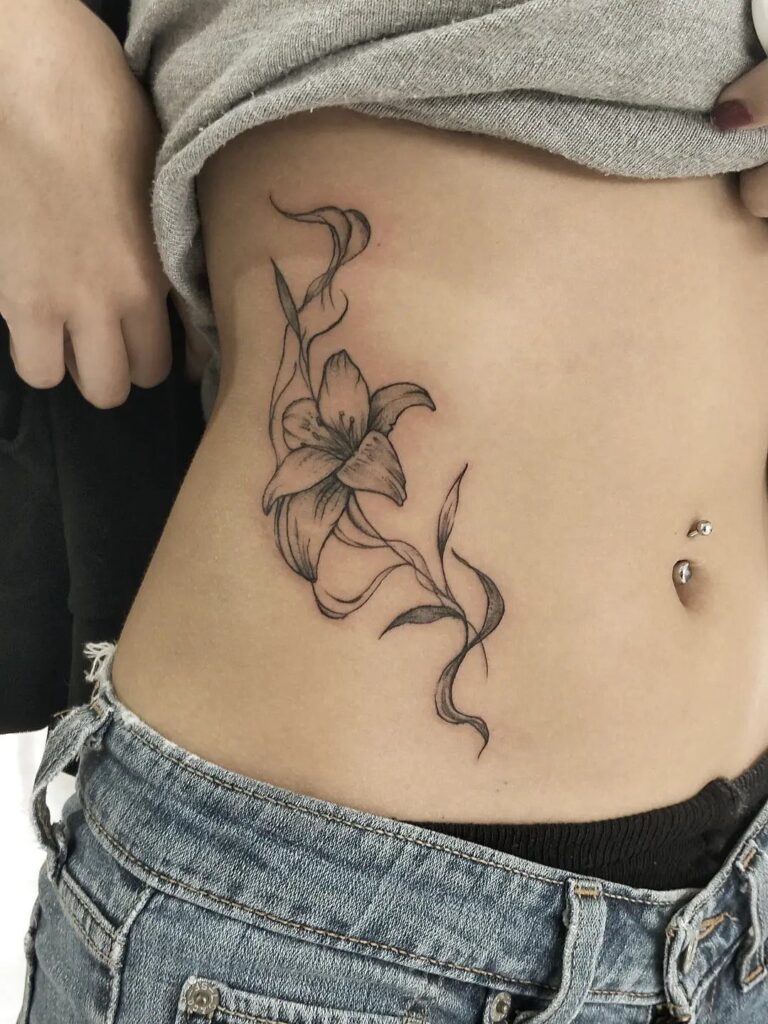
A wrap around waist tattoo ranges from fine-line botanicals to bold tribal geometry, and the deciding factor is whether your priority is movement that follows your body or a fixed symbol that holds its shape against it.
The obliques along the side do offer some padding, though a wrap means the needle will hit the softer front and the tighter lower back in the same sitting, and those spots add up.
[link-whisper-related-posts]1. Fine Line Black Ink Lilies
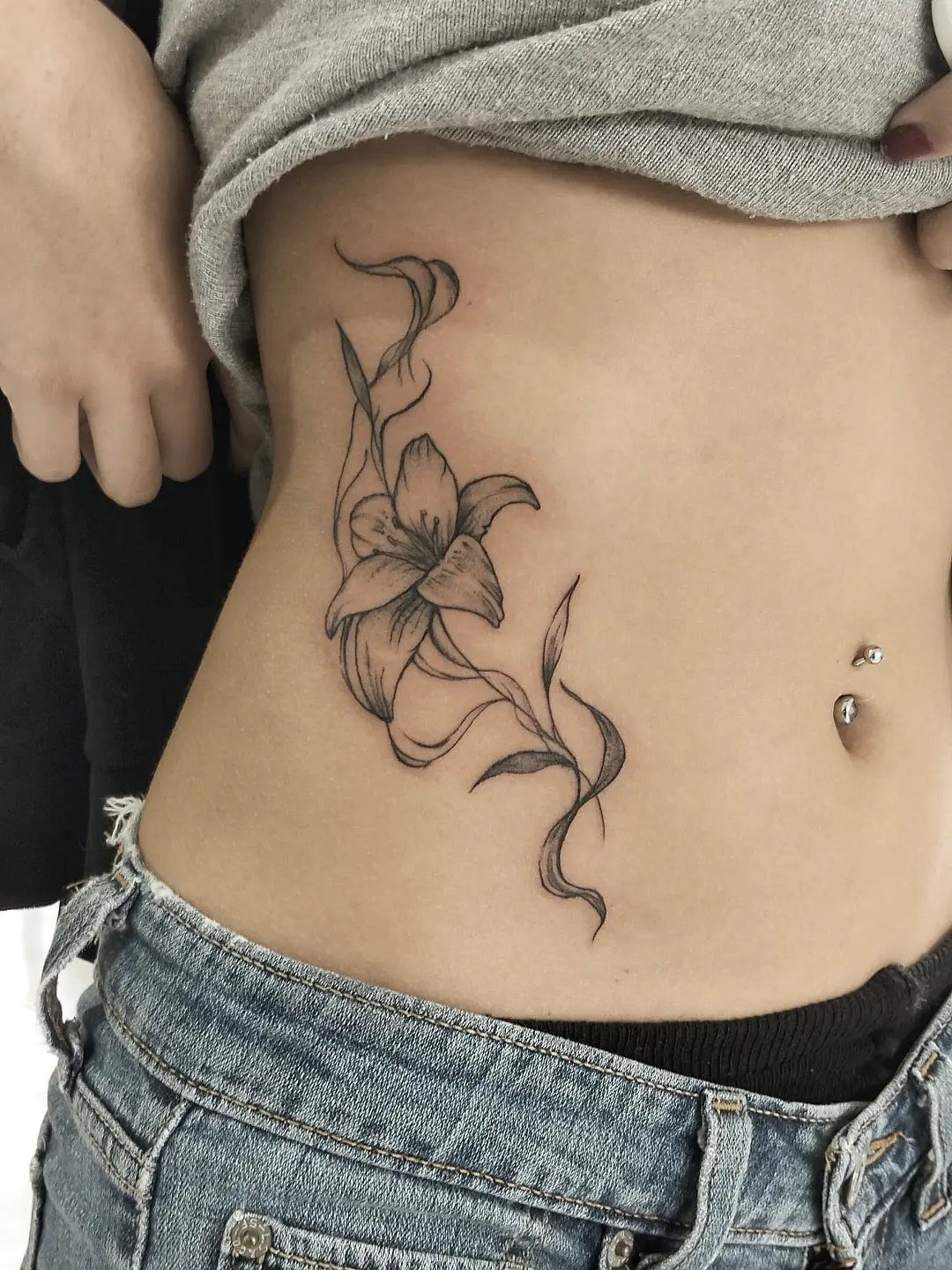
Fine line black ink lilies work best when the stems travel, not sit still.
I have seen this piece arranged diagonally from the side of the torso down across the hip, the petals kept thin enough that skin tone shows through and the leaves taper to nearly a hair at the ends.
The flowing stems let the artist adjust to your waist curve without the design fighting your hip bone.
Ask for the leaves to finish soft, not blunt; a hard edge where the tattoo wraps toward the back reads as a seam and breaks the movement.

Clean, Flawless Transfers: Your artwork will look so clean once transferred to the skin with the Stencil Stuff gel! Gentle on the skin, Stencil Stuff transfer solution helps you achieve clear and sharp tattoo stencil transfers every time!

Warm Tips: The tattoo transfer paper need to work with transfer medias.You will need to purchase the stencil ointment separately. Apply the design made on the master paper. Please pay attention to press the back side of the pattern to the skin for at least 3 seconds
2. Black Tribal with Red Accents
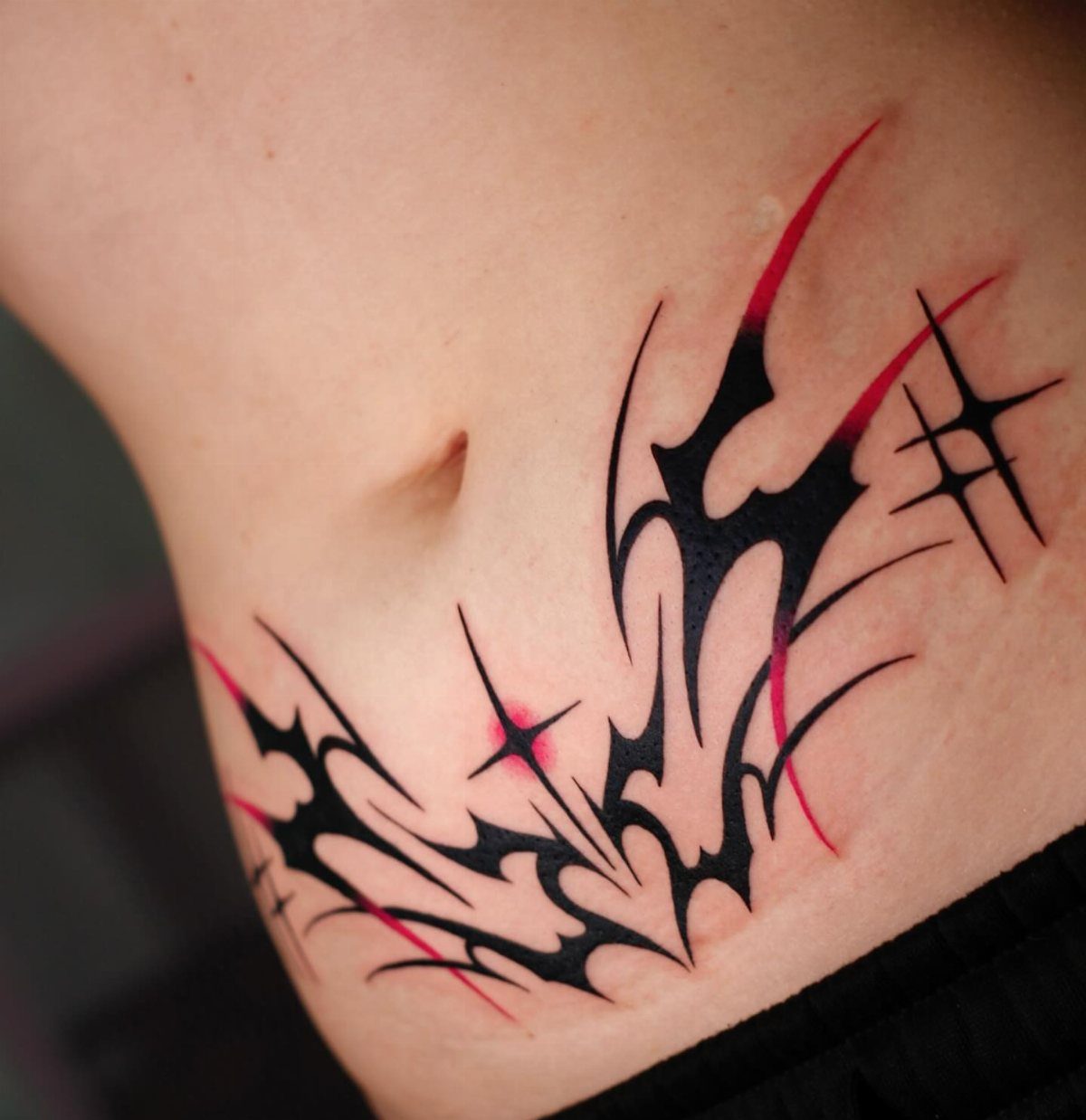
Black tribal with red gradient tips is a sharp, high-contrast choice that demands fresh ink to look its best.
The red sits at the points and star details, which means those accents fade faster than the black body and need touch-up planning from the start.
Before you commit, check how the red reads against your undertone.
On cooler skin it can shift pink; on warmer it stays truer. The cyber-tribal style also relies on crisp edges, so this needs an artist who works slowly in the stretchy skin at the waist.

TRUSTED FAMILY-OWNED BUSINESS: We are a USA trademarked brand dedicated to providing high quality stencils and our promise of satisfaction. If you are not satisfied for any reason, we will refund your order. Thank you for considering our stencils.

Elegant Calla Lily: These 2 painting stencils of calla lily pattern are simple in style, the curved and large flowers are in full bloom, and the well-defined patterned leaves well set off the charm of calla lilies, and the styles are versatile and suitable for decorating at home!

Blooming Lily Pattern Stencils: Can meet your different needs, well made and fun to creat craft projects for families and friends, offers endless possibilities for transforming your home decor
3. Tribal Pentagram Waist Wrap
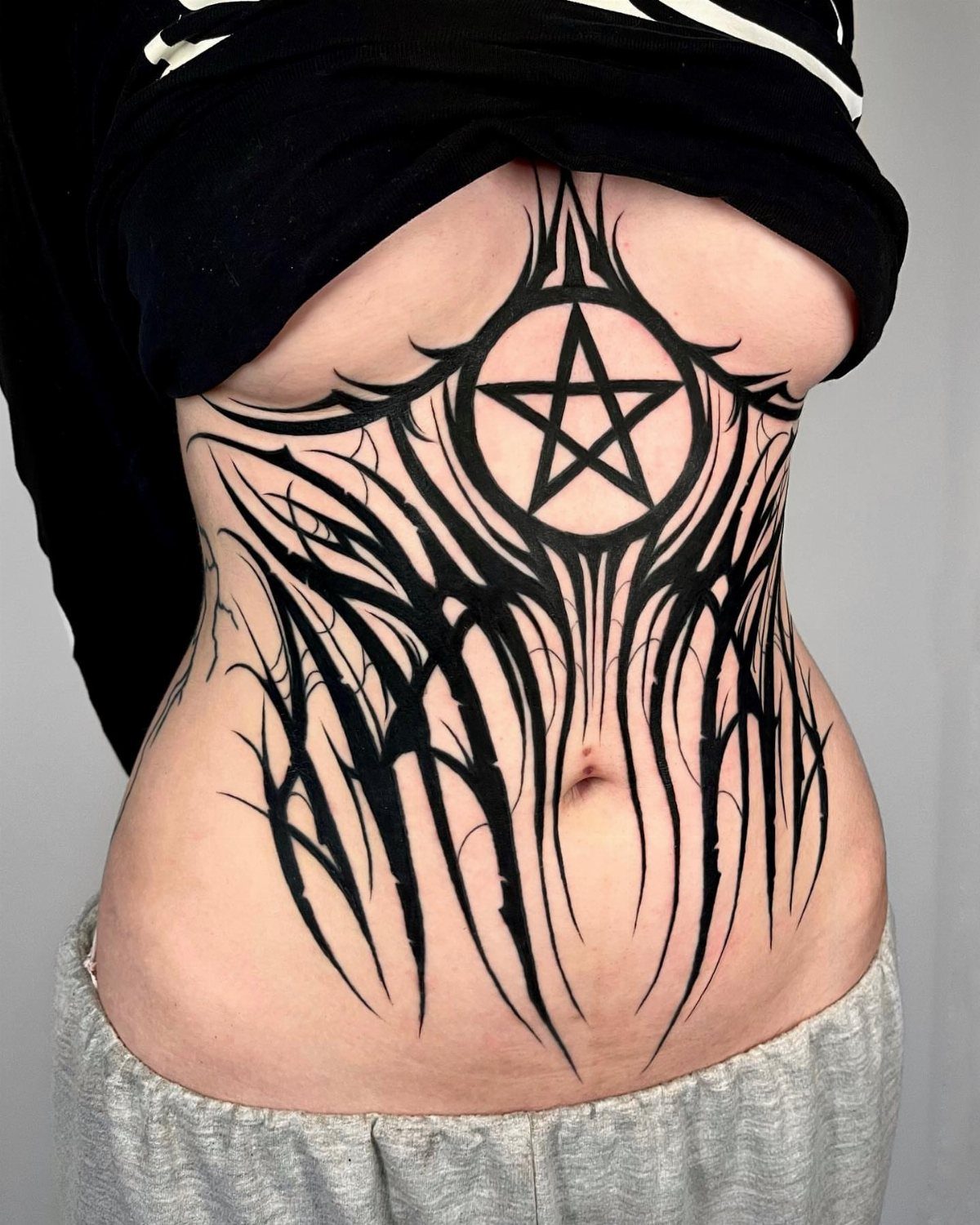
A tribal pentagram waist wrap centers a symbol that carries weight beyond its shape. The flowing lines extend from the chest down over the ribs and stomach, which means sitting, bending and breathing all move the inked area constantly.
The size here is the practical issue. At this scale the waist wrap becomes a single long session or multiple sessions spaced weeks apart.
The pointed tribal lines must align across those sessions or the geometry drifts. Ask to see healed photos of large tribal work from this artist, not just fresh ones.

RICH TEMPORARY TATTOO KIT - Contains tattoo templates (34 patterns),4 tattoo inks in 3 colors (black Maroon Cherry Red),4 disposable gloves 1 pack of cleaning supplies for a hassle-free temporary tattoo experience.

【RICH TEMPORARY TATTOO KIT】- Contains tattoo templates 44 waterproof stencils,4 tattoo inks in 4 colors (Black, Maroon, Cherry Red, Blue),4 disposable gloves, 1 pack of cotton swab. Easily achieve the decorative effect and fun of self-expression that tattoos bring

24PCS Unique Henna Stencil Pack – This complete henna tattoo kit accessory set includes 24 sheets of reusable mehndi stencils (6.89" x 3.34"). Featuring exclusive designs like long arm bands, moon motifs, vine flowers, and large floral templates, it is ideal for creating DIY temporary skin art on wrists, arms, back, and full body.
4. Curved Tribal Waist Design
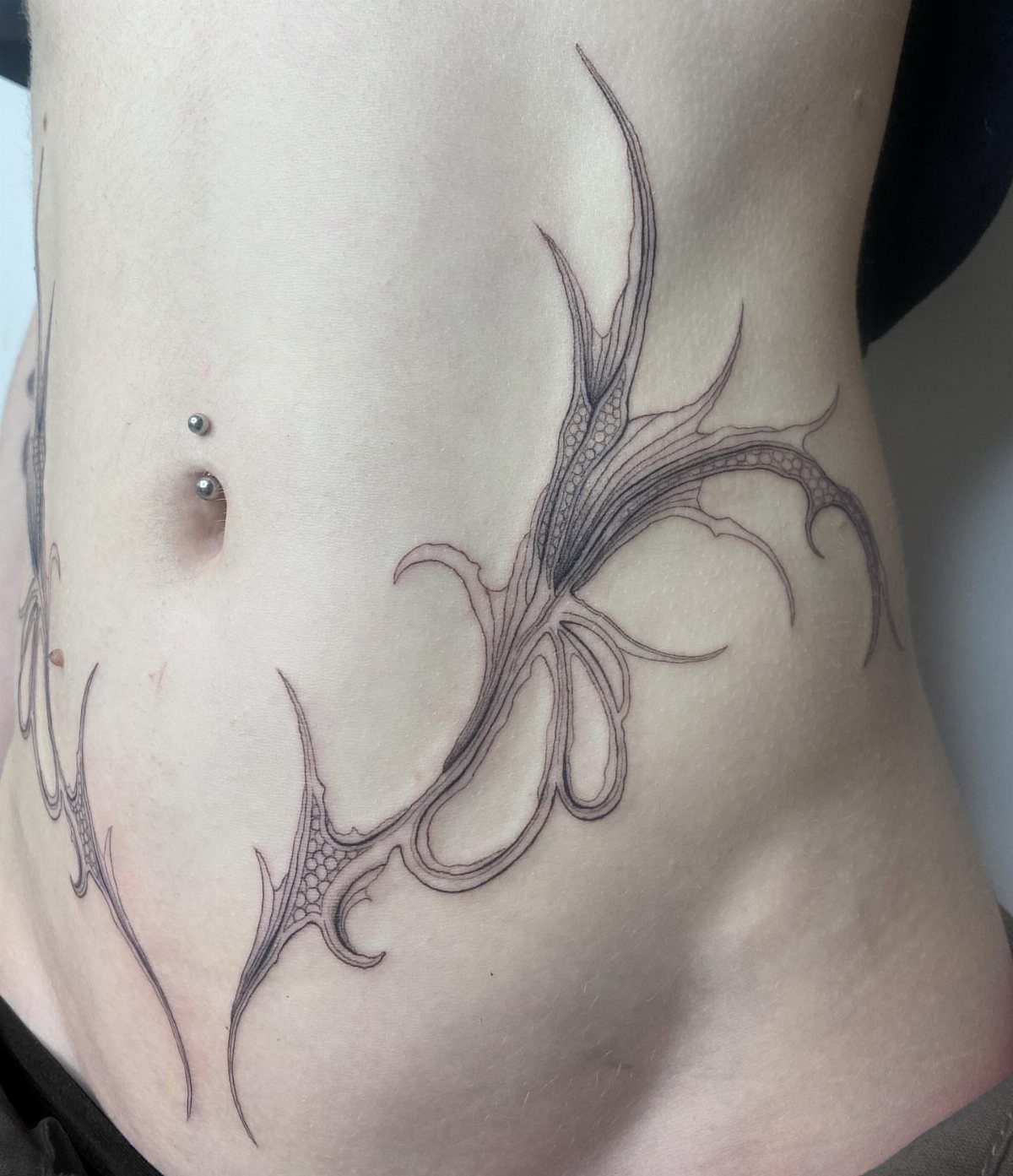
Curved tribal with dotwork and organic spikes follows the hip bone rather than crossing it. The tattoo curves below, not through, the navel area, which matters if you already have belly button piercing or plan to get one.
The fine-line weight means this will soften faster than bold tribal.
Dotwork especially spreads over time on waist skin. Plan for the lines to thicken slightly and choose an artist who spaces the dots loose enough to allow for that shift without closing into gray fill.

Versatile Graffiti Stencils: Ideal for painting on various surfaces such as Wood, Canvas, Paper, Fabric, Wall, Rock, and Furniture. Perfect for creating Halloween and Gothic-themed art projects.

Tribal Totem Patterns: Various styles of tribal totem patterns can be combined and drawn according to your needs. Unique style and novel design. Perfect for wall, furniture, picture frame corner decoration.

The dimensions shown are the overall stencil sheet size. The graphic fits inside the sheet and is slightly smaller than the overall sheet size
5. Blue Floral Cameo Wrap
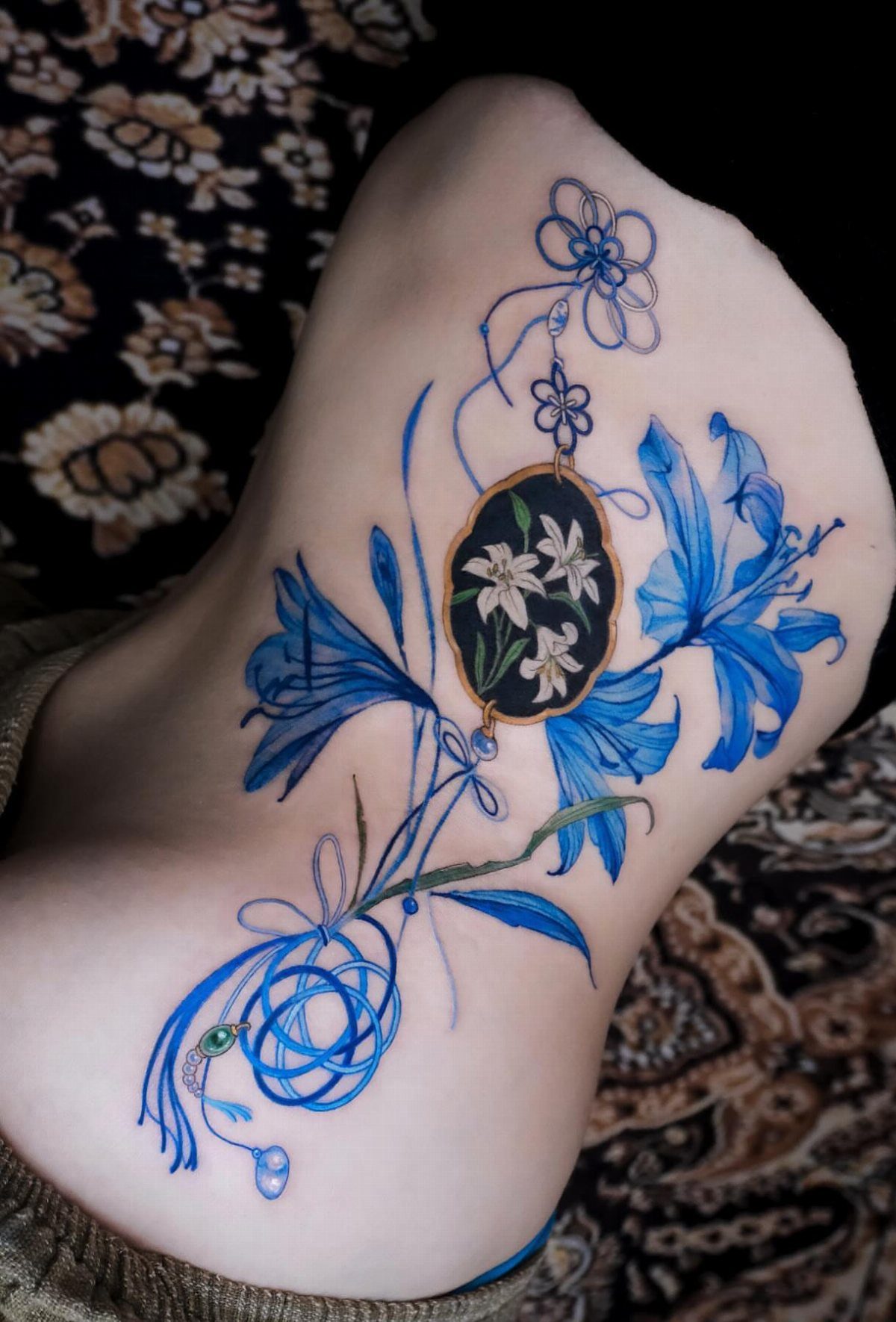
Blue floral cameo wraps use a color that holds better than red on most skin but still needs the right blue.
The cameo frame creates a focal point that breaks the floral flow, which works if you want a portrait or keepsake image inside the oval.
The ribbon work connecting the lilies adds secondary movement that helps the wrap read from the front even when the cameo itself sits at the side.
【4 Layer A4-sized Stencil Transfer Paper】- 10.9*8.4 inch tattoo transfer paper features four layers: a protective layer, design layer, release layer, and a yellow backing layer. The white master sheet is for design application, with a removable translucent protective sheet (needs to be removed before use), blue carbon paper, and an additional backing layer for enhanced stability. It's fade-resistant, easy to use with a thermal copier or ballpoint pen, making it convenient and user-friendly

Safe and Healthy: Our tattoo transfer gel meets strict safety and non-toxic material standards, non-irritating to the skin and vegan-friendly. Maintains client comfort while achieving clear tattoo stencil transfers.

142+ Nature-Inspired Tattoos Stencil Designs in 12 Sheets: This temporay tattoo template set features over 142 unique, delicate designs centered on enchanting botanical and natural elements. Discover a vast collection of flowers (daisies, roses, sunflowers, lavender), intricate leaves, winding stems, complete bouquets, elegant wreaths, crowns, bees, and butterflies. Perfect for creating floral temporary tattoos, henna-inspired patterns, and nature-themed body art.
Tattoo Design Inspiration
Fine line botanical work around the waist lives or dies on how the stems travel. A vertical vine that curves with the body reads natural; one that fights the hip line looks pinned on.
The trailing dotwork you see in these designs needs spacing that accounts for waist movement. Skin there stretches across 2 axes, so dots set too tight will close into solid gray within a few years.
Ask the artist to show you healed dotwork on an area that moves, not just flat skin from an arm or leg.
A wrap around waist tattoo needs to flow with your body’s natural curves and movement.
This matters more than most people plan for; the cameo or focal point often ends up off-center by necessity, and the connecting work is what keeps it from looking isolated.
ADVANCED MATERIAL: Tattoo transfer paper is made with the high quality dyes and stencil paper. Transfer marks are very clear, clean and smooth. Tattoo transfer paper kit come with 35 sheets. Great for tattooing, trace and transfer images onto the body.<br>

REUSABLD VARIETY OF OPTIONS - This set of temporary tattoo stencil includes 123 different patterns for adult,male. Scorpion tiger dragon cow eagle skeleton Tribal Symbols geometric design etc patterns in 20 pages A4 size, Almost unlimited creative combinations and options to meet your every need.

【 575+ Fun Assorted Tattoo Stencils 】-The ChurlChurl tattoo stencils collection includes 575 high quality stencils with multiple themes. enjoy cute trendy tattoo stencil designs like butterflies, words, flowers, symbols, totem, Egypt style patterns and more.
Tattoo Placement Advice
Waist tattoos follow bone, not ignore it. The hip bone creates a hard edge that a straight line will accentuate rather than soften; curved designs that pass below or above it read smoother.
Skin at the waist moves more than almost anywhere else on the torso.
Sitting, bending, and breathing all shift the surface, which means a design that looks balanced standing may distort seated. Ask to see a stencil mockup in both positions before the needle starts.
The area below the navel and above the pubic line sits on thinner skin with less underlying muscle.
Ink there settles differently and often heals with slightly more spread. Plan for this by keeping line weight moderate; too fine disappears, too bold looks stamped on.
Healing both simultaneously creates friction and complicates aftercare for both.

TRUSTED FAMILY-OWNED BUSINESS: We are a USA trademarked brand dedicated to providing high quality stencils and our promise of satisfaction. If you are not satisfied for any reason, we will refund your order. Thank you for considering our stencils.


Made of a tough nylon mesh- no true openings, chalk powder goes through open screen mesh
Pain Levels for Waist Tattoos
Stomach and waist skin ranks among the more sensitive areas to tattoo. The surface is thin, nerves are dense, and the underlying muscle layer lacks the padding that fat provides on an arm or thigh.
The pain intensifies near the center line and anywhere the skin stretches directly over bone, such as the hip points and the area just below the ribs.
Most people find the side of the waist, where the oblique muscle provides some cushion, more manageable than the front.
Breathing complicates the experience.
The artist needs you still, but your diaphragm moves constantly. Long lines become harder to hold steady, which can extend session time and add to the fatigue factor.
A wrap-around design means multiple angles of approach, and some will hurt more than others. Plan for this in your session length; most artists recommend breaking a full waist wrap into segments rather than pushing through in one sitting.

32 Bold Animal Tribal Patterns – 4 large A4 sheets featuring Dragons, Wolves, Scorpions, Lions, and more, for a strong, edgy look with professional-quality stencils.

Bold tip marker makes clear stencil lines for tattoos

▶ 【Henna Tattoo Kit】 12 sheets tattoo stencils. Henna stencils for hands. airbrush tattoo stencils suitable for tattoo lovers. Henna tattoo kit for beginners. Experience the effects of tattooing without the pain of tattooing.
Frequently Asked Questions
What to wear for a tattoo on the hip?
Wear something loose that sits below the tattoo line and won’t rub against fresh ink.
A skirt or dress works better than waistband pants, since elastic or denim pressing on a new hip tattoo irritates the skin and can stick to the plasma that seeps during the first day.
How long should you leave the plastic wrap on a tattoo?
Follow whatever timeline your artist gives you, since aftercare methods vary by shop and ink type.
The wrap protects against bacteria and fabric fibers while the surface is still open, but leaving it on too long traps sweat and plasma against the skin, which breeds the wrong kind of moisture.
How painful is it to get your stomach tattooed?
Stomach and waist skin is thin, nerves run thick there, and the muscle underneath does not have the fat layer you get on arms or thighs, so the needle hits harder.
The center line hurts most, and anywhere bone sits right under the skin: hip points, the spot just under the ribs, anywhere the stretch pulls tight.
The side of the waist sits easier for most people; the oblique muscle underneath gives the needle something soft to push against.